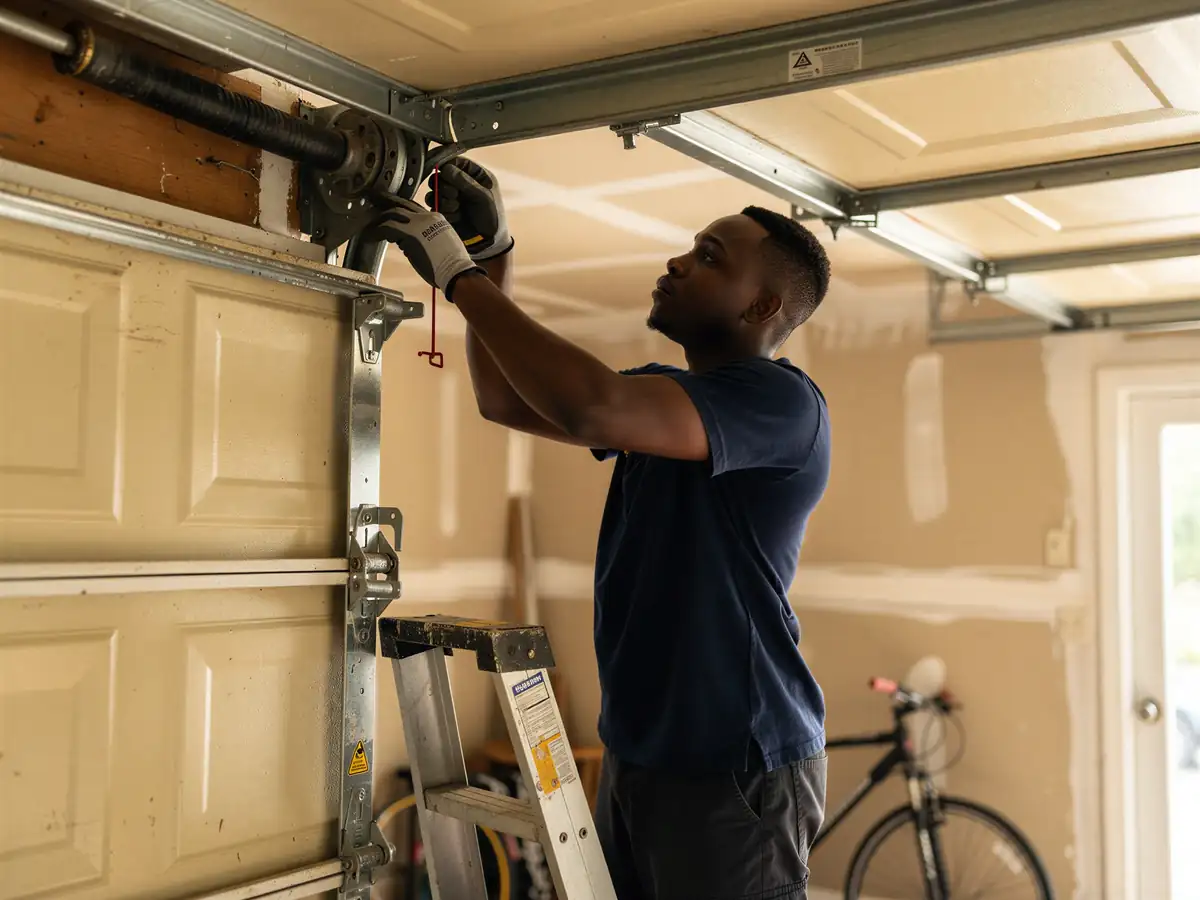
What the Repair Takes
Melissa sits about 18 miles out from our shop in Wylie, which puts it at the far edge of what we cover in a single trip. That distance doesn't change the repair itself, but it does change how we schedule it - we try to pair a Melissa call with other work in the area rather than running out for one door, so if you call early in the day you'll usually get a same-day slot more easily than a late-afternoon one.
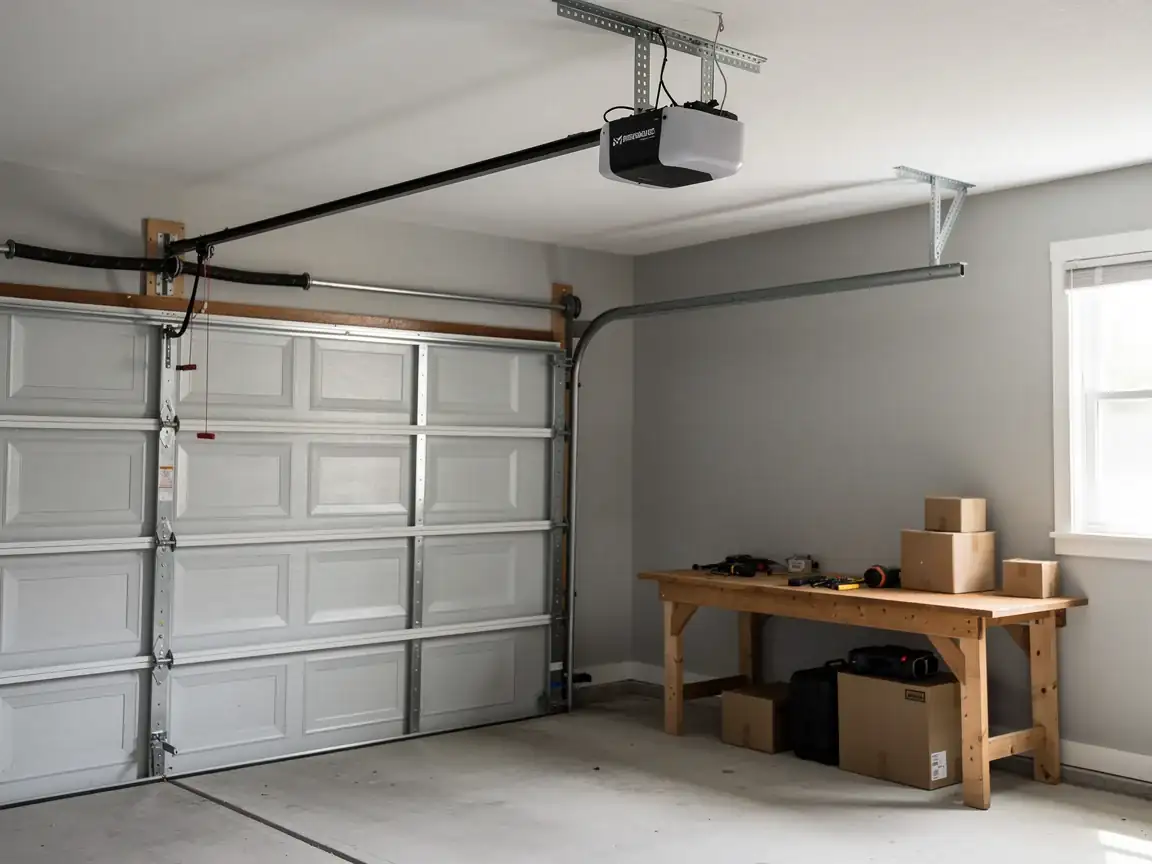
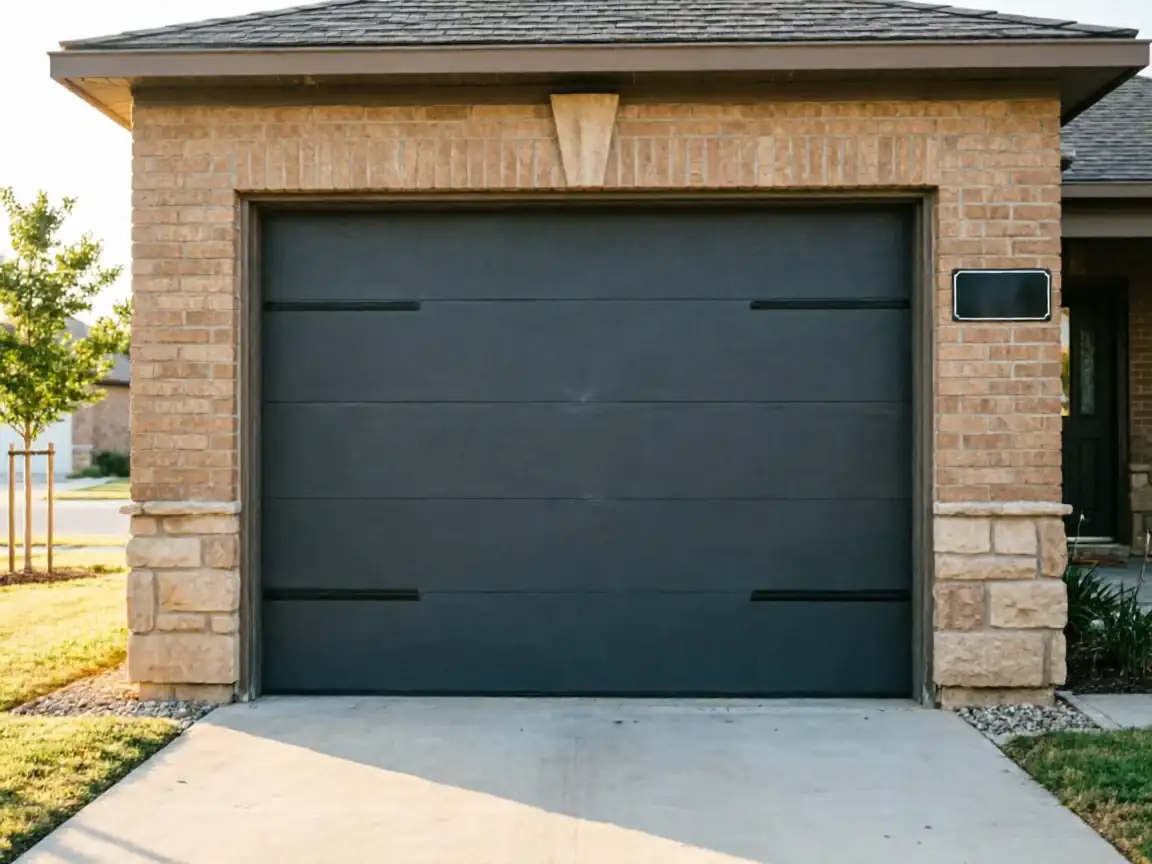
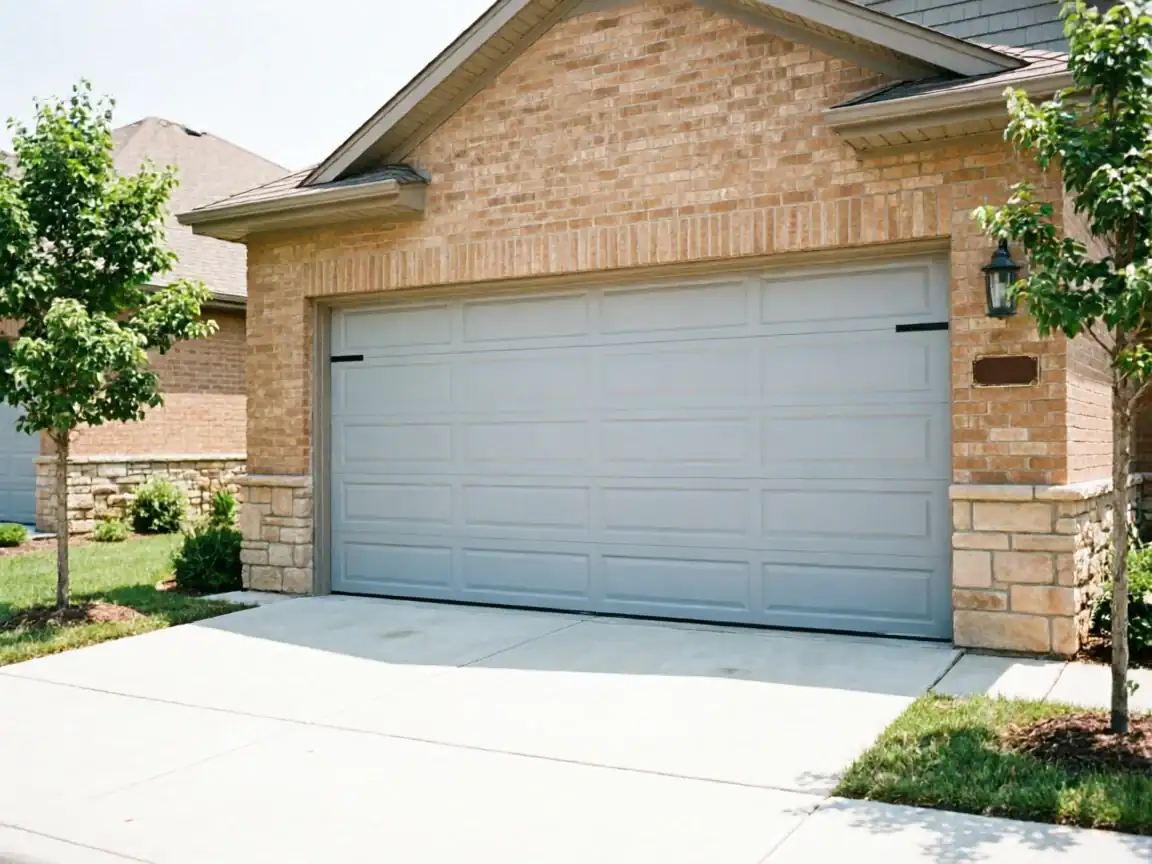
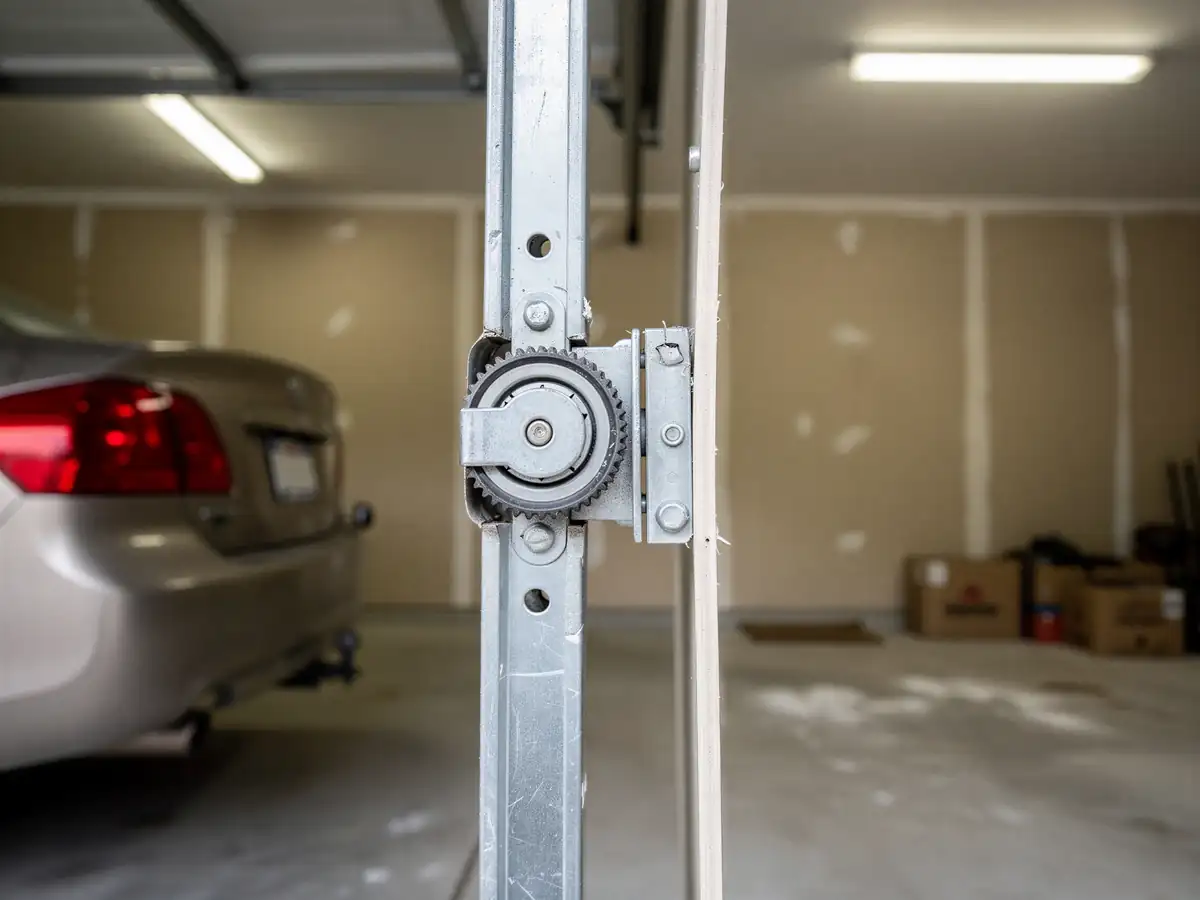
The repair itself is straightforward on houses this age. Melissa's housing stock runs younger than most of the towns we cover - a median build year around 2015 - so nearly every door we touch here uses factory nylon rollers on steel track rather than the steel rollers and heavier gauge track you find on older stock closer to Wylie. Nylon rollers are quieter out of the box but they wear at the roller stem and wheel face over ten-plus years of cycling, and a lot of 2015-built houses are hitting that mark now.
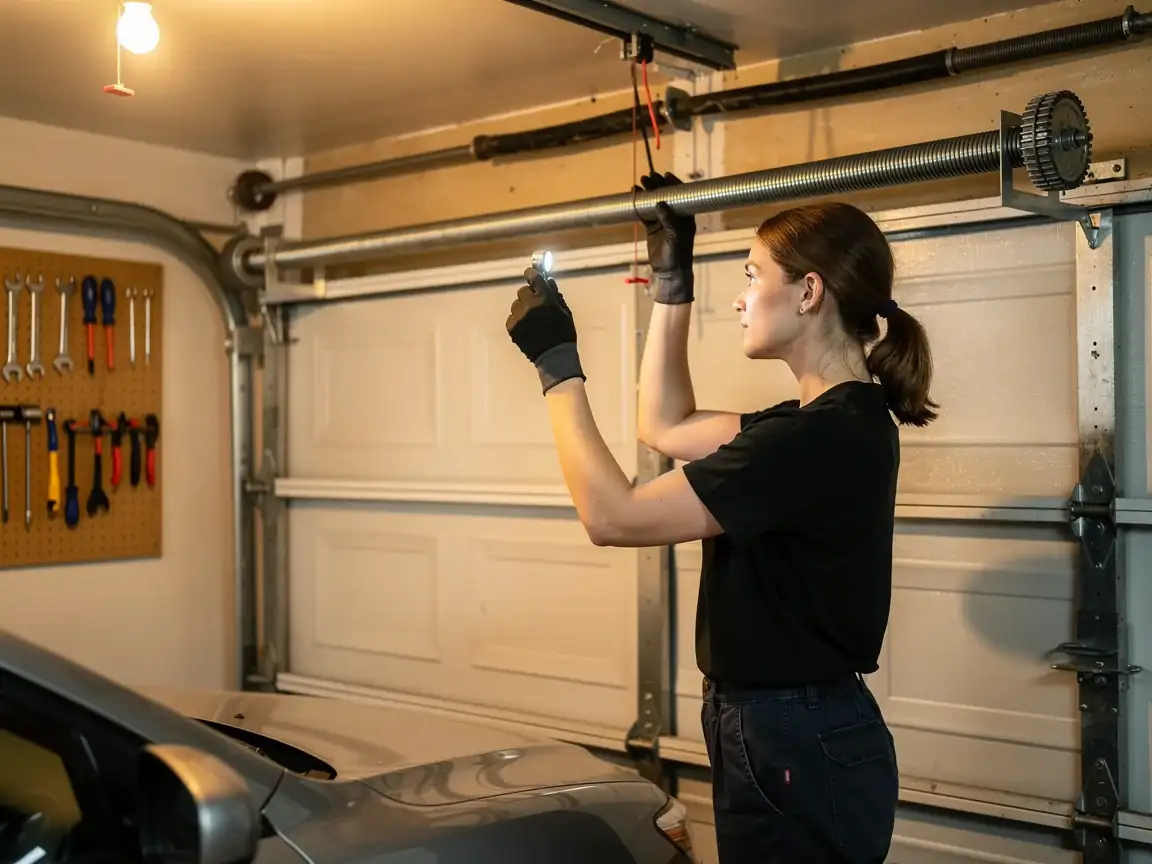
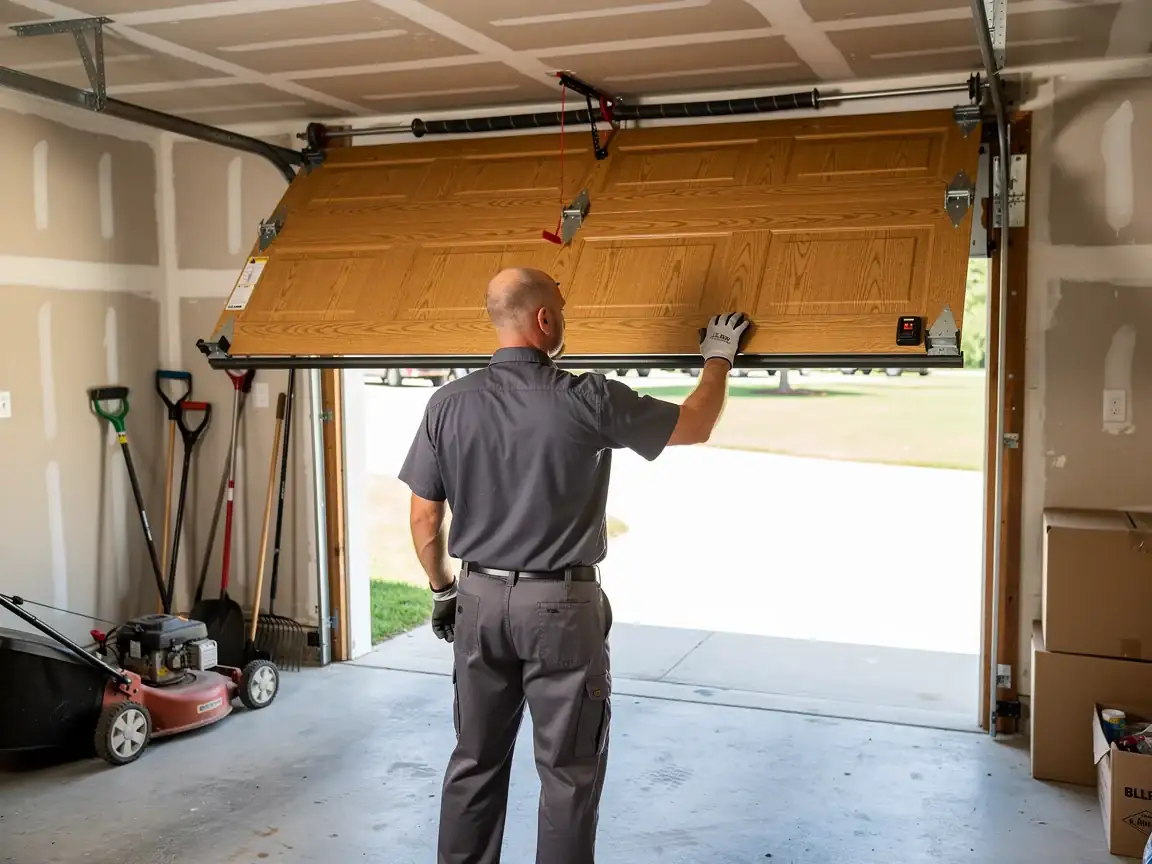
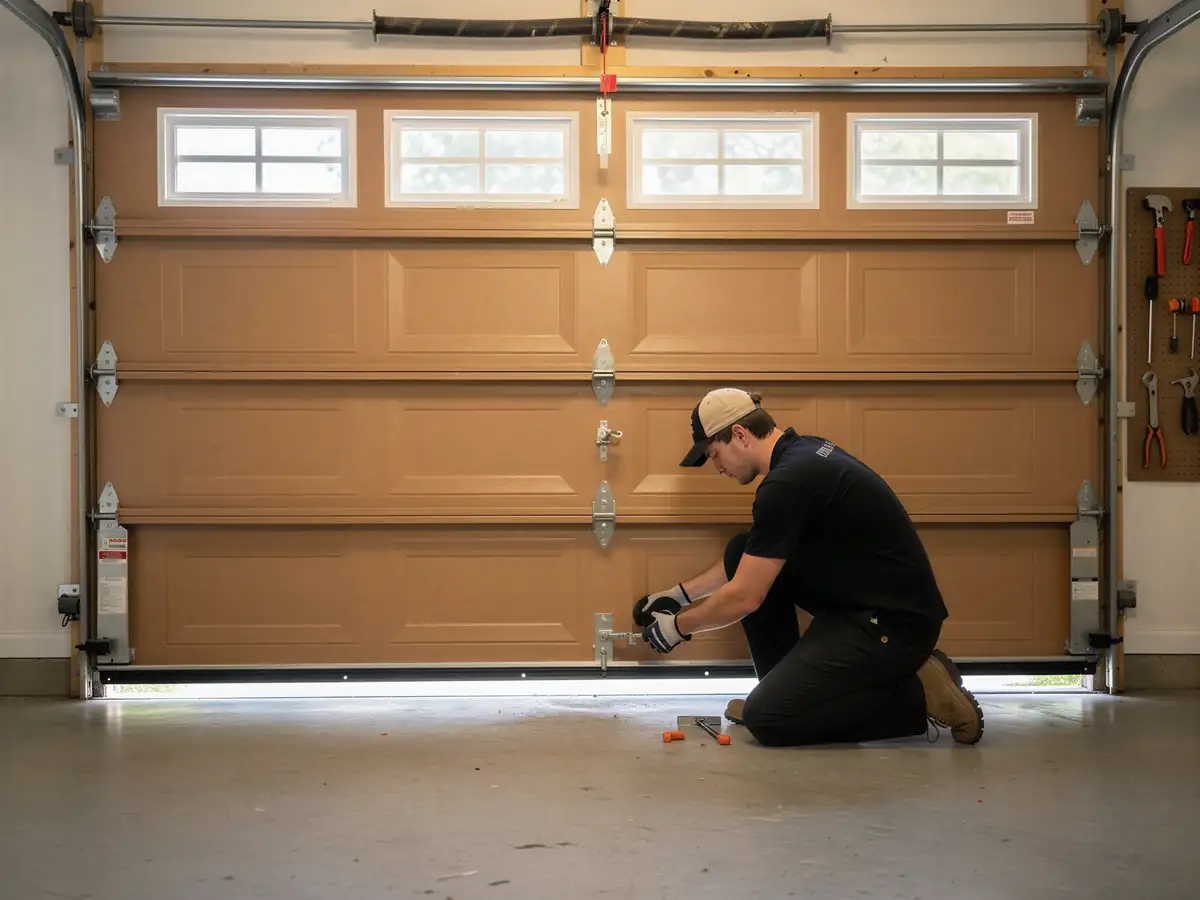
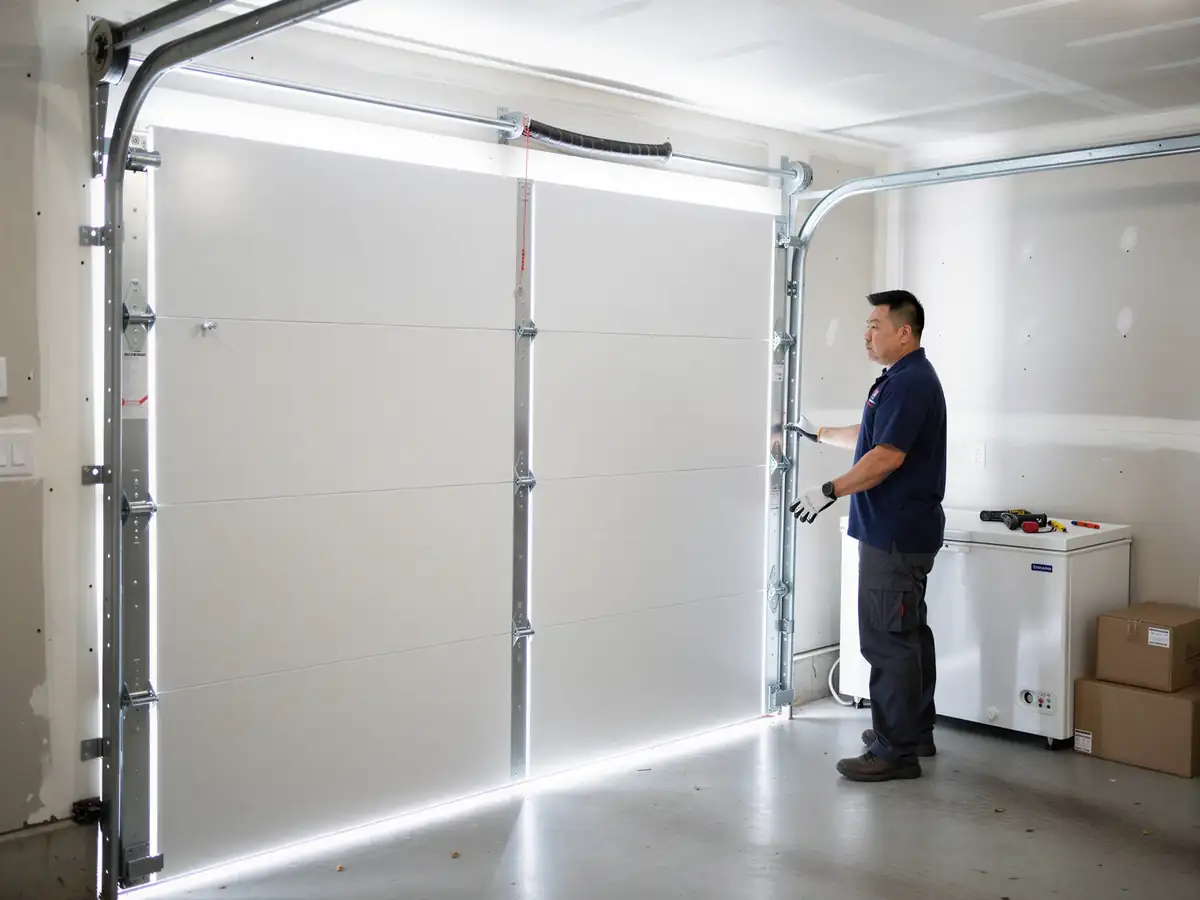
We pull the old rollers, check the track for the wear grooves that heavy use leaves behind, and set new rollers with sealed bearings if the track is still true. If the track's bent or racked, that's a separate conversation.
The Symptom
On a nylon-roller door like most of what's in Melissa, the tell isn't grinding - it's a soft, rhythmic thump as each roller hits the same worn spot in the track on its way up or down. Steel rollers on older doors squeal; nylon rollers thump or judder, and the door can feel like it's catching every few inches even though the opener never strains.
Some owners mistake this for a spring problem because the door hesitates. The way to tell them apart: a bad roller shows up as a repeating stutter tied to the door's position, not a one-time jerk or a door that won't lift past waist height. If your door stalls completely or reverses on its own, that's the opener or a cable, not a roller - a different call.
How Long It Takes
A full roller set on a single door, once we're on site, runs under two hours in most cases
These are newer tracks, usually still straight, with no rust to fight. Add the drive and a Melissa call ends up being more drive time than wrench time, which is part of why we try to batch these with other jobs in the 5,333-household area rather than running one truck out for a single door.
If the track is bent enough to need straightening or replacing, figure on more time
Since that's not a part we carry pre-cut to length.
What You Pay
We don't have a published price list for roller jobs specific to Melissa, and we're not going to invent a number just to fill this section. What we can say is that the job scope here tends to run smaller than in older parts of our service area - newer track, no rust, usually no need to touch the hinges or center bracket - which keeps the labor side shorter. Ask for a number when you call; we'll give you one based on the door in front of us, not a guess.
Stocked Parts
Our truck carries sealed-bearing nylon rollers in the stem lengths that fit the door hardware common to 2000s-and-newer construction, which covers the large majority of what we see in Melissa. We also carry standard steel rollers for the handful of older doors that show up even in a newer town. What we don't carry pre-stocked is specialty track sections or oversized rollers for custom doors - those get ordered, and that adds lead time we can't shorten.
What Can Go Wrong
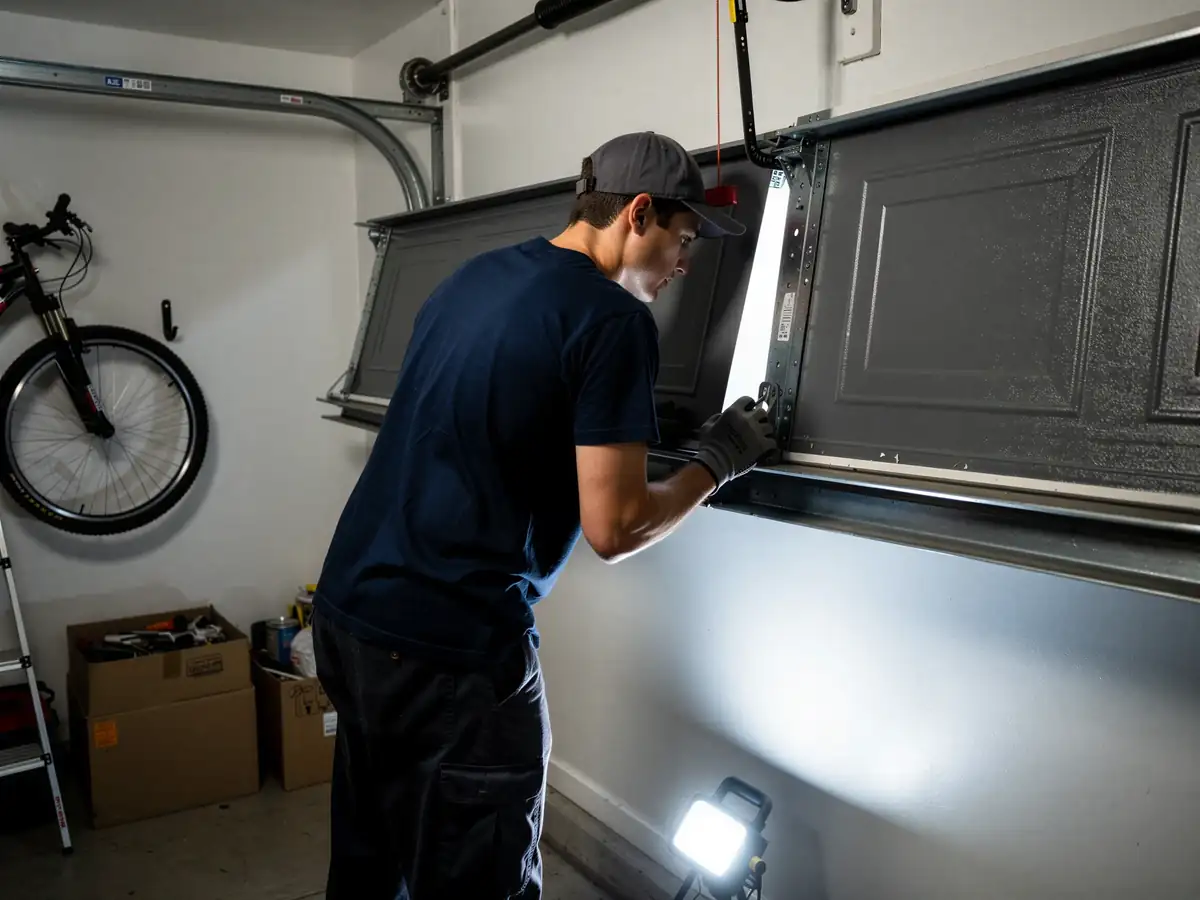
The most common surprise on a roller job here is finding the track mounting brackets have loosened rather than the rollers being the only problem
New construction settles, and a stud that was true in 2015 can shift enough over a decade to throw the track out of plumb by a few degrees. New rollers won't fix that; the bracket has to be reset first; or the thump comes right back.
The other thing we watch for
Melissa's household incomes run higher than much of the rest of our service area, and some owners here have doors with upgraded hardware or insulated panels that use a different roller stem spec than builder-grade doors. We check the stem before we quote, not after.