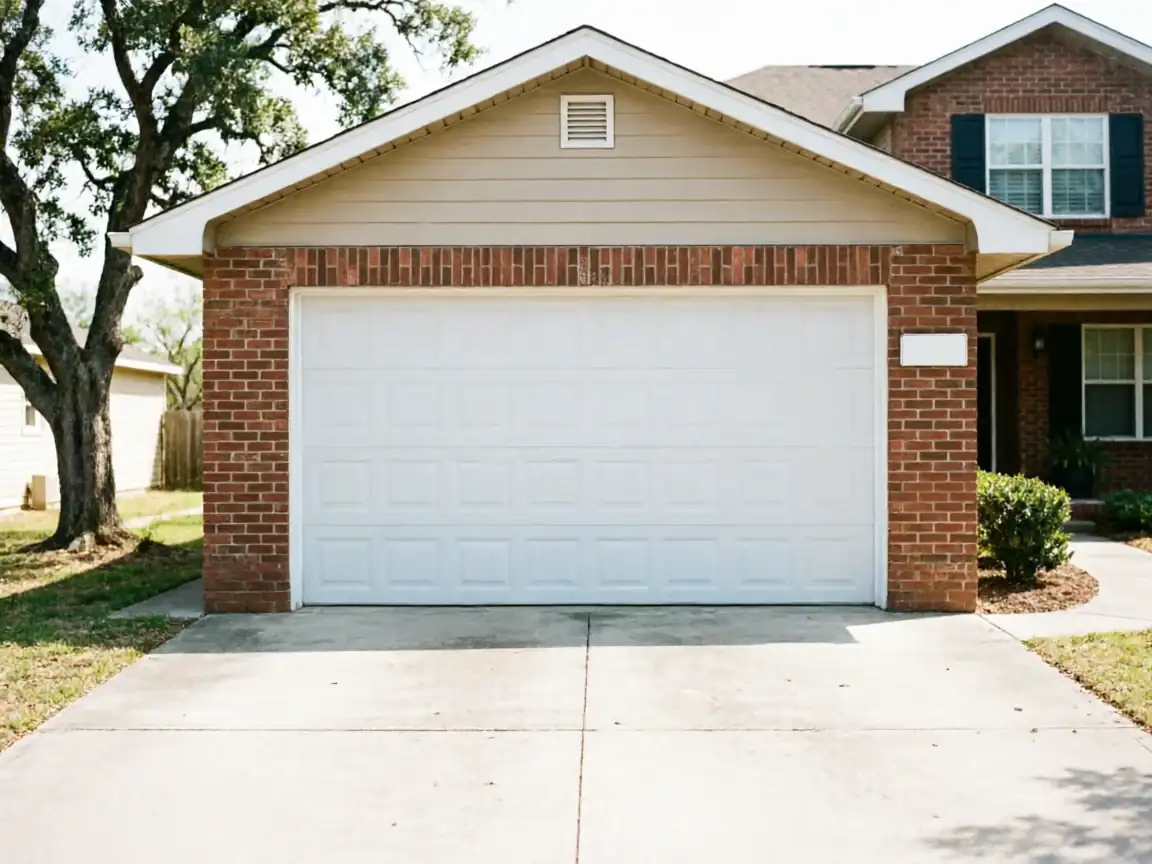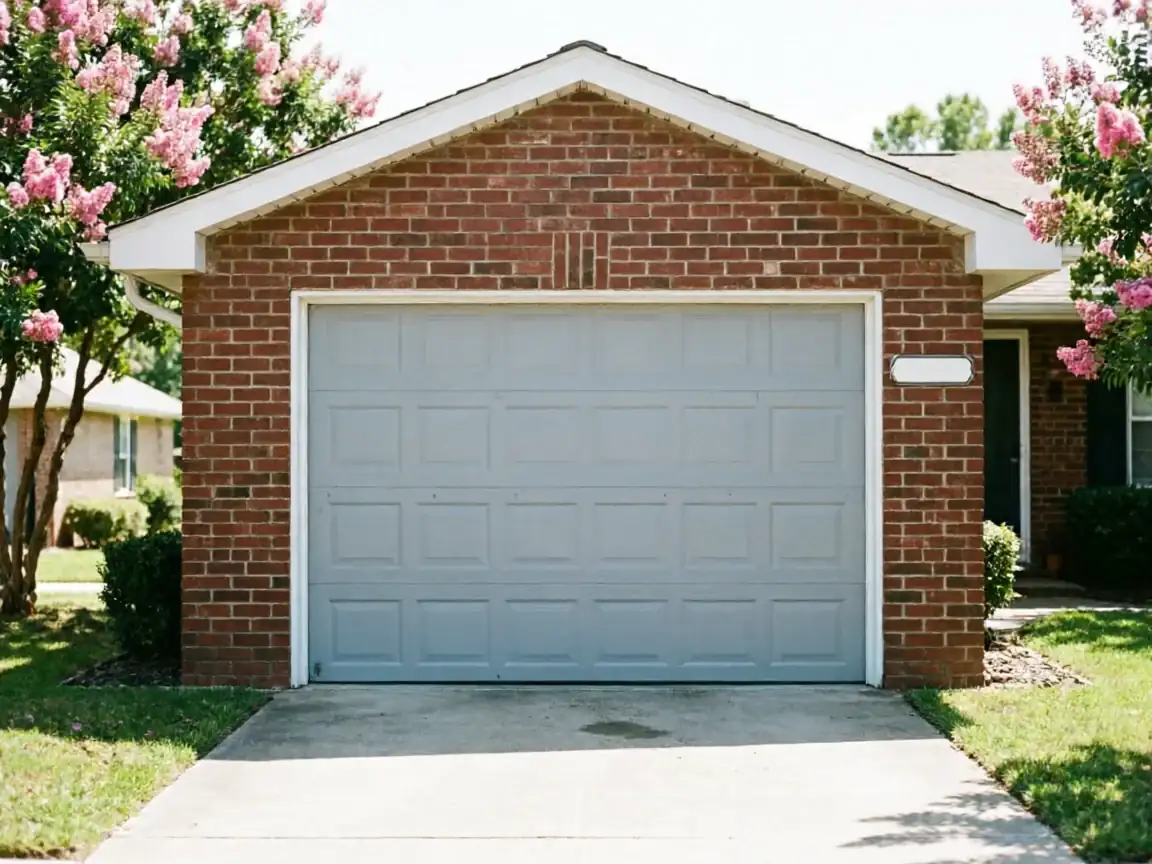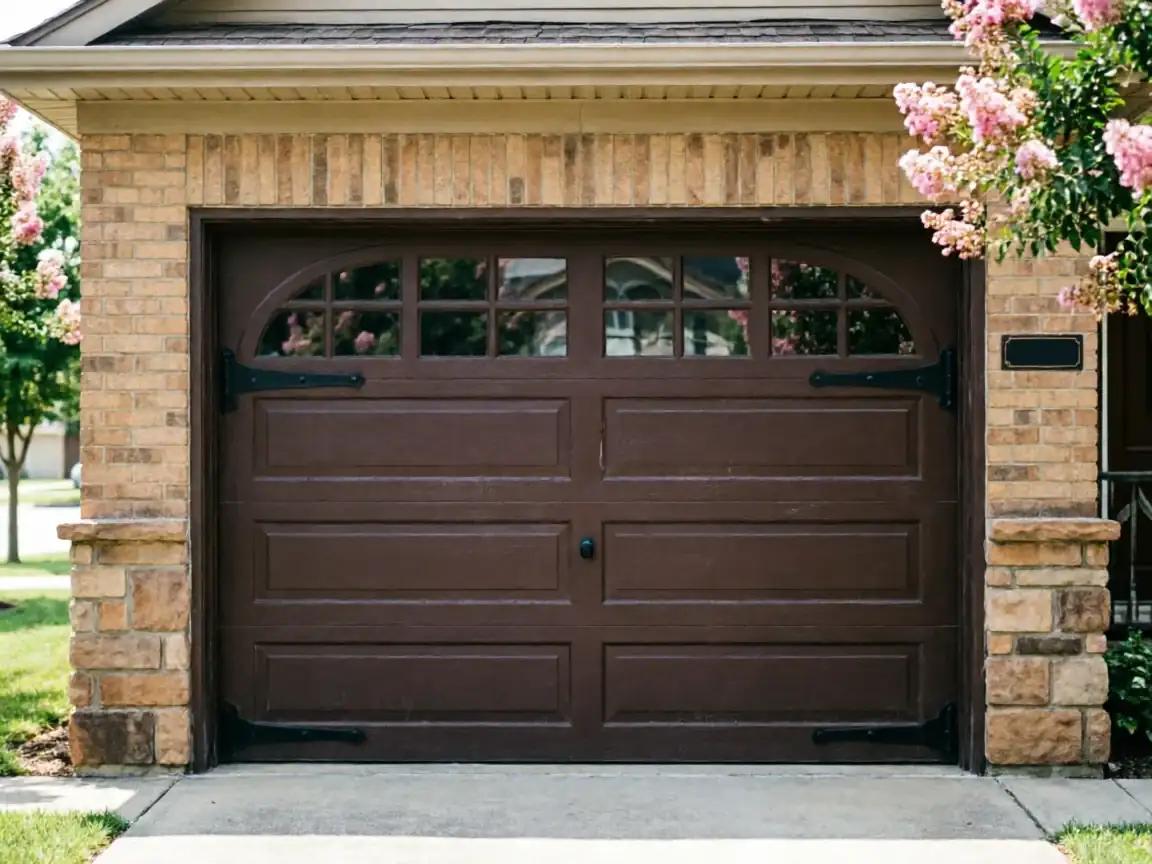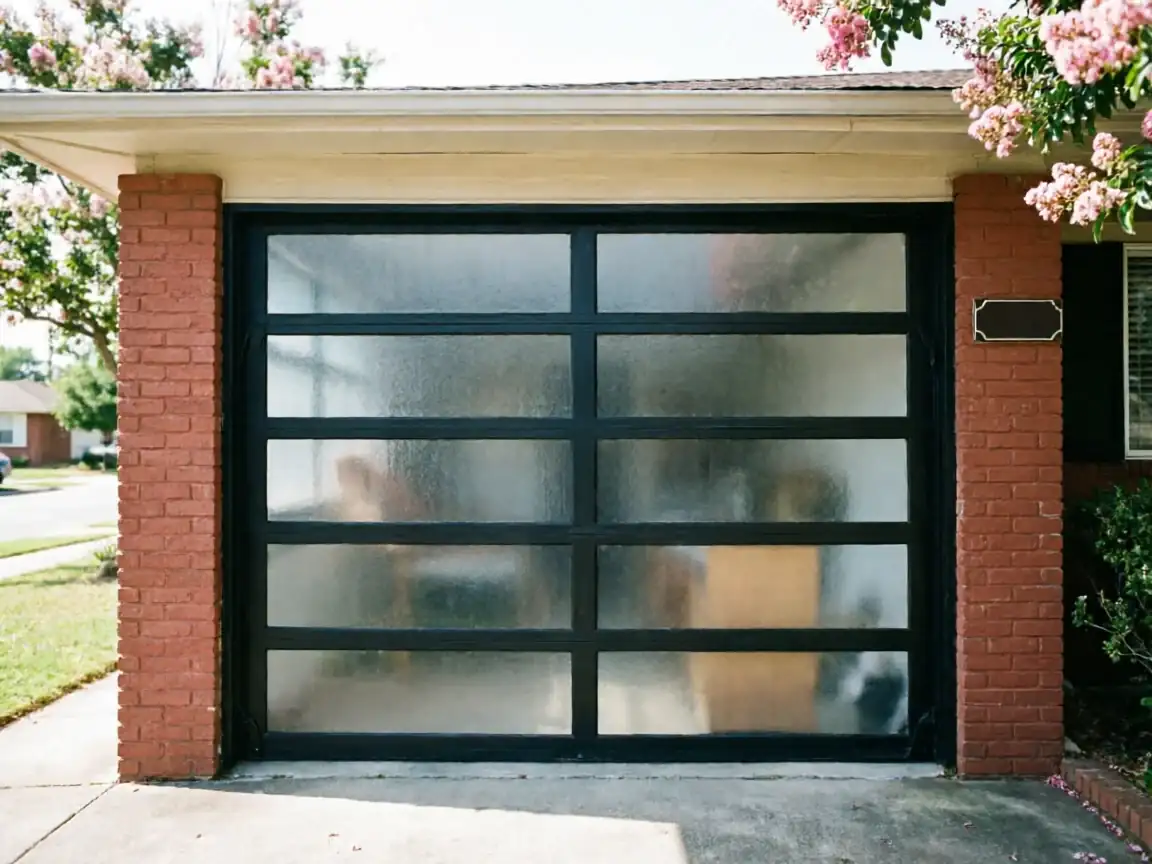
Why This Fails Locally
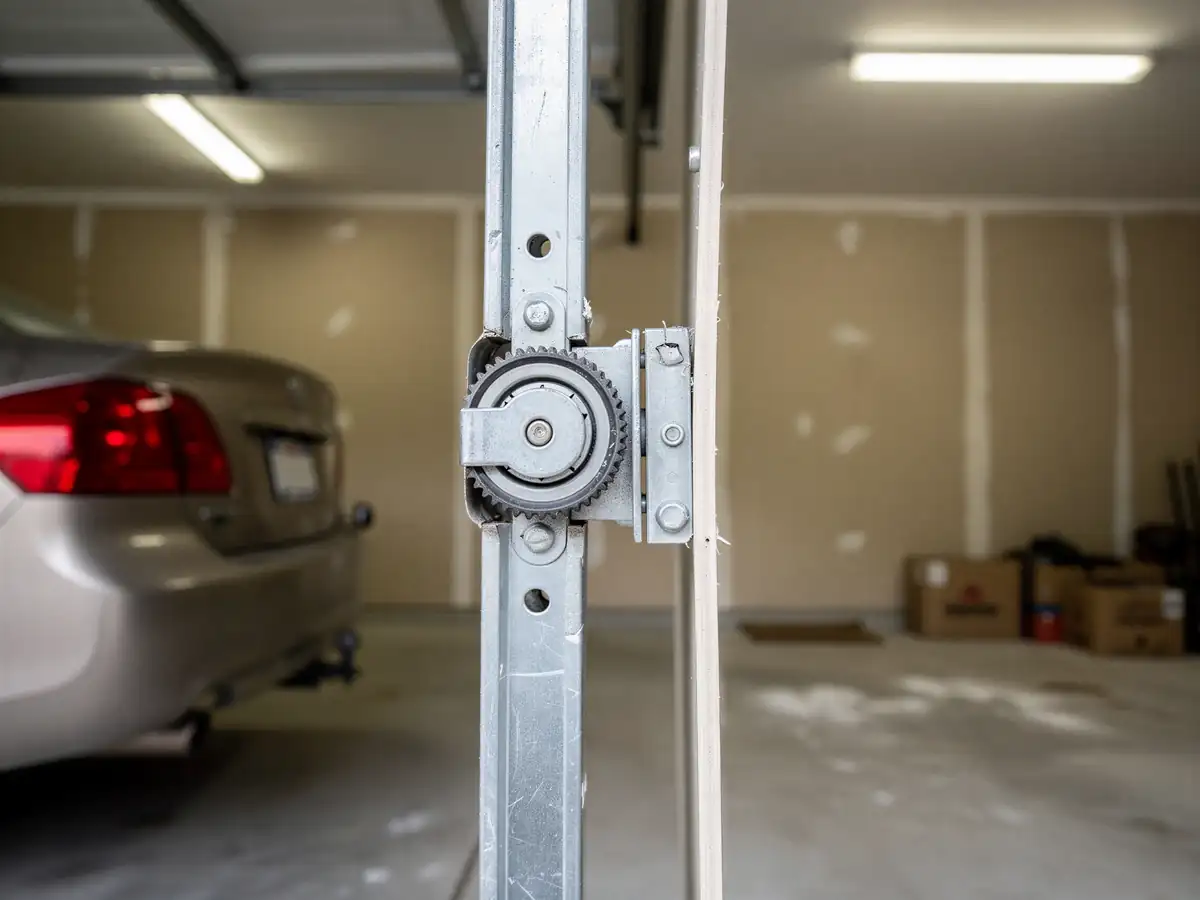
Most of the housing stock across this service area went up between 1971 and 2015, with the median build year sitting around 2005. That's a big stretch of builder-grade steel track and standard roller hardware, all installed to the code and budget of its decade, and a lot of it is now old enough that the brackets have started to sag at the lag screws.
The climate here is mild with only occasional freeze days, which changes the failure pattern compared to colder regions. You're not dealing with ice welding a track shut overnight. What you're dealing with is twenty-plus years of daily thermal cycling - warm afternoons, cool mornings, the occasional hard freeze - working the same bolts loose a sixteenth of an inch at a time until a roller finally walks out of the channel. It's slow, it's cumulative, and it shows up most in the subdivisions built in that 1971-2015 window, which is most of them.
Across the roughly 48,073 households and 39,491 owner-occupied houses in this area, off-track calls follow that same age curve almost exactly. Newer doors rarely do this. Doors from the builder-grade wave do it often.
The Symptom
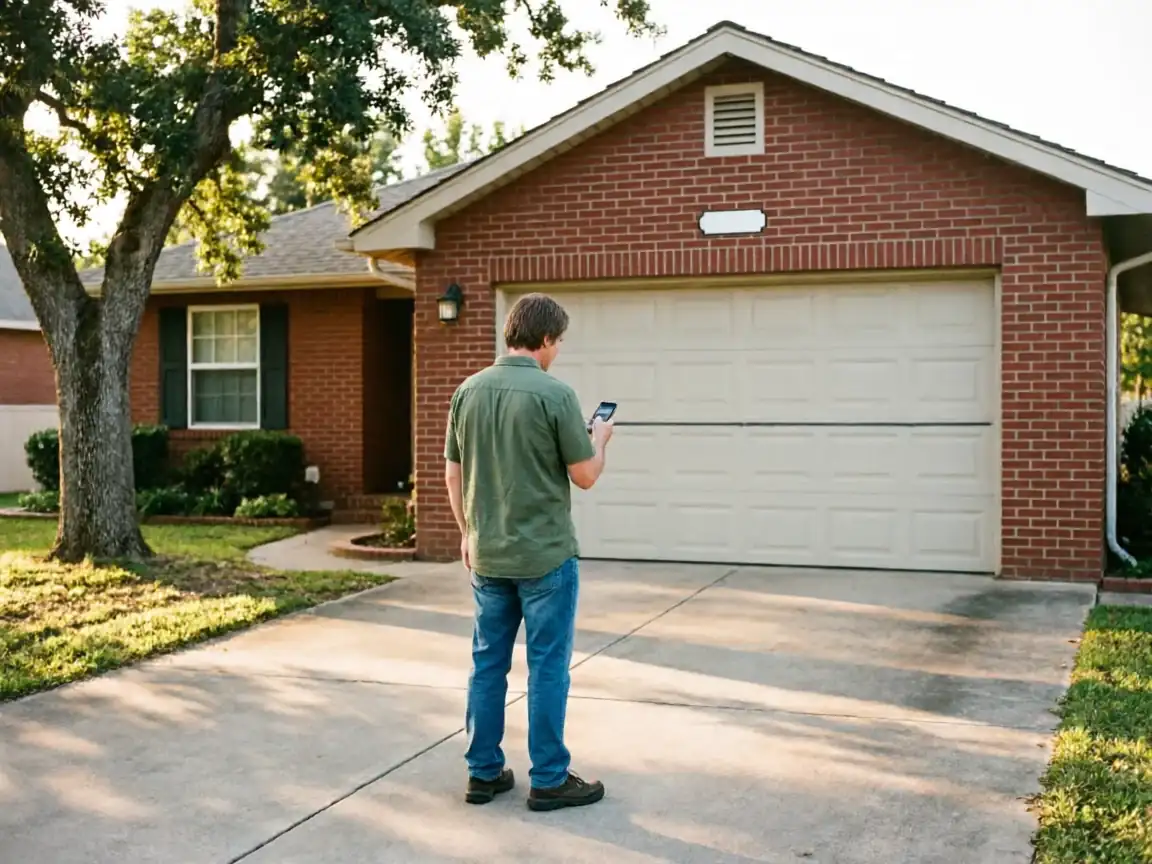
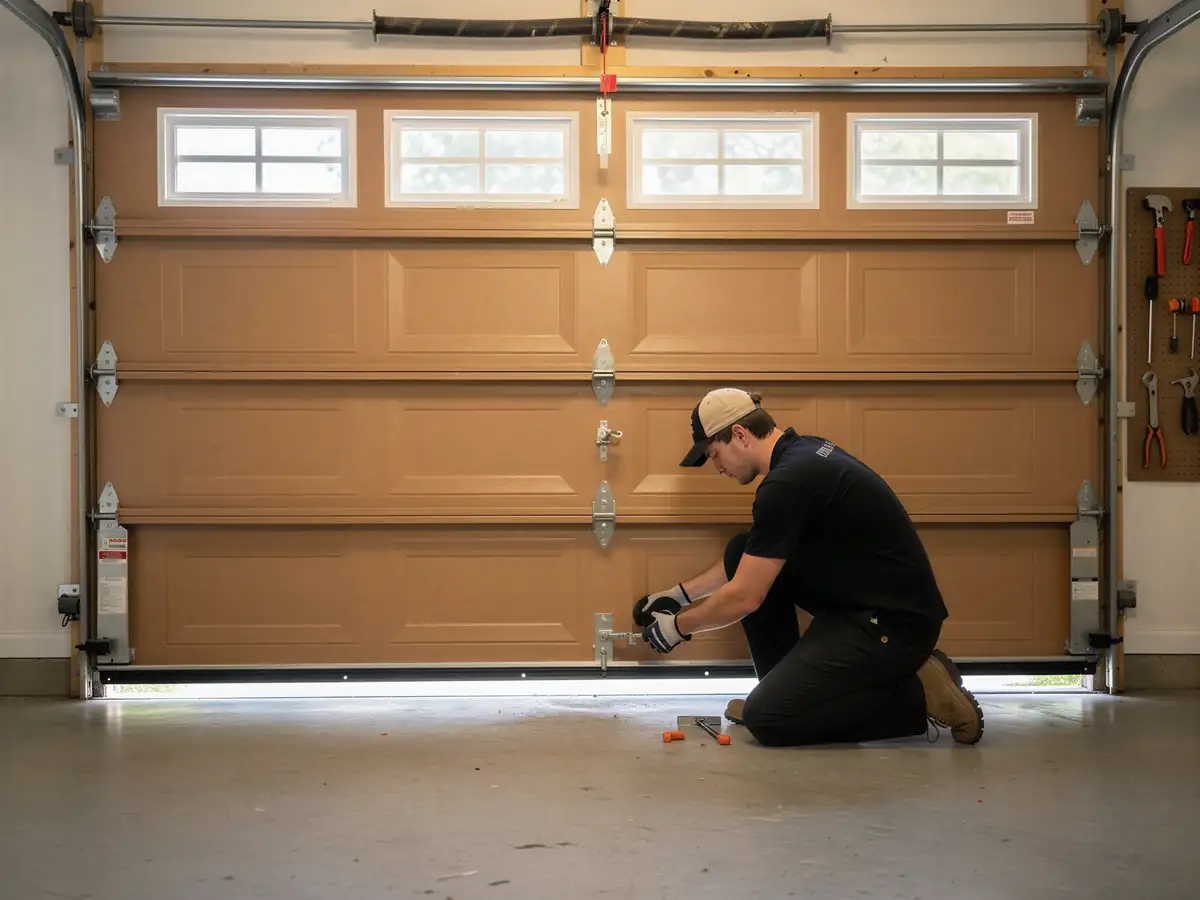
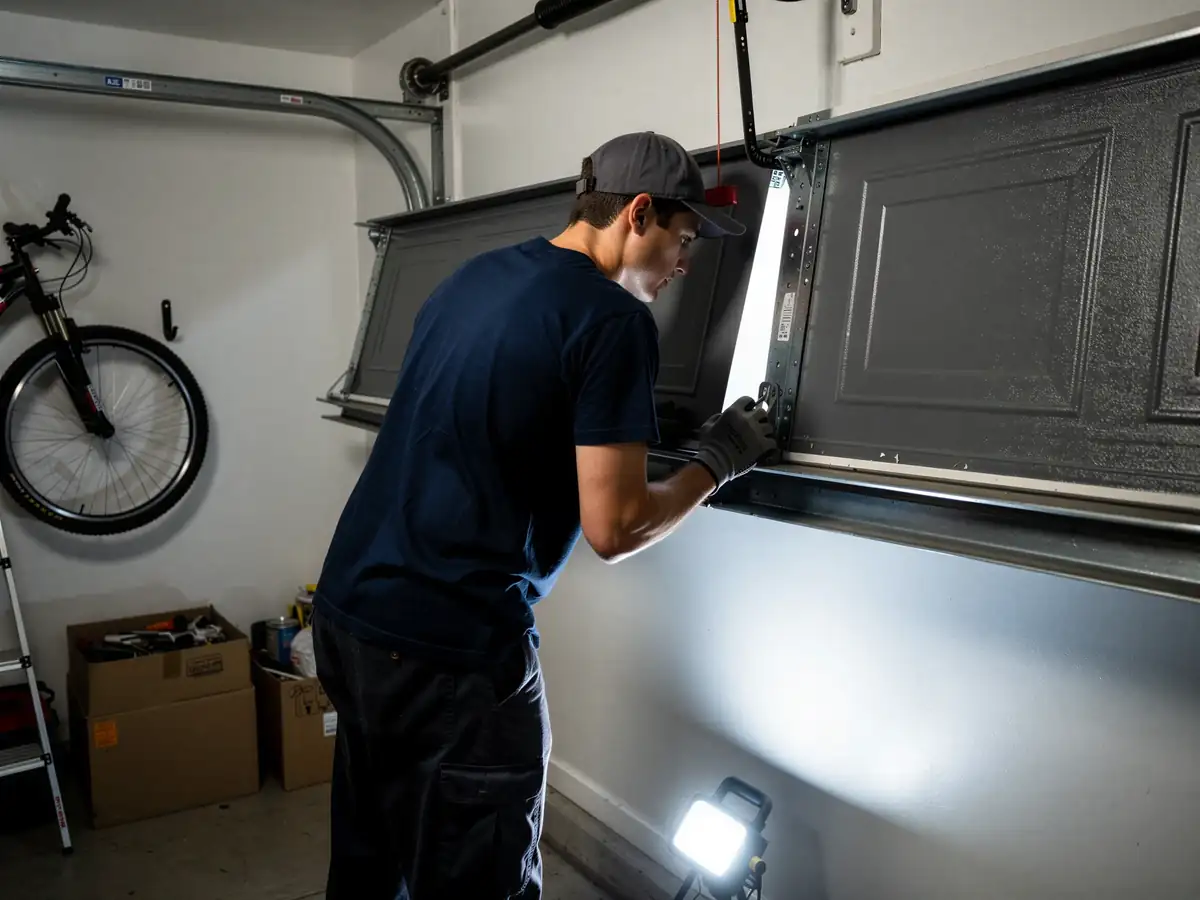
An off-track door usually announces itself before it fully jumps. You'll see a gap of daylight along one edge of a panel where the roller has slipped out of the channel, or the door will hang crooked in the opening instead of sitting flush. Sometimes it's quieter - a grinding or popping sound partway through the cycle, right before the door stalls.
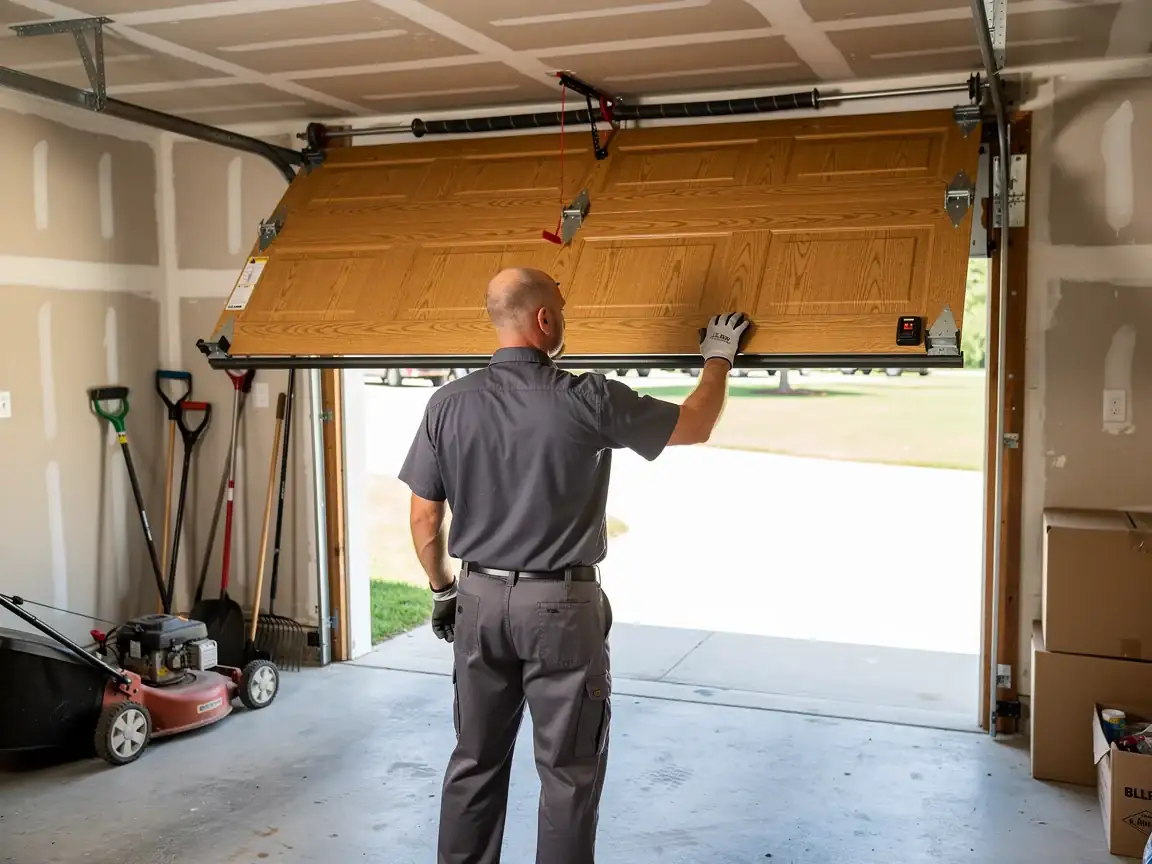
In the worst version, one side comes off the track entirely while the other side keeps moving, which twists the panel and can bend the track itself. If that happens, stop the opener immediately. Running a motor against a jammed or twisted door is how a $150 roller repair turns into a $600 track-and-panel replacement.
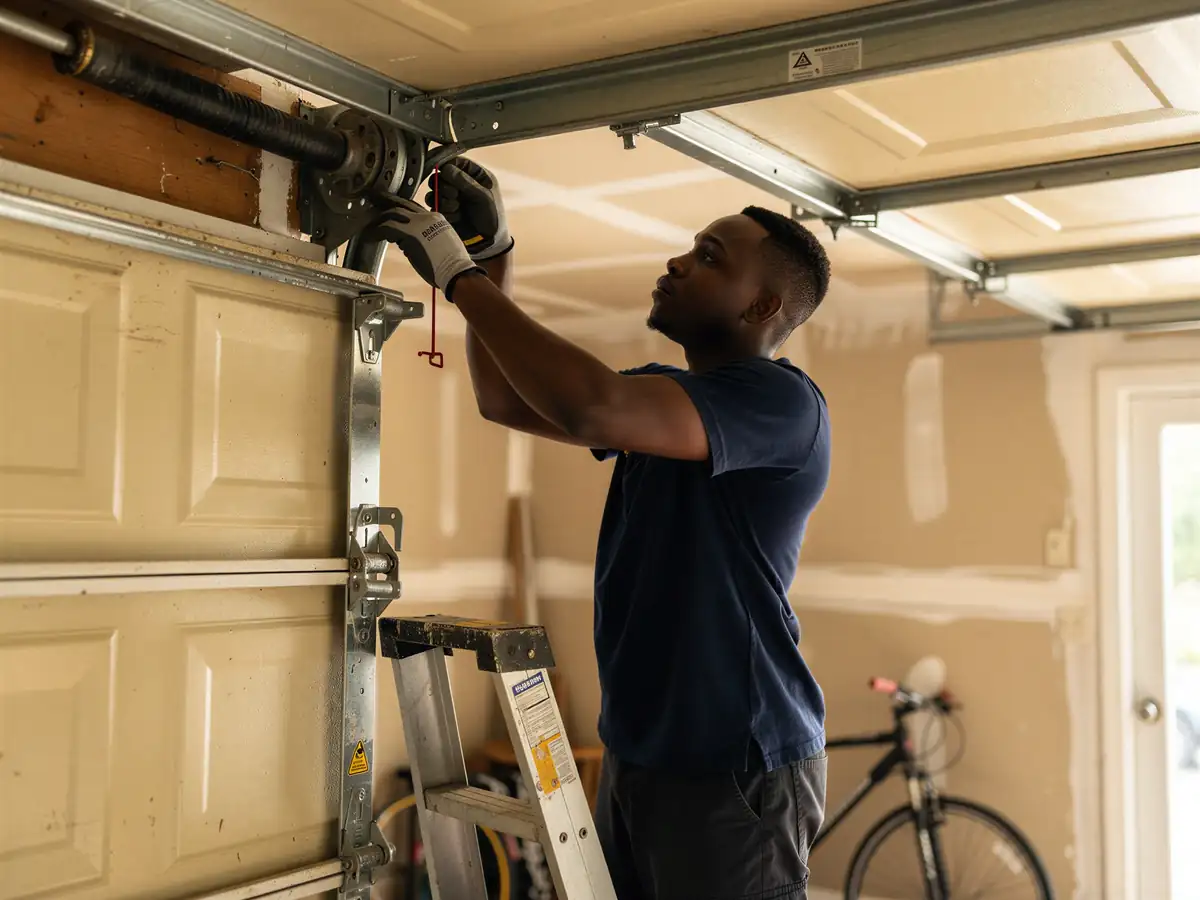
A loose or frayed cable is often the first domino. Once a cable starts to slip, the door rides unevenly, the roller takes side-load it was never built for, and it pops loose on the next cycle. If you've noticed one cable looking looser than the other, that's usually the root cause, not the track itself.
Can You Do This Yourself
You can safely check a few things without tools
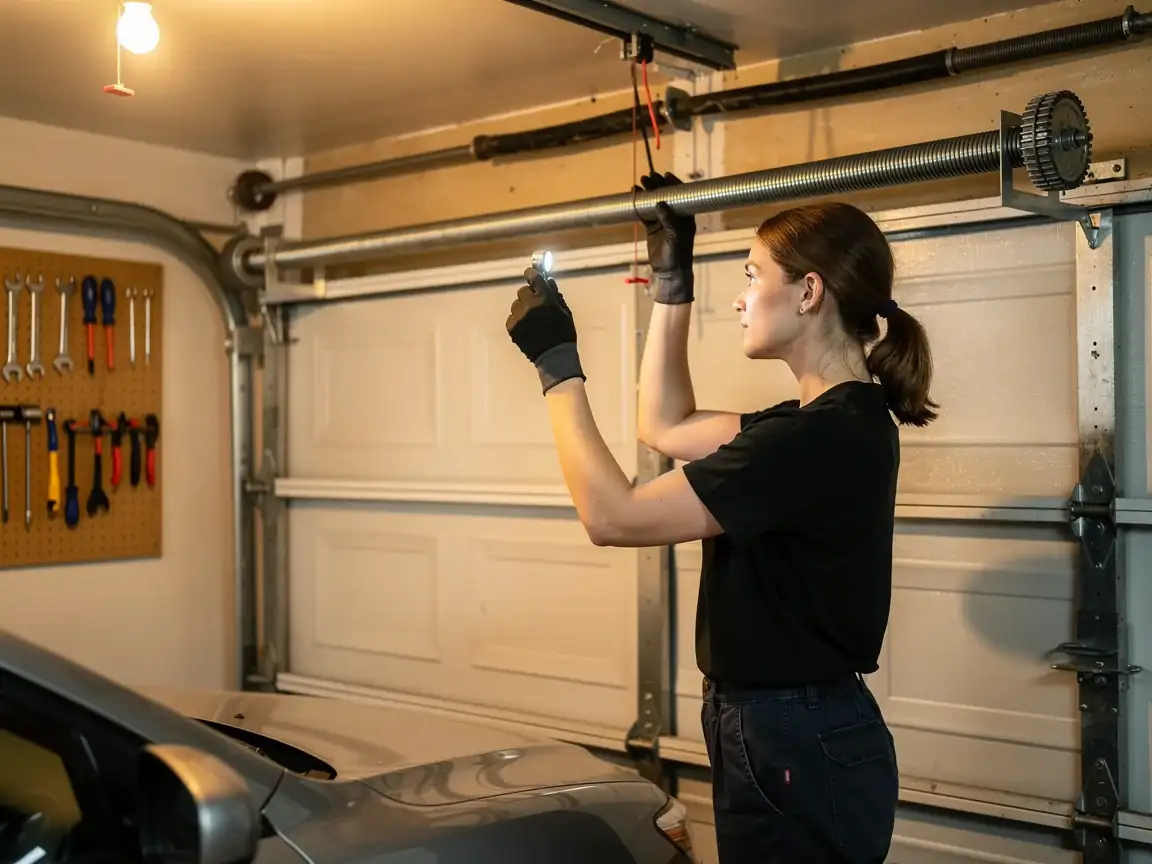
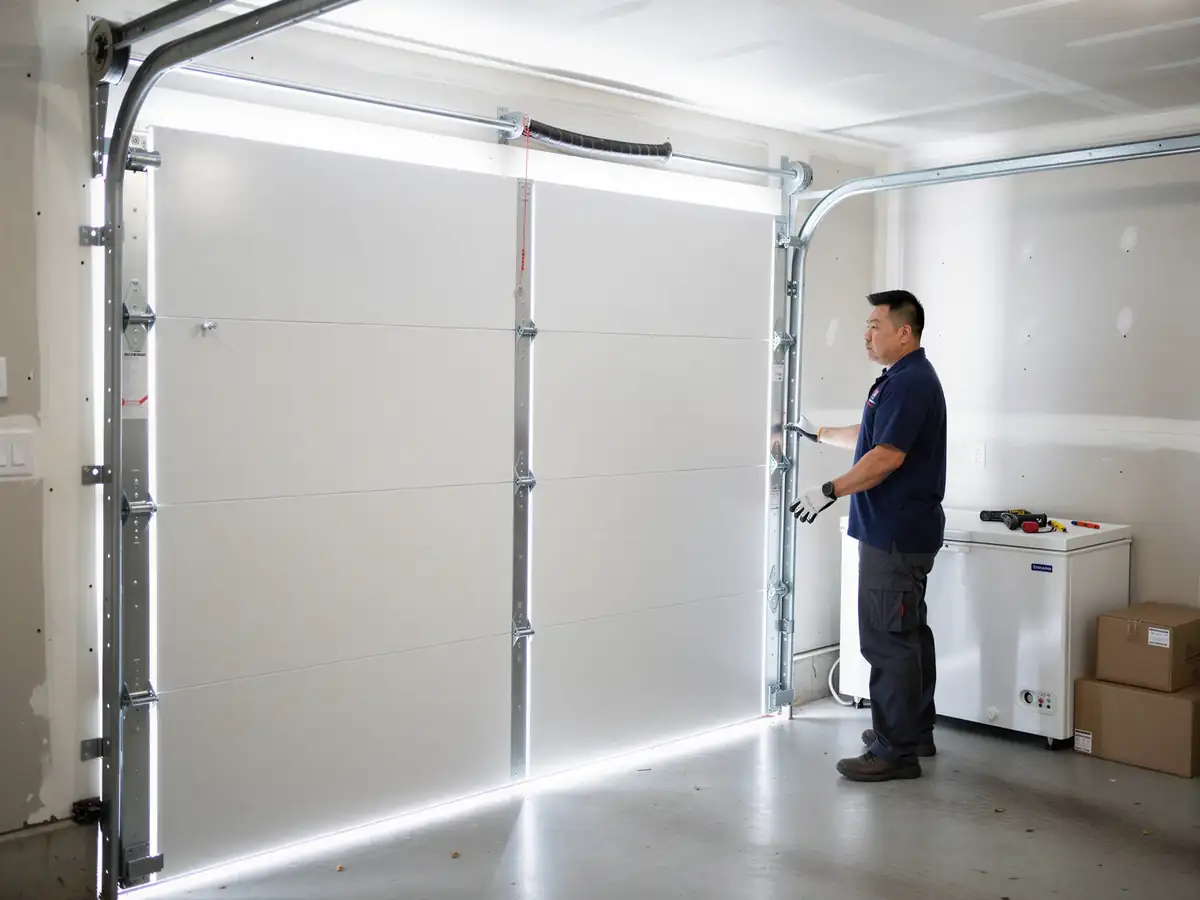
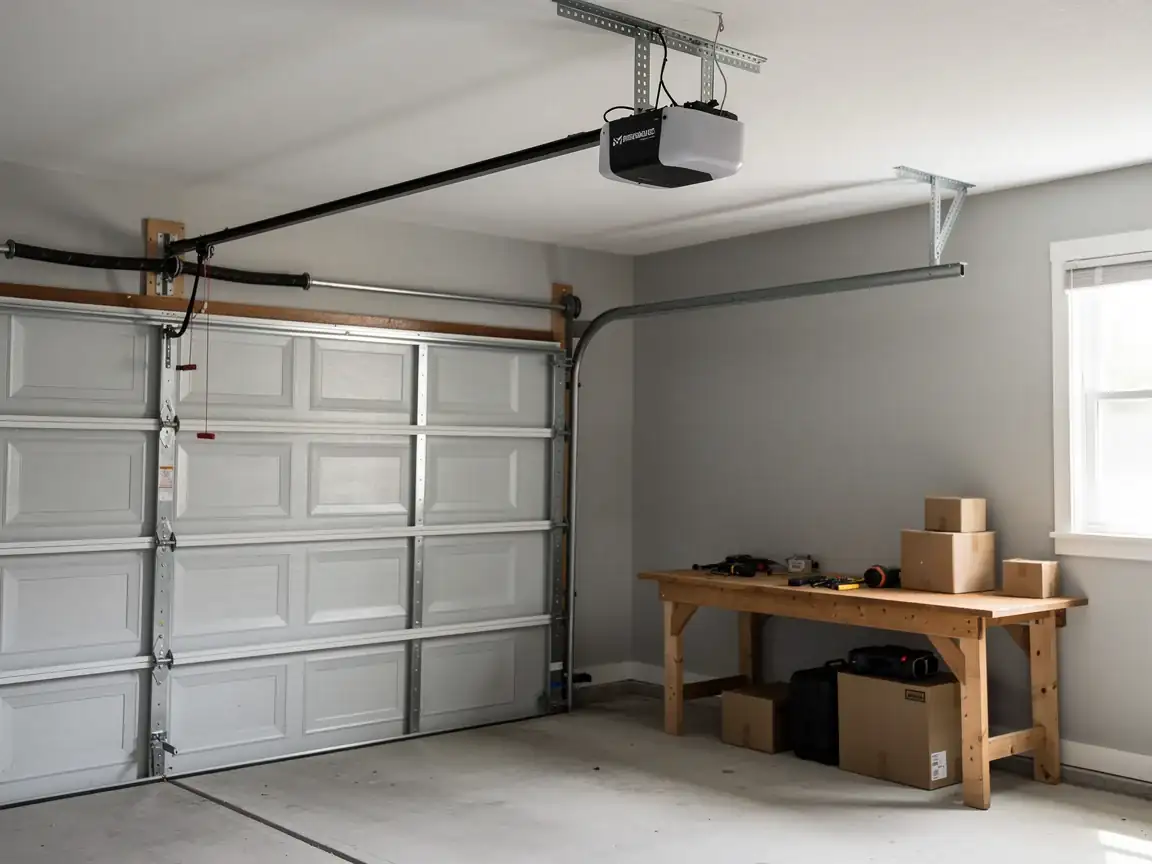
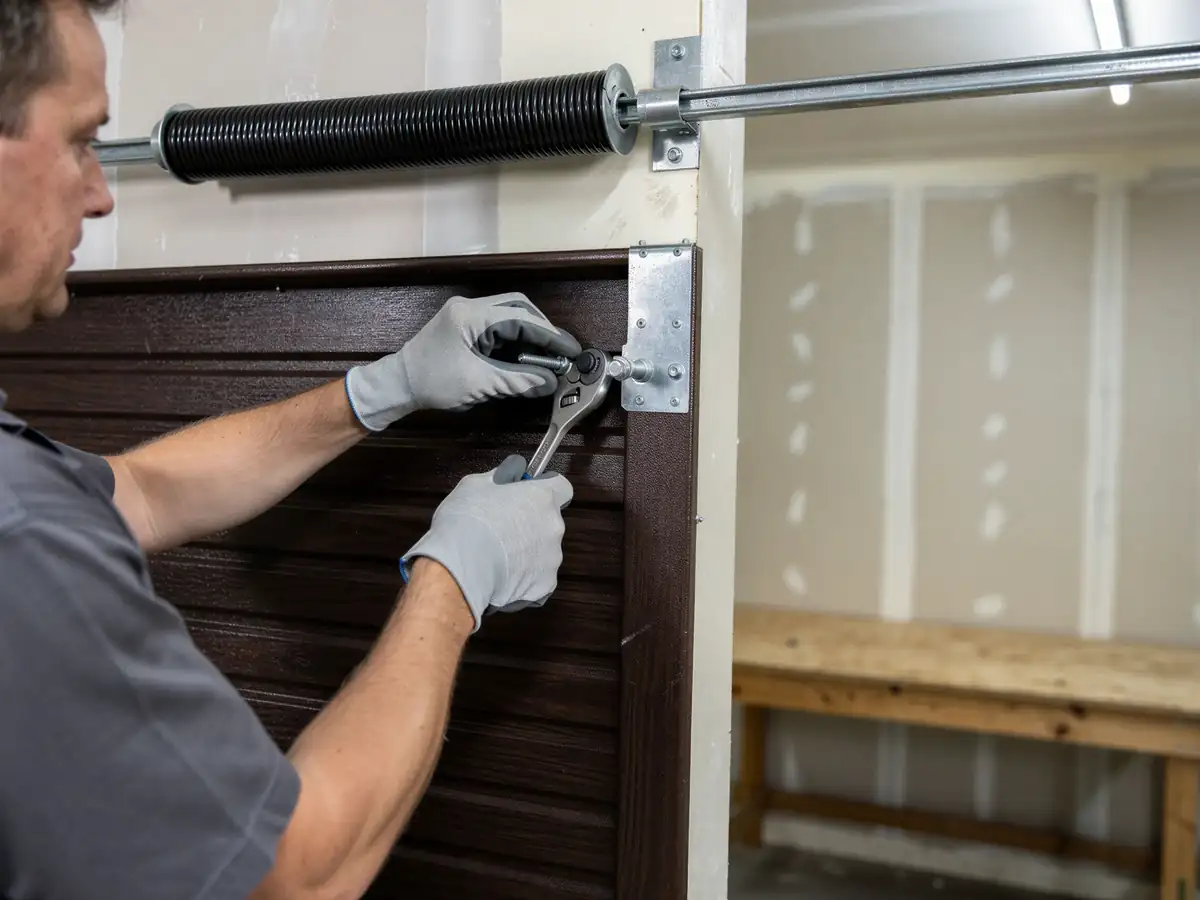
Look at the track brackets along the wall - if any are loose or pulled away from the stud, that's a job for a wrench, not a repair kit, and it's worth having someone look at the fasteners behind it too. You can also visually check whether both cables are under equal tension and whether any strands are frayed near the bottom bracket.
What you shouldn't do yourself is force the door back into the track while it's under spring tension
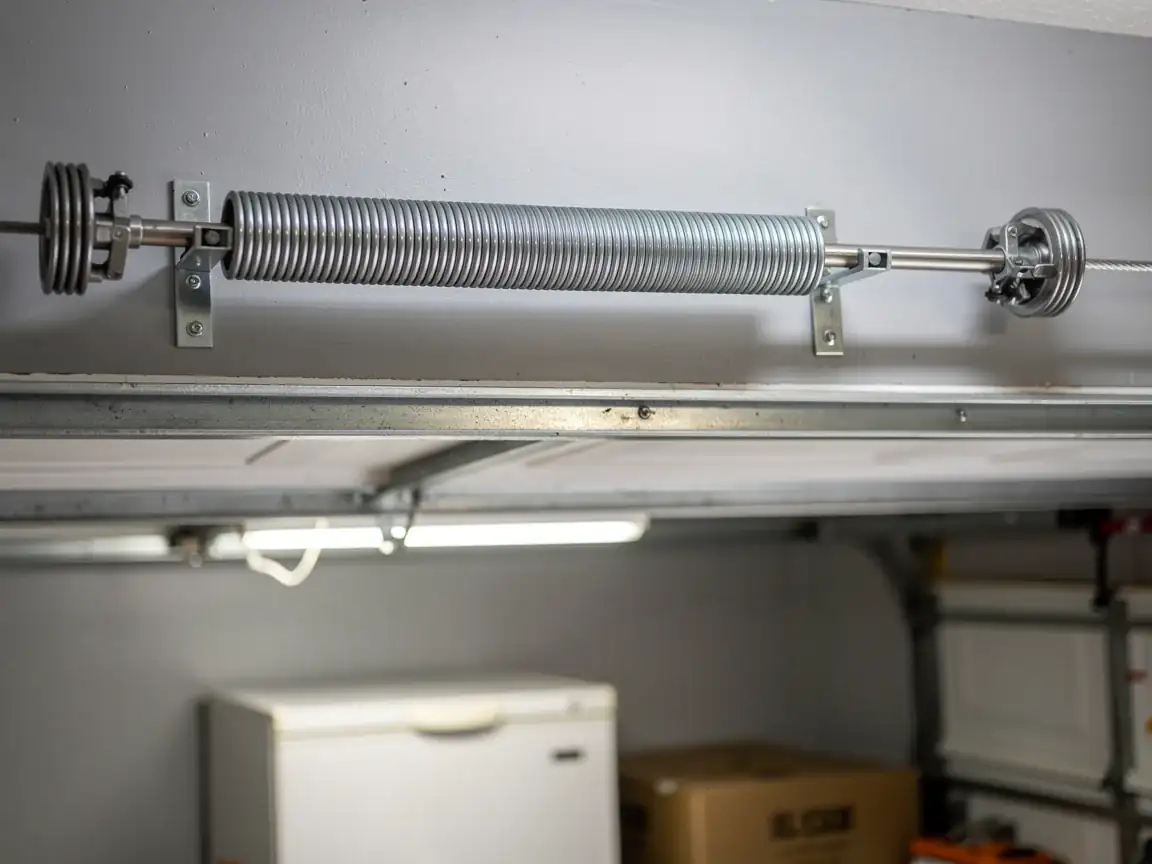
Or try to realign a track while the torsion spring is still wound. That's the one place we draw a hard line - torsion springs store enough energy to break bones, and we don't walk homeowners through adjusting them over the phone. If the door is off track and won't move freely by hand with the opener disconnected, leave it alone and call.
If it's just one roller out near the bottom of the track and the door still moves freely by hand
A careful person can sometimes guide it back in. Past that, the risk isn't worth the savings.
How to Book
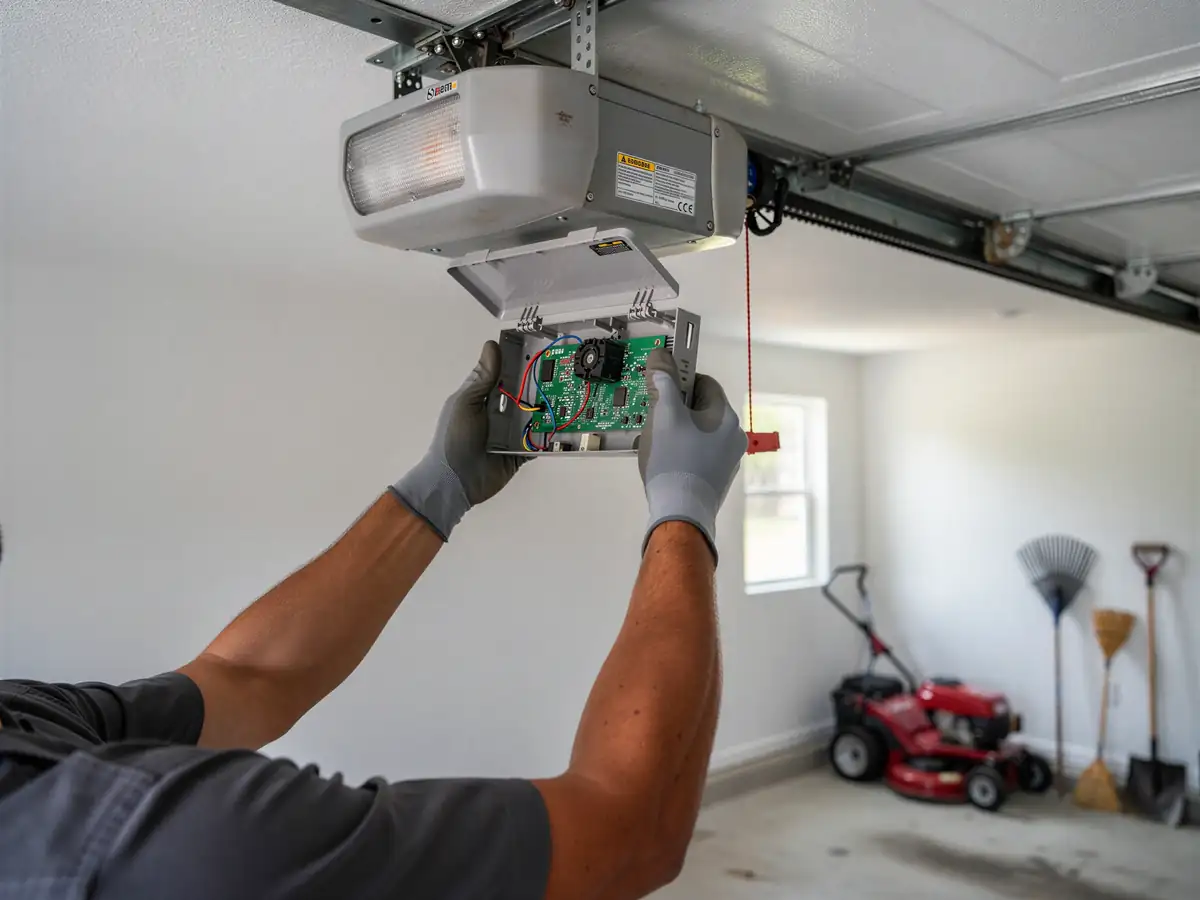
If your door is off track, stalled, or hanging crooked, don't keep running the opener against it - that's how a one-roller fix becomes a bent track and a new panel. Disconnect the opener if you can do it safely, leave the door where it sits, and reach out through our site to get a job scheduled.
We work across the towns in this service area, from St. Paul and Lavon close in to Murphy, Lucas, Parker, and the towns further out toward Princeton and Melissa. Wherever you're calling from in that stretch, the track issue itself is usually the same builder-grade wear pattern - we just need the make and rough age of your door to bring the right rollers and bracket hardware on the truck.
Start here: Wylie Garage Door Pros.