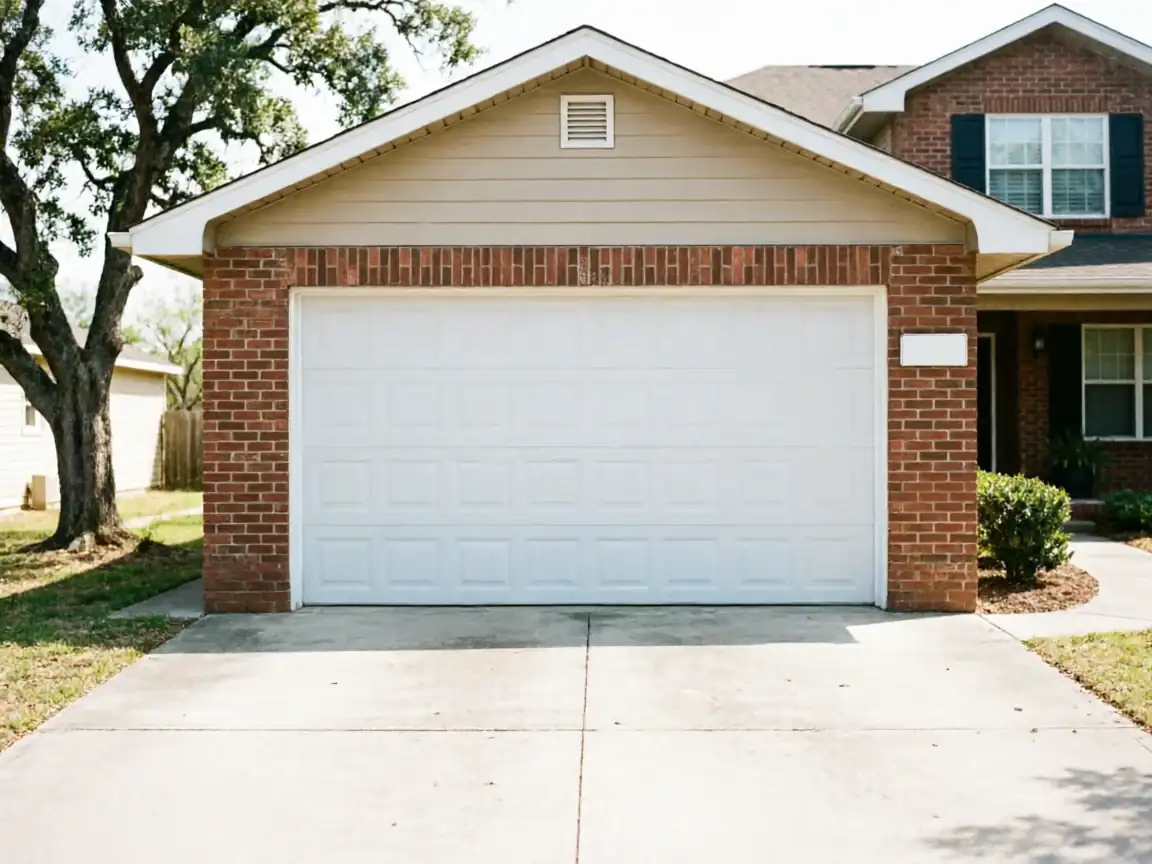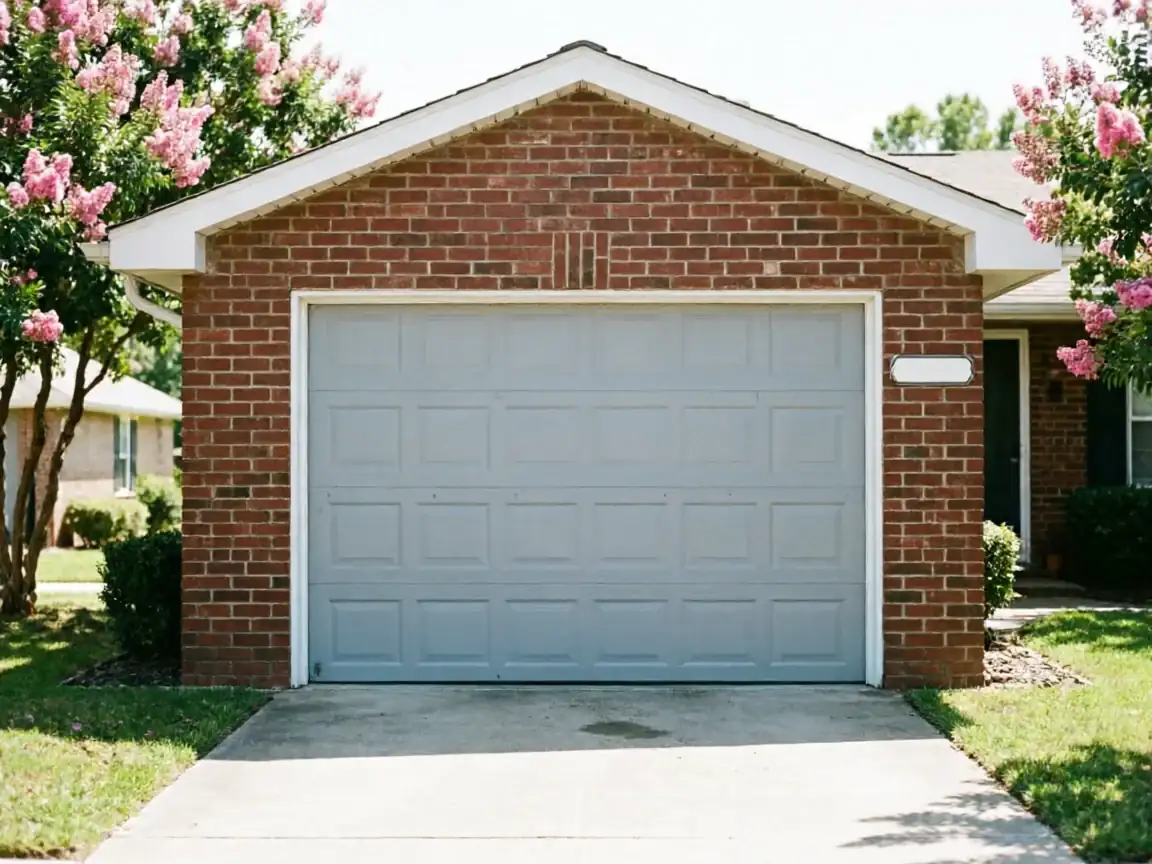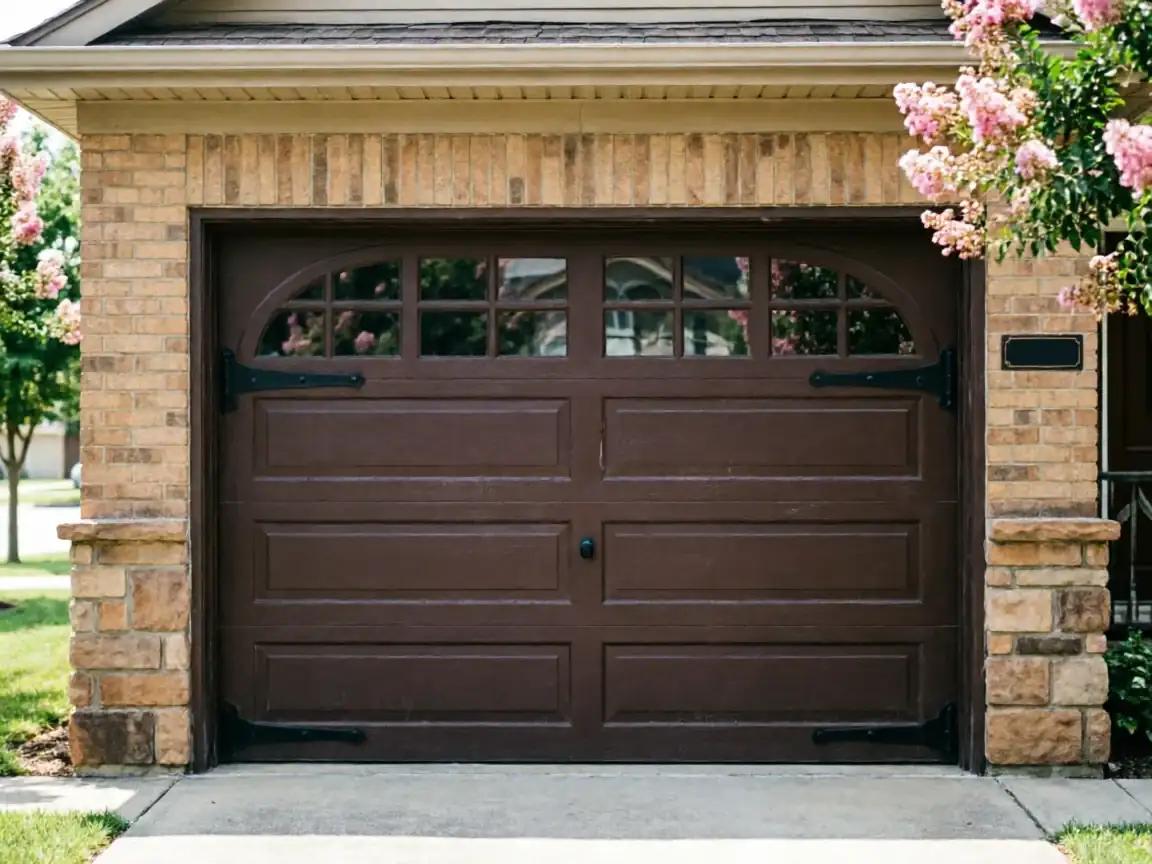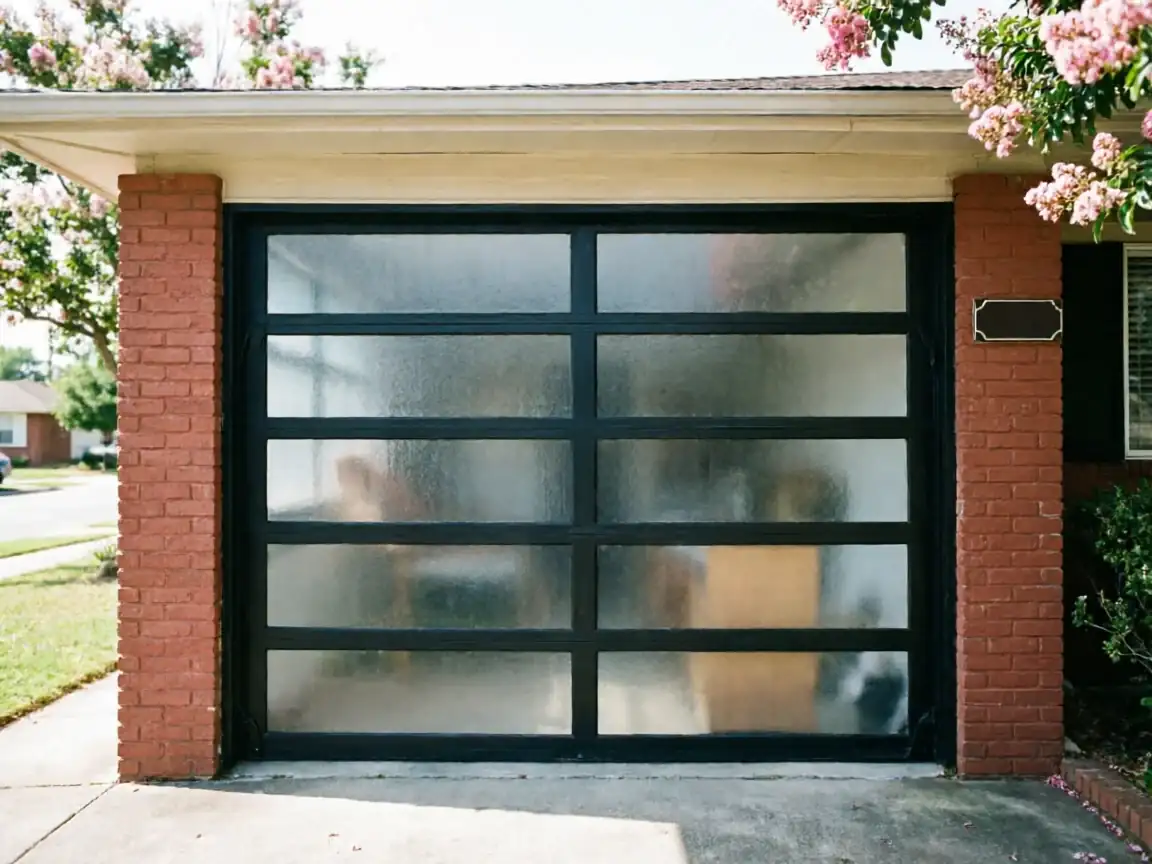
Why This Fails Locally
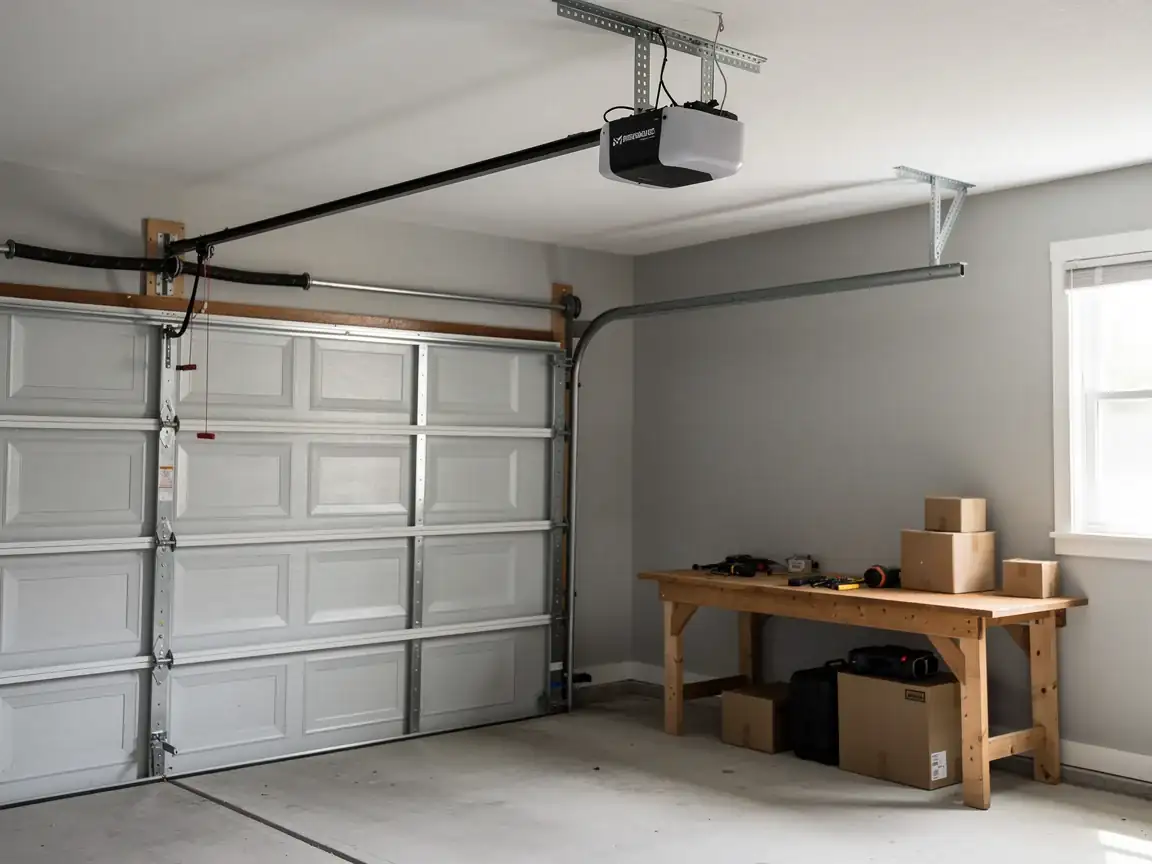
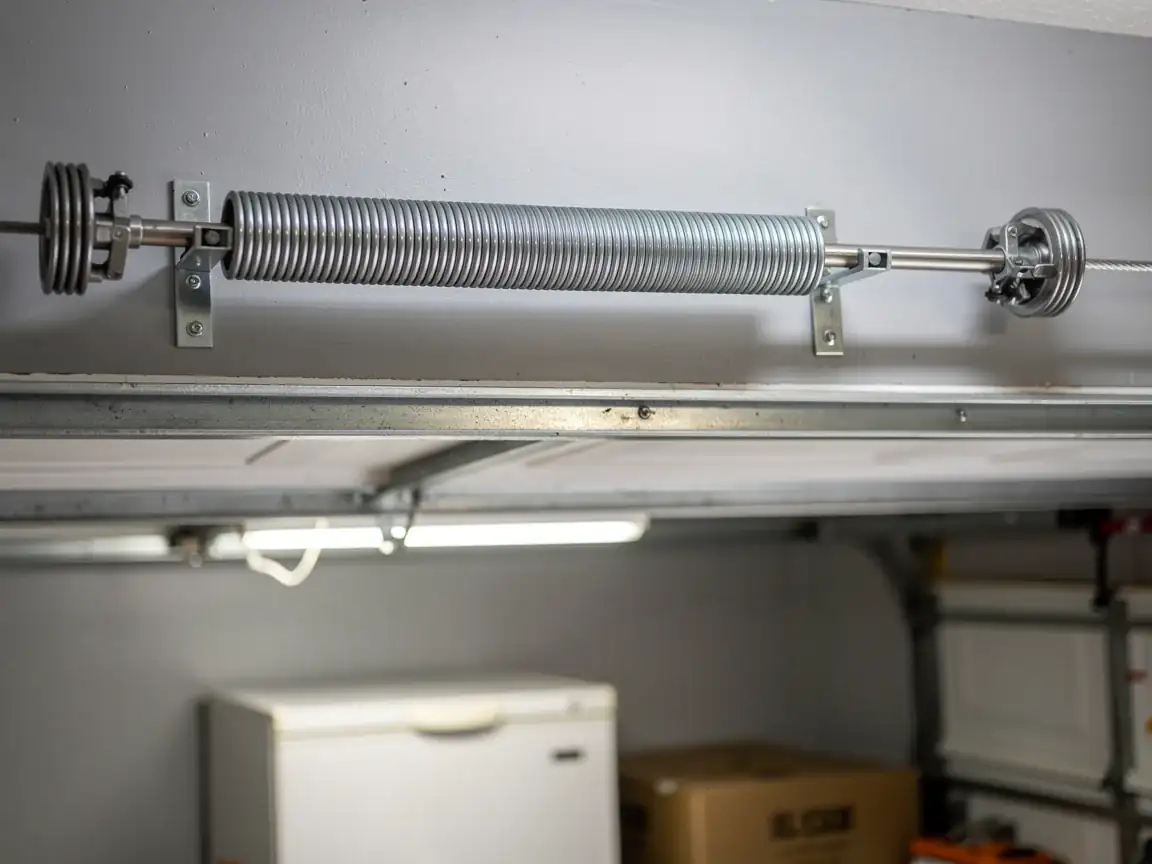
Most of the housing stock in this service area went up between 1971 and 2015, with the median build year landing around 2005. That means the typical door you're dealing with isn't an old one-piece relic - it's a late-90s to mid-2000s steel sectional door on a standard torsion spring, installed by a builder crew working fast across one of twenty subdivisions going up at the same time. Those springs are rated for a set number of cycles, usually somewhere around 10,000, and a door opening four times a day for twenty years is right at the edge of that number or past it. That's the failure you're actually calling about, not bad luck.
The climate here is mild with occasional freeze days, which doesn't crack doors the way a hard freeze-thaw region does, but it does mean metal fatigue runs on time and temperature cycling rather than ice. Springs lose tension slowly in the heat, then snap on a cold morning when the steel contracts and the last bit of give is gone. Rollers dry out the same way. None of this is a defect specific to one house - it's what happens to a 15-to-20-year-old torsion system in this kind of weather, on this kind of build schedule.
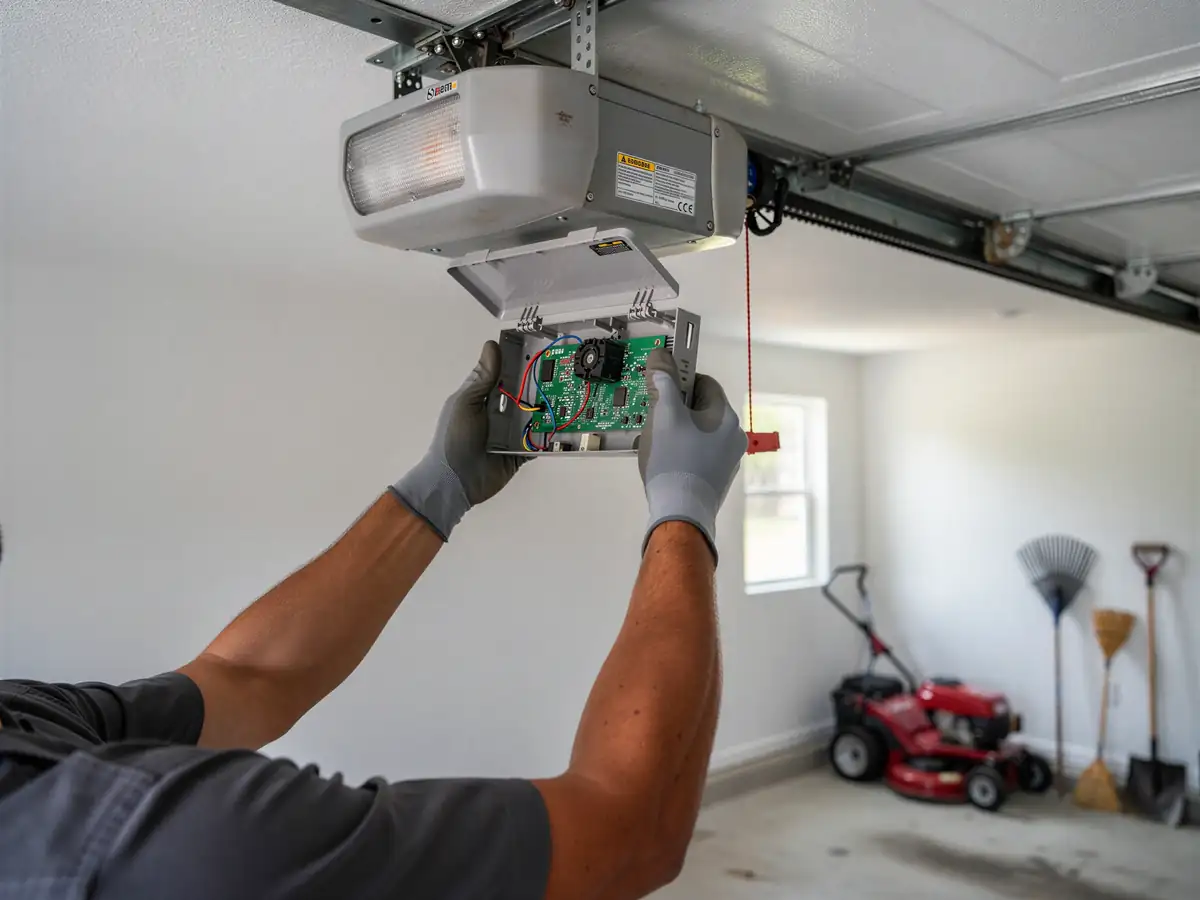
When the call comes in as an emergency, it's almost always one of these two things: a spring that let go, or an opener logic board that finally gave out after years of the same cycle count.
The Symptom
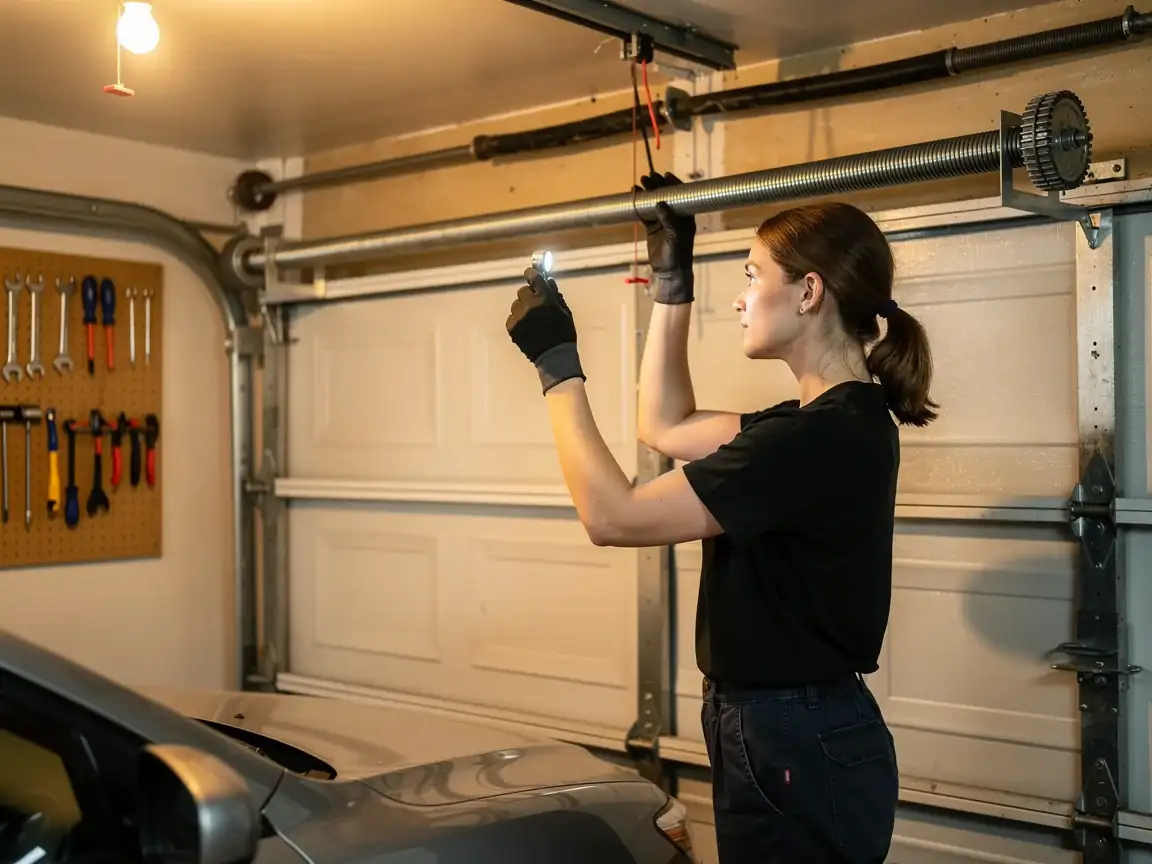
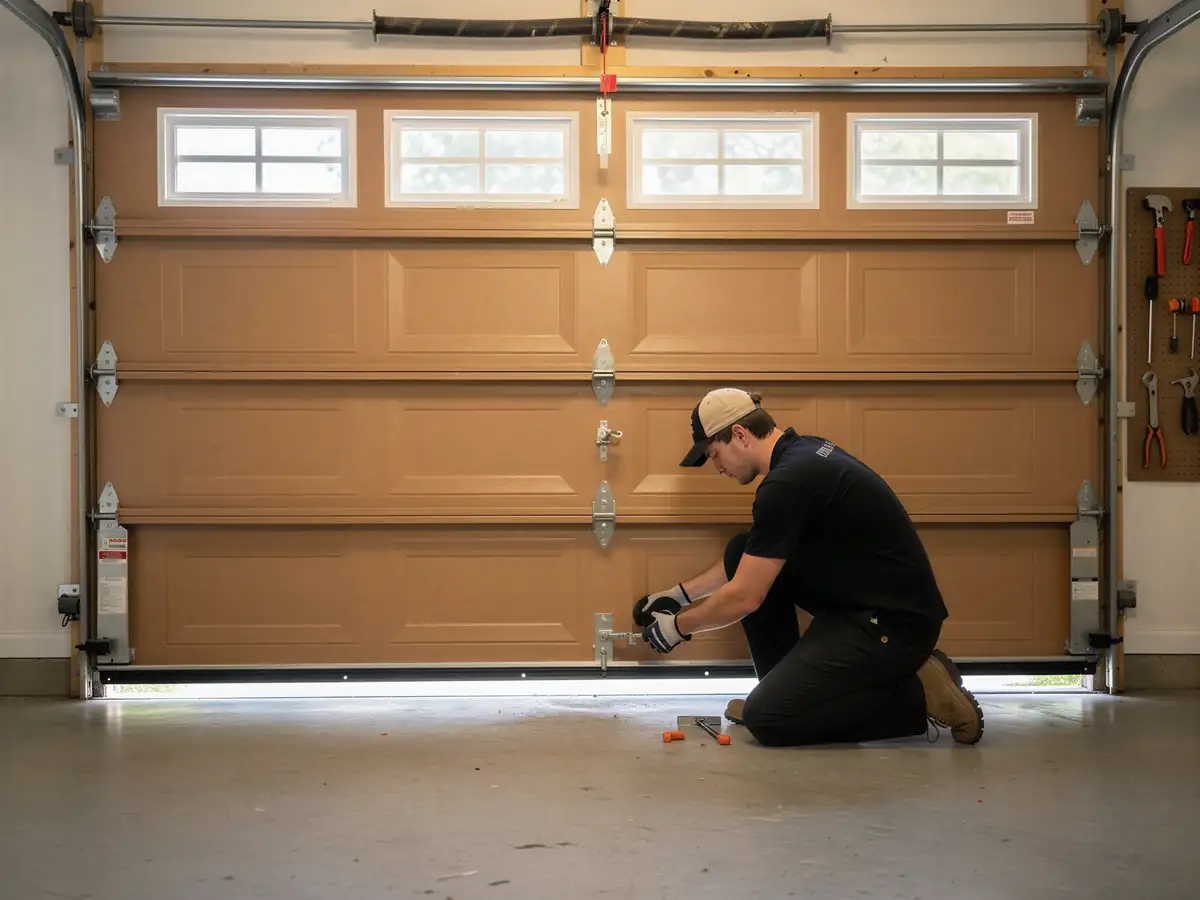
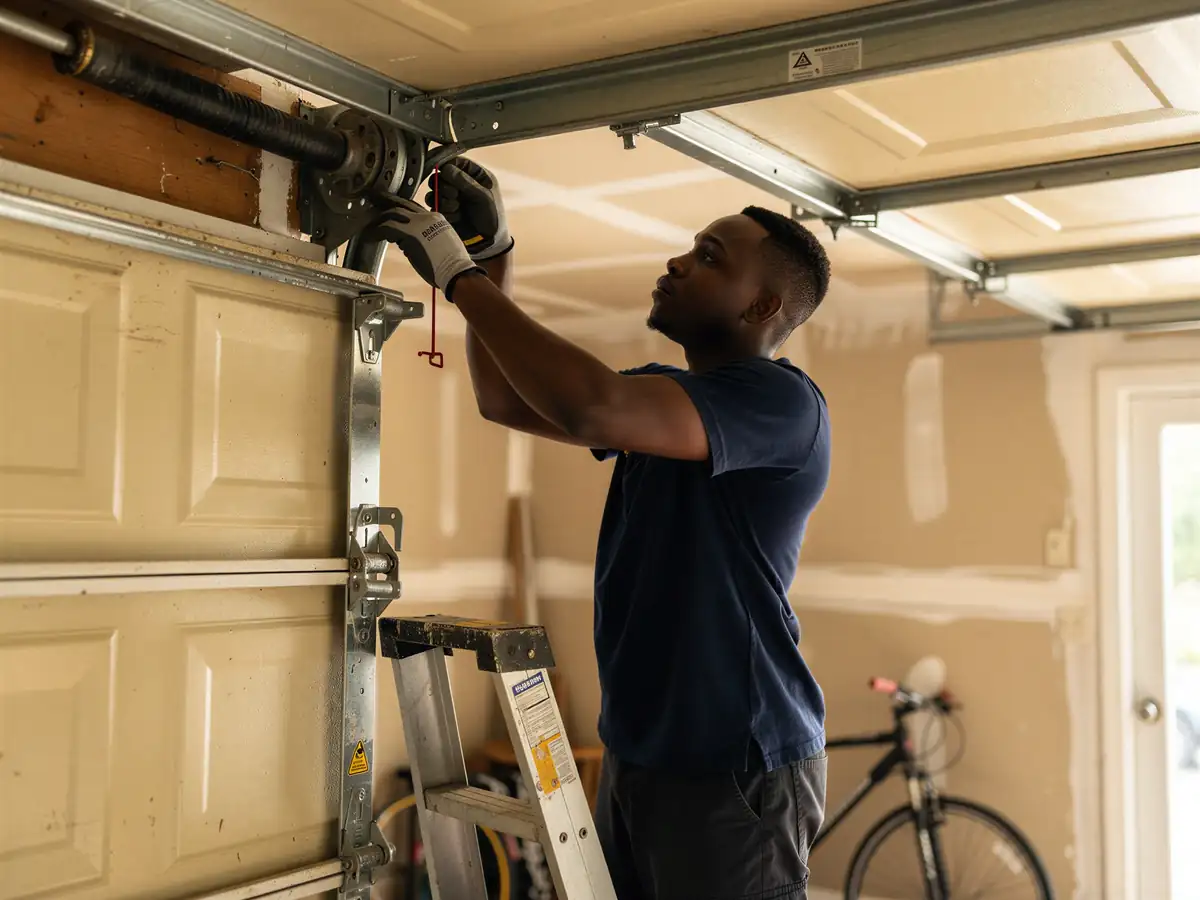
A broken spring usually announces itself with a bang from the garage, then a door that won't lift past a few inches or won't lift at all - the opener strains, the motor hums, and nothing moves. That's a torsion spring, and on a double door there are usually two, wound to the same tension and aging at the same rate, so if one goes, the other is close behind.
A dying opener looks different: the light blinks, the remote clicks, but the carriage doesn't travel the track, or it reverses halfway up for no reason. On homes built in the 2000s boom, a lot of these original openers are still the first unit installed - they've outlived their expected run and the logic board is the part that quits, not the motor.
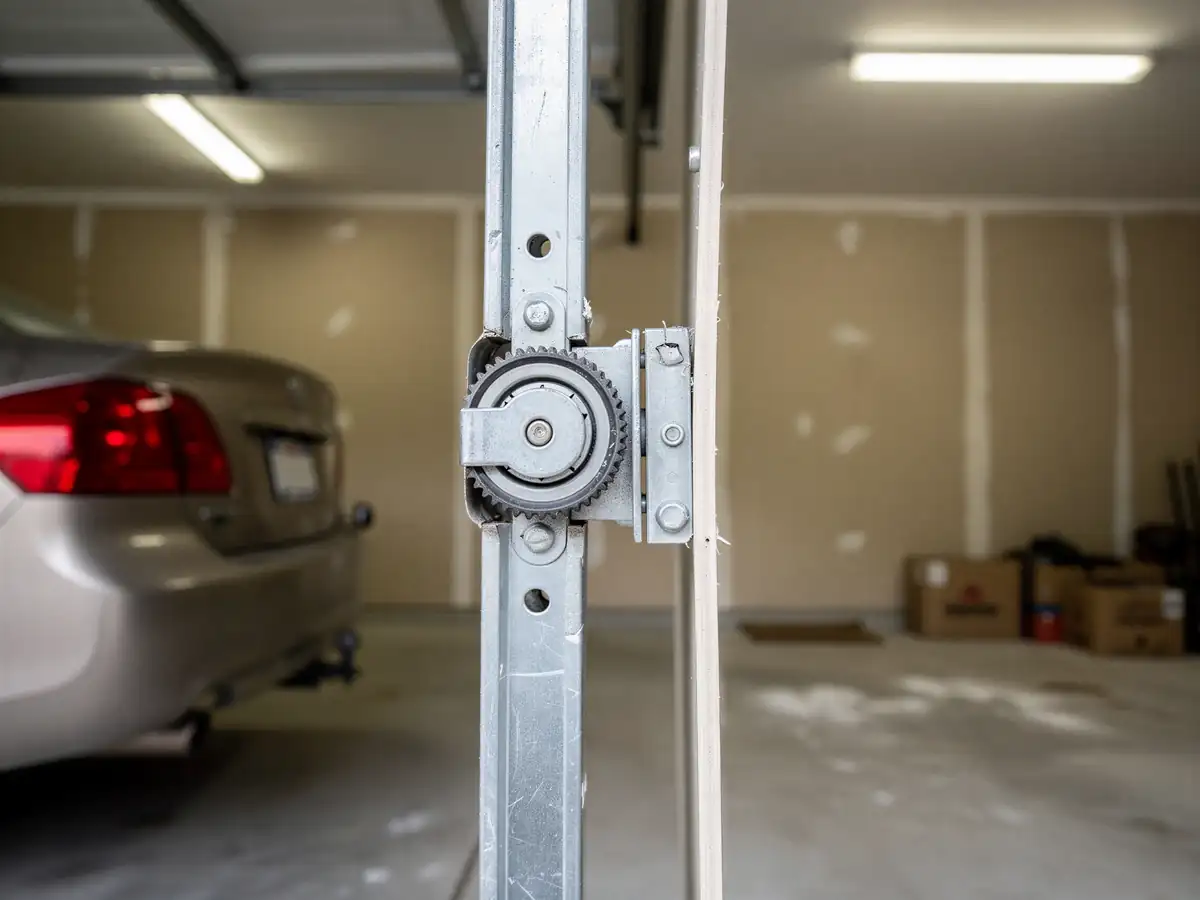
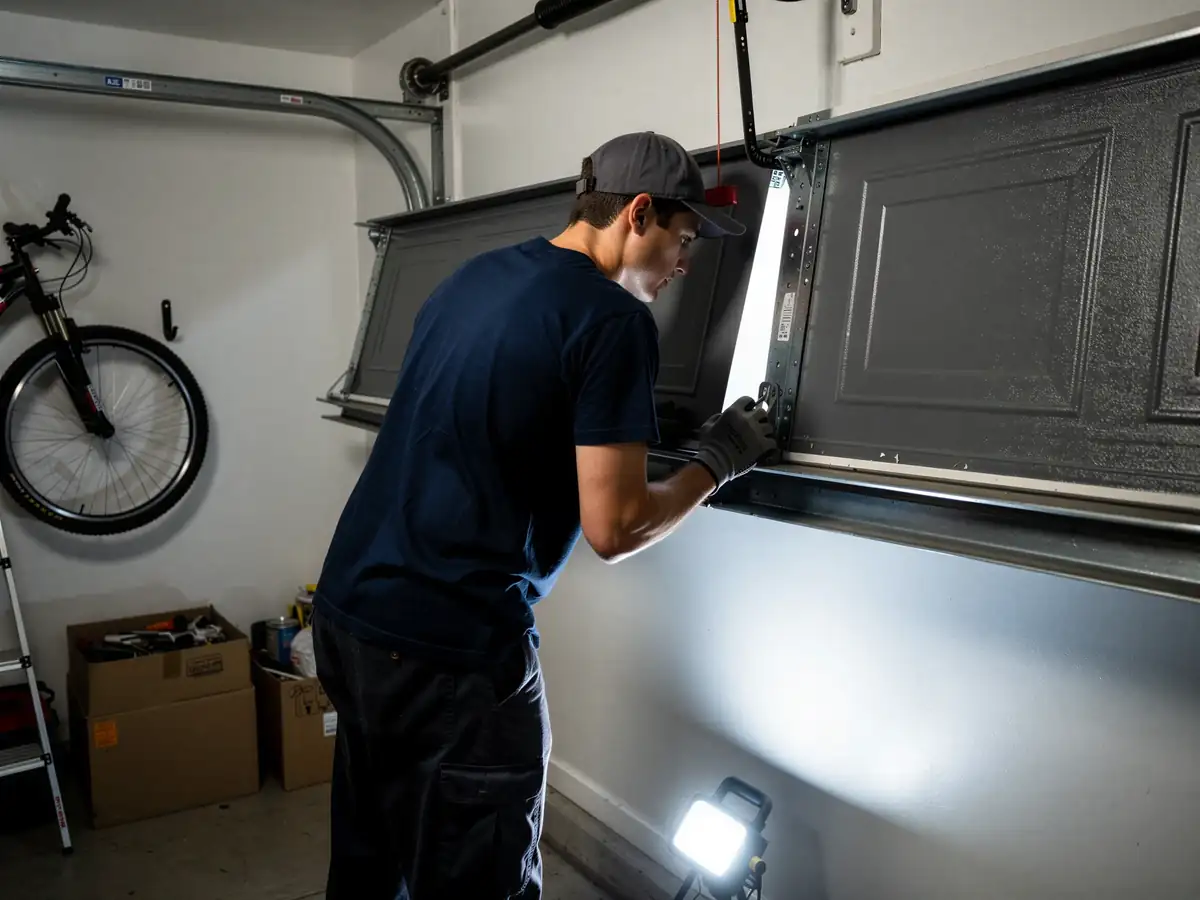
Cables that fray or jump the drum show up as a door that hangs crooked on one side, dropping faster on the left or right as it closes. That's not cosmetic - a cable under tension that lets go can swing the bottom panel hard enough to damage the frame or anything standing near it.
Any of these three - snapped spring, dead opener board, slipped cable - is what counts as an emergency here, because a door stuck half-open or half-closed isn't secure and isn't safe to force.
Can You Do This Yourself
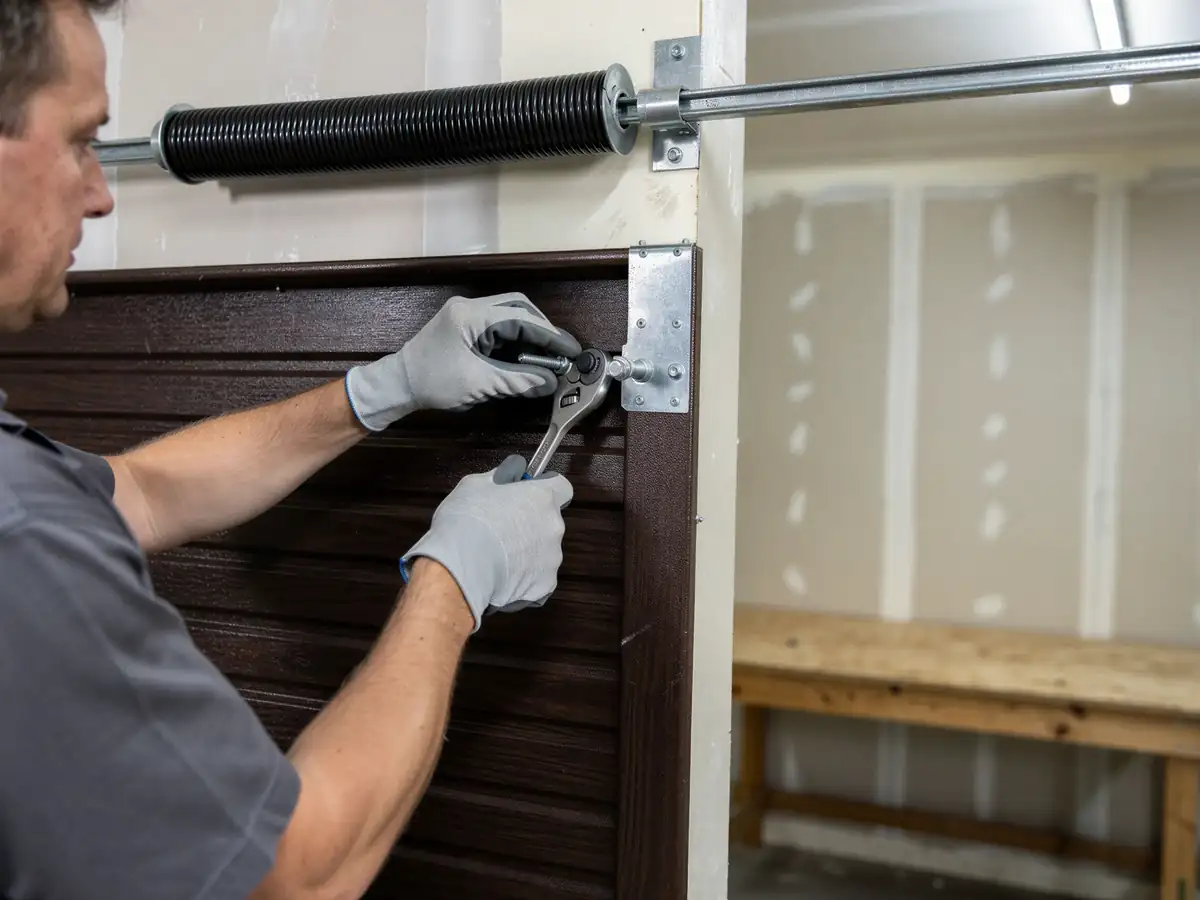
Don't touch the torsion spring
It's wound under enough tension to break a wrist or worse, and the tools to do it safely aren't something most homeowners own or should buy for a one-time job. That's the honest limit - this isn't a YouTube repair, it's the one job on the whole list of garage door tasks that calls for a professional every time.
What you can check before calling
Make sure the opener isn't simply unplugged or tripped on a breaker, check that the photo-eye sensors near the floor aren't blocked or knocked out of alignment (a blinking opener light is often just this), and look at the manual release cord to see if someone pulled it by accident, which disconnects the opener from the carriage entirely.
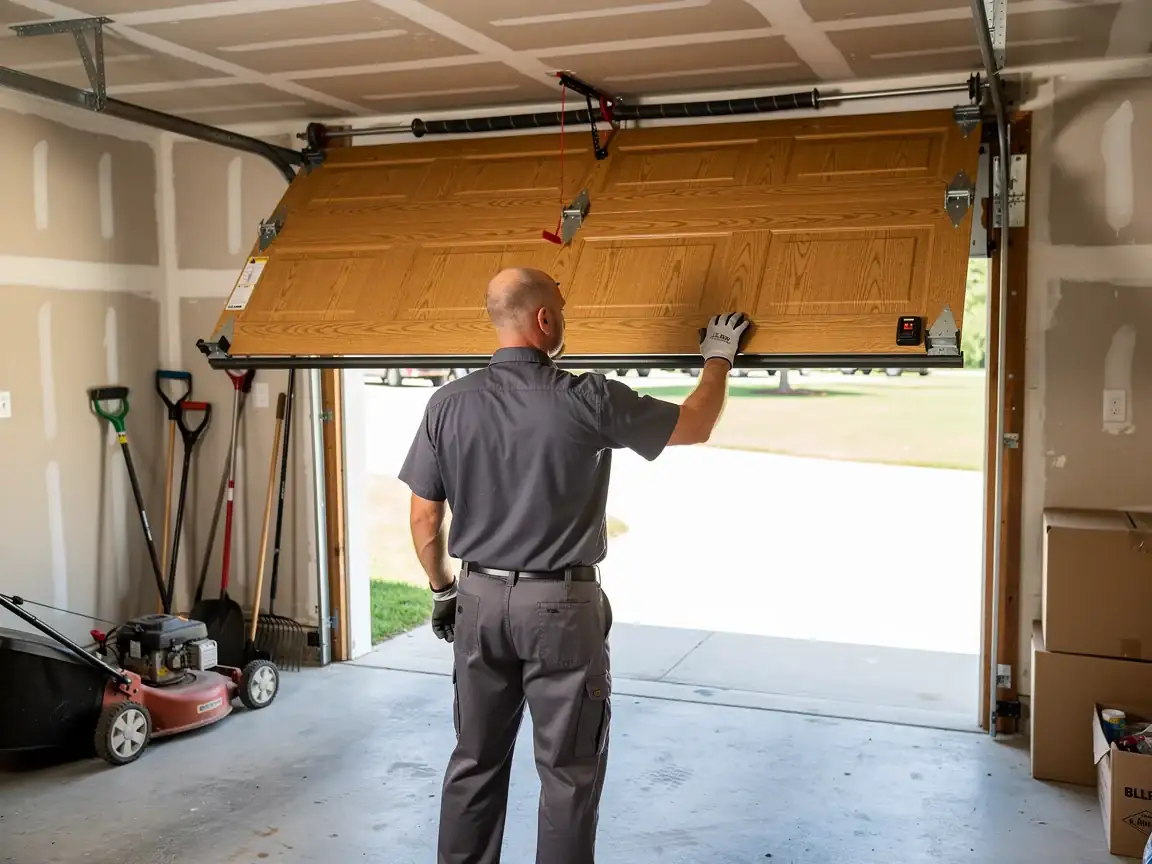
If the door is stuck part-way and you need the car out now, the manual release lets you lift the door by hand
Carefully, since without the spring doing its job a sectional door can be heavier than it looks, especially a double-wide. Get it up, block it if you can, and leave the repair itself to someone with the right bar and winding tools.
How to Book
If a spring broke, a cable jumped, or the opener quit and the door won't close securely, that's the kind of job that doesn't wait for a weekday slot - an open or stuck garage door is a security gap as much as an inconvenience. Have the following ready when you call: the door's age if you know it, whether it's a single or double door, and what exactly happened (the bang-and-stop pattern, the crooked hang, the dead opener light).
Start at the home page, where you'll find the current way to reach the team and get a truck pointed at the address.