Doing Nothing For Now
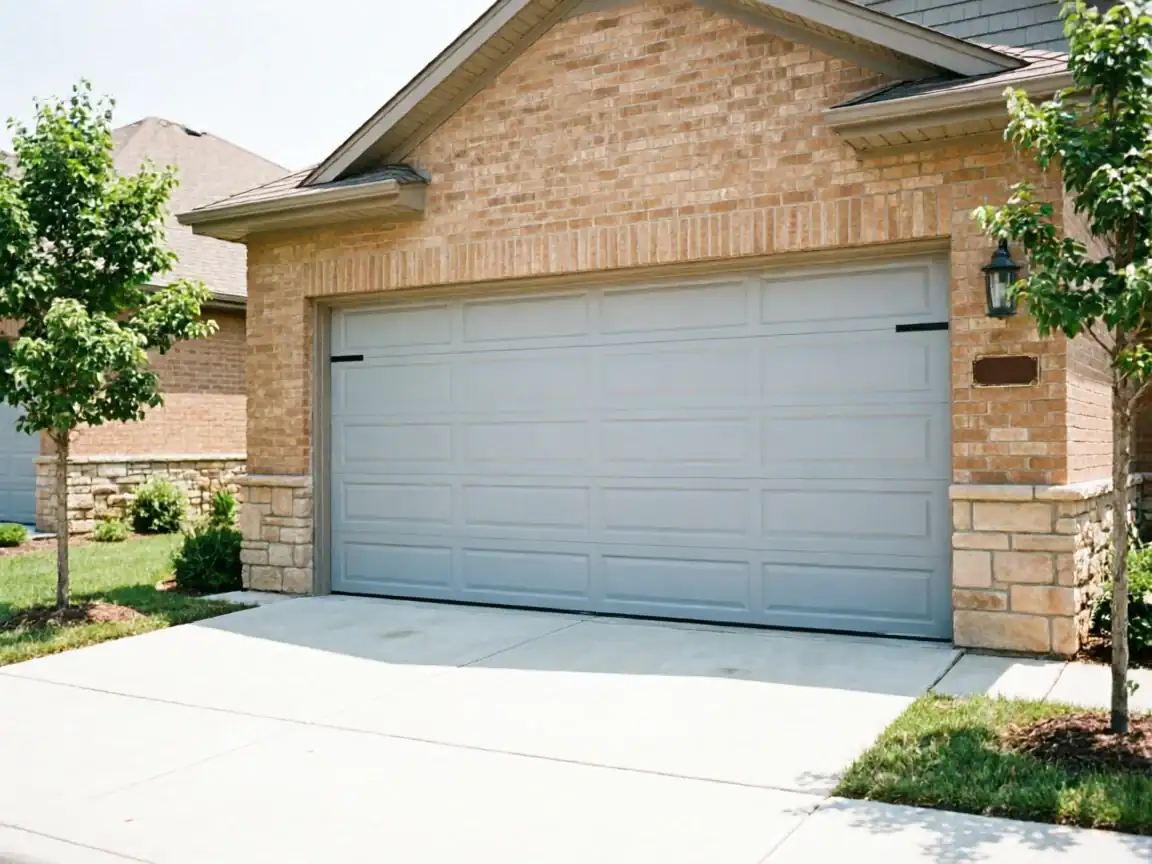
Most of the houses we get called to in this part of Collin County went up between 1971 and 2015, with the bulk of that building happening in the 2000s. That matters more than people think. A door and opener installed when a subdivision was built is now somewhere between ten and twenty years old, which is right at the point where springs fatigue, nylon rollers crack, and opener logic boards start acting strange before they fail outright.
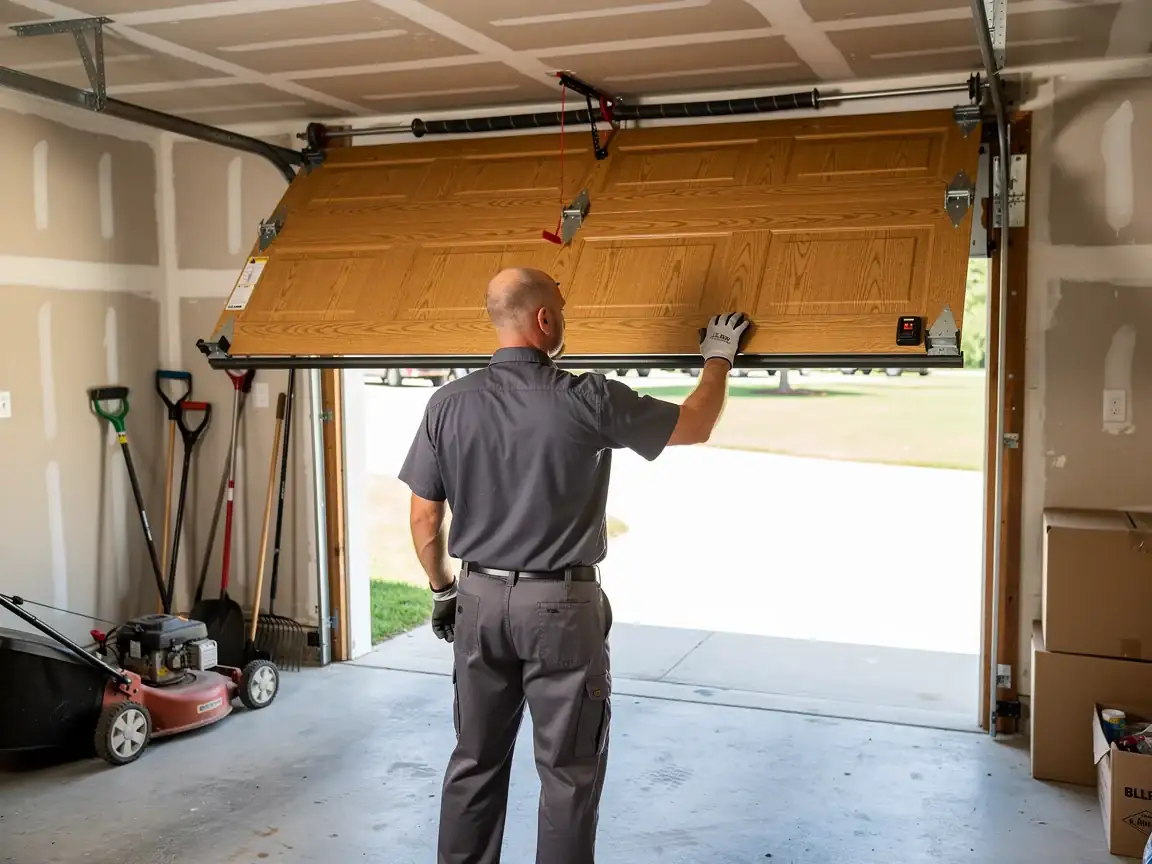
If your door still opens and closes without grinding, shaking, or hanging up halfway, doing nothing for now is a reasonable call. We're not going to tell you to replace a spring that isn't showing wear just because of its age. A service call makes sense when something has already changed - a noise that wasn't there before, a door that's slower on one side, an opener that strains to lift. Waiting past that point usually costs more, because a spring that lets go under load can take a cable, a bracket, or a panel with it.
We'd rather walk you through what to watch for on a quick visit than talk you into work the door doesn't need yet.
The Problem
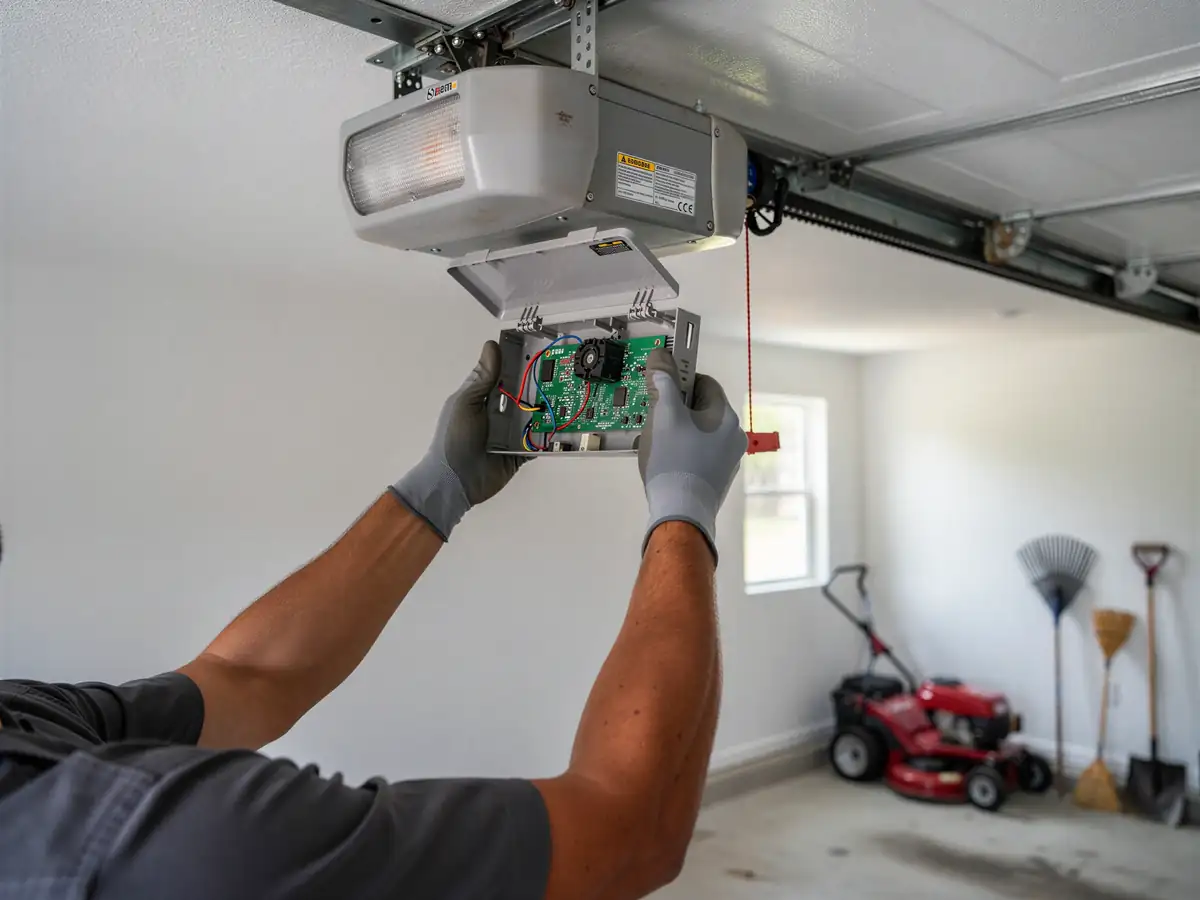
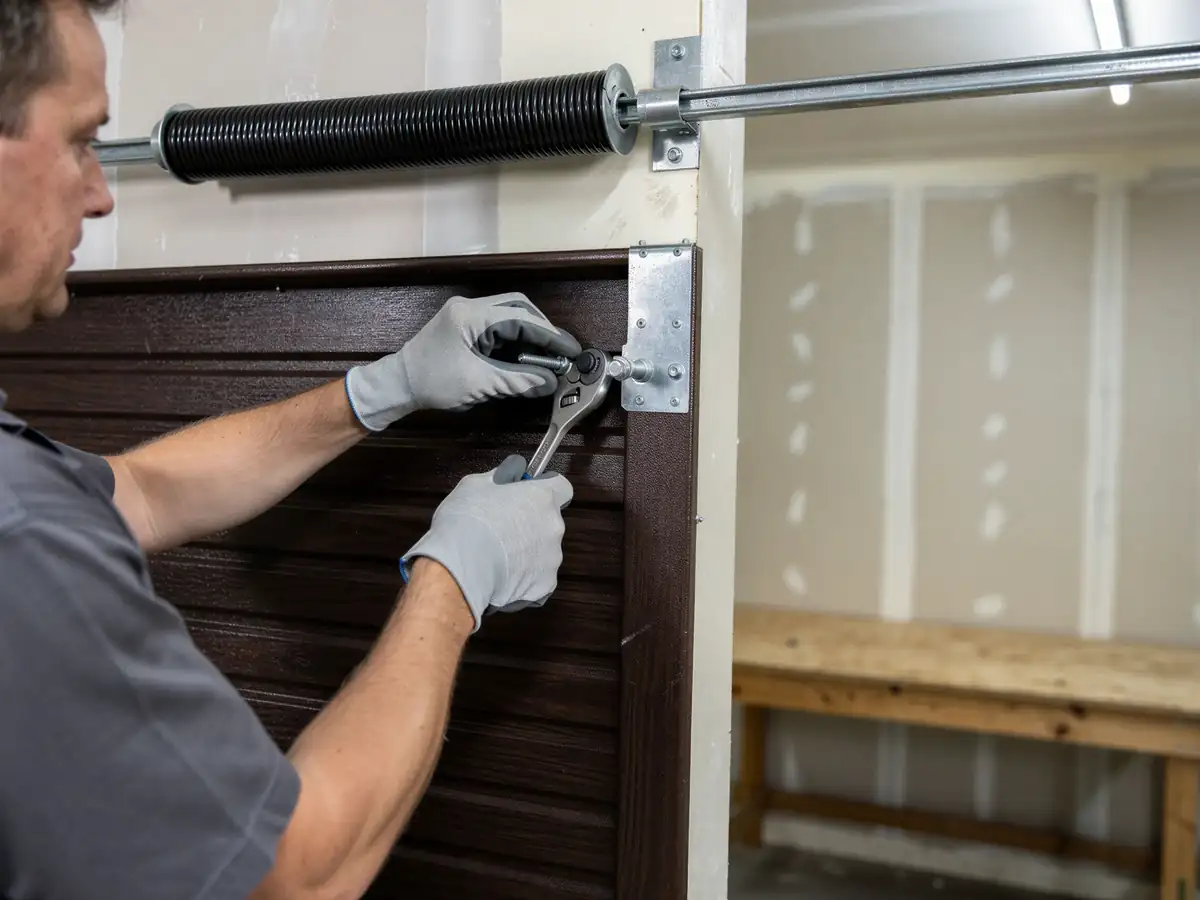
Because most of the housing across this service area dates to the same roughly 35-year stretch, with heaviest construction around the mid-2000s, a lot of garage doors and openers are aging out in the same window. We see the same handful of failures repeat house after house: original torsion springs that have hit their cycle limit, plastic drive gears in openers from that era that strip teeth, and weatherstripping that's shrunk and cracked from years of sun and swing in temperature.
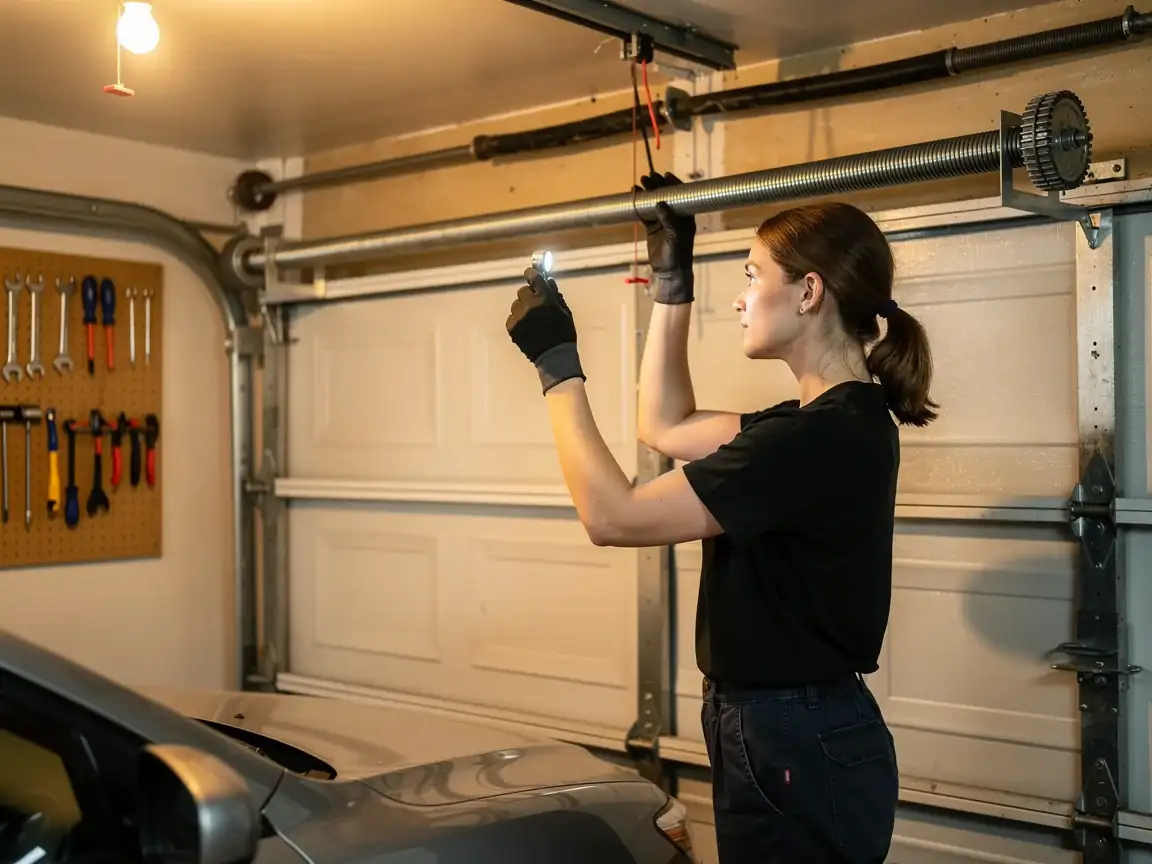
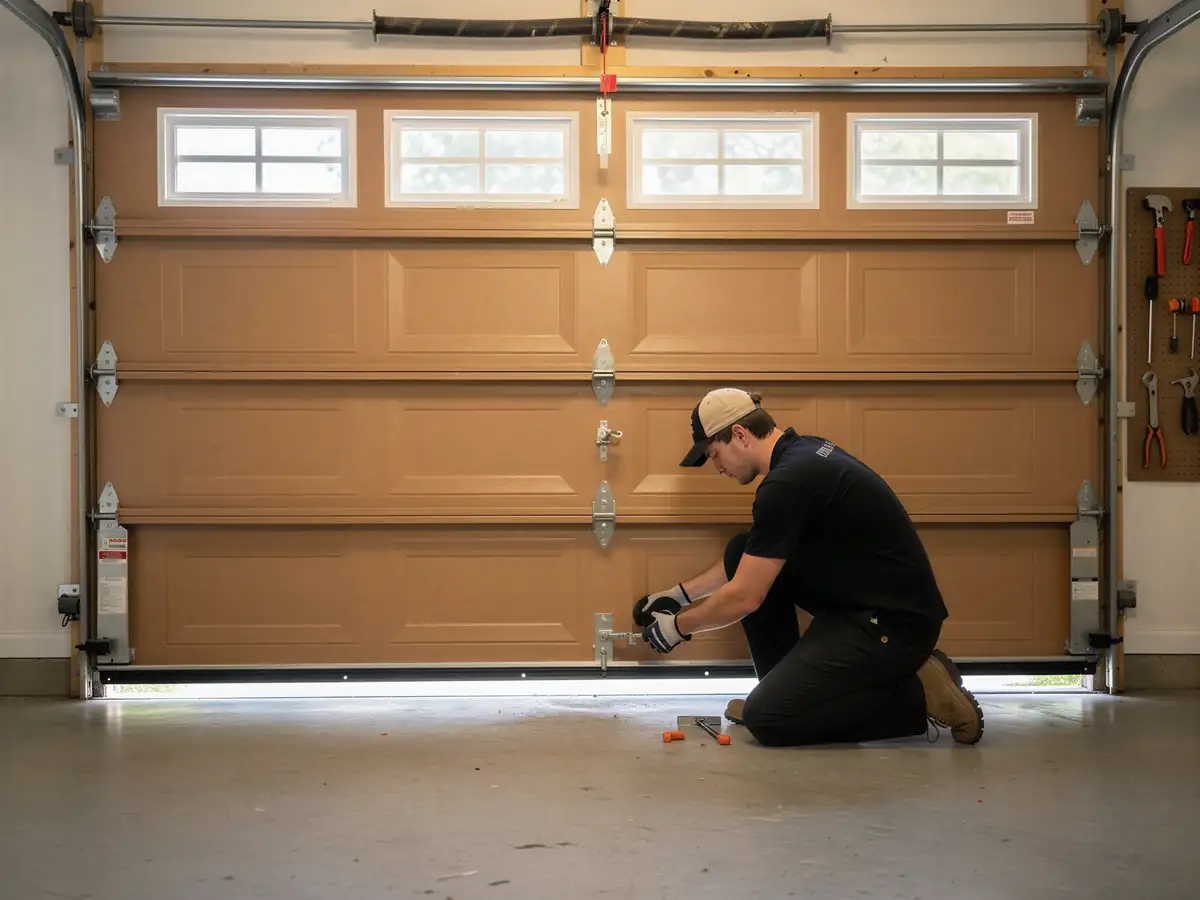
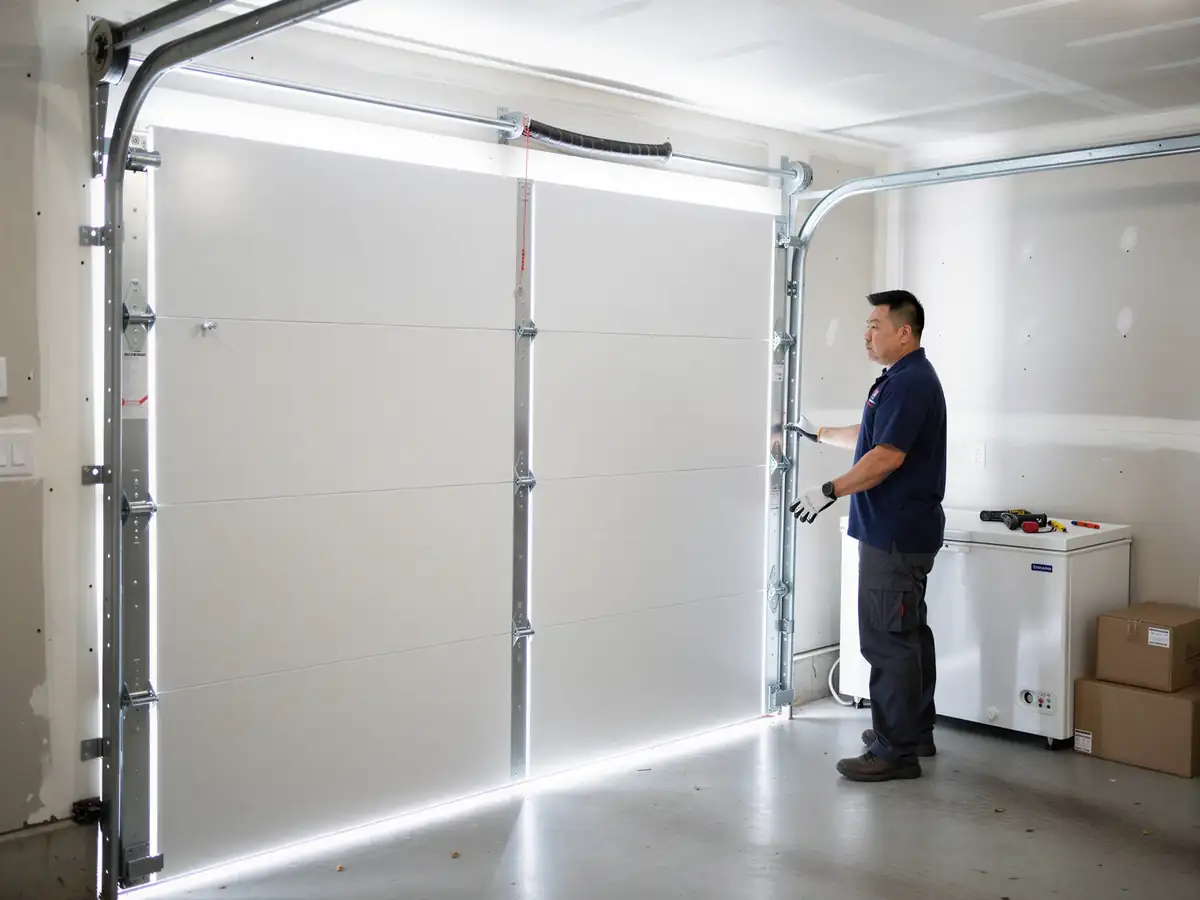
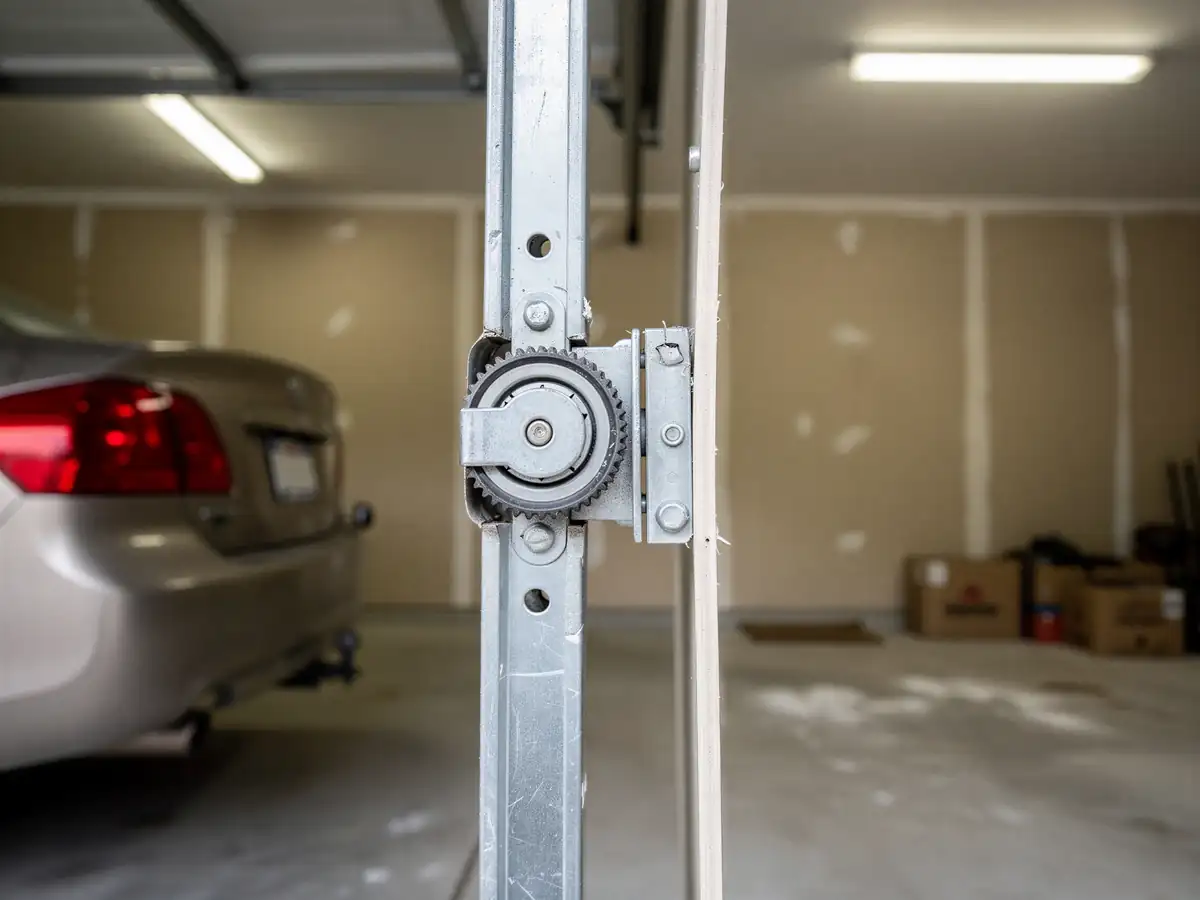
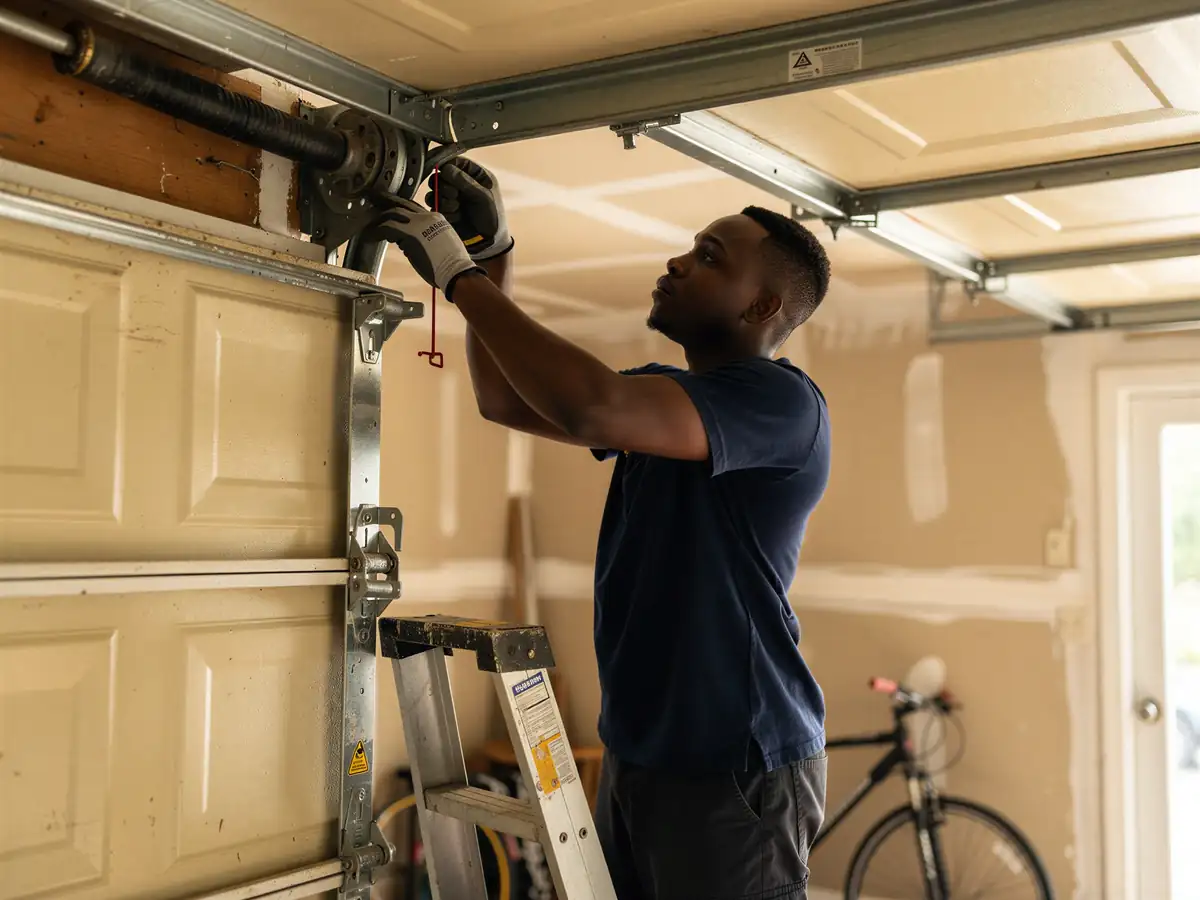
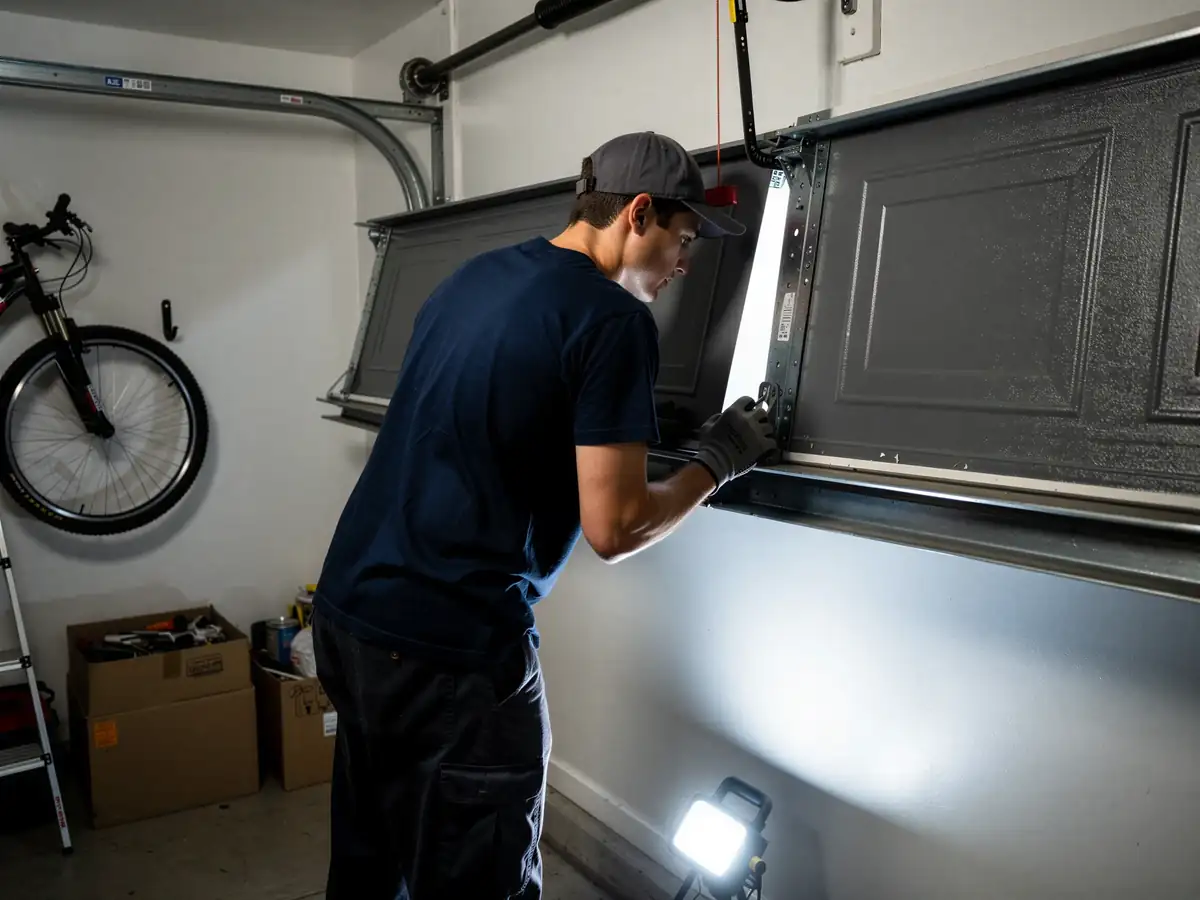
A service call starts with figuring out which of those you actually have, not assuming. We check spring tension and wear, look at the track alignment, test the opener's force settings and safety reversal, and inspect cables and rollers for fraying or flat spots. On a lot of these 2000s-built homes the door and opener are original equipment, so once a part fails, it's often easier to replace than source an exact match - we'll tell you straight when that's the case instead of hunting for a part that may not exist anymore.
One honest limit: if the opener logic board is the failure and the unit is long discontinued, we're not going to chase a board swap that costs nearly what a new opener runs. We'll say so on the spot.
What the Weather Here Does to It
This area sits in a mild climate band with occasional freeze, not the deep-freeze cycling you'd get further north
But enough cold mornings each winter to stiffen grease, shrink rubber seals, and make steel springs noticeably tighter and more brittle for a few hours before things warm back up. That's when we get the most calls for a door that won't budge first thing in the morning, or a spring that finally snaps on a cold start after a summer of slow fatigue.
It cuts the other way too
Summers here put a lot of heat and UV on vinyl and rubber weatherstripping and on opener belts, which dry out and crack faster than the manuals suggest. A service call in warmer months is more likely to turn up a worn belt or a gap at the bottom seal than a spring problem.
Neither extreme is severe enough to justify over-engineering a door for conditions it won't see
We lubricate, adjust, and replace parts worn by this specific swing between mild cold and real heat - not by assuming a harsher climate than what actually hits this area.
What You Pay
We don't publish a flat number for a service call because what you pay depends on what's actually wrong once we're looking at the door, not on a guess over the phone. A diagnostic visit covers inspecting the springs, cables, rollers, track, opener, and safety sensors, and giving you a clear answer on what needs doing and why.
What we can tell you is how we scope it: with median household income across this area around $127,000 and a large share of owner-occupied houses, most of the jobs we run are straightforward repairs on doors that are worth keeping - spring replacement, roller and cable swaps, opener tune-ups or board replacement - rather than full tear-outs. We'll quote the repair before we touch anything, and if a door is old enough or damaged enough that replacement beats patching it again, we'll say that plainly instead of running up a repair bill on a door that's on its way out anyway.
The one thing we won't do is estimate a price before we've seen the door. Anyone quoting a number over the phone for a spring job they haven't looked at is guessing.