Why This Fails Locally
Most of the garage doors we work on in this service area went up between 1971 and 2015, with the bulk of that stock built around 2005. That means a lot of nylon rollers are now sitting right at or past their expected service life, and a lot of homeowners who bought in the mid-2000s building boom are hitting roller failure at roughly the same time. It's not a coincidence tied to one street or one builder - it's a wave tied to the construction years.
The climate here doesn't help. This area sits in a mild band with occasional freeze events, so rollers don't get the slow, steady wear of a true cold-winter climate. Instead they get stretches of heat that dry out nylon and stem bearings, followed by a cold snap that makes brittle plastic crack instead of flex. That stop-start pattern is harder on rollers than either extreme alone would be.
With roughly 39,491 owner-occupied houses across this service area, most built in that same post-1990s window, roller wear is one of the most common calls we get - not because the doors are bad, but because they're all aging on the same clock.
The Symptom
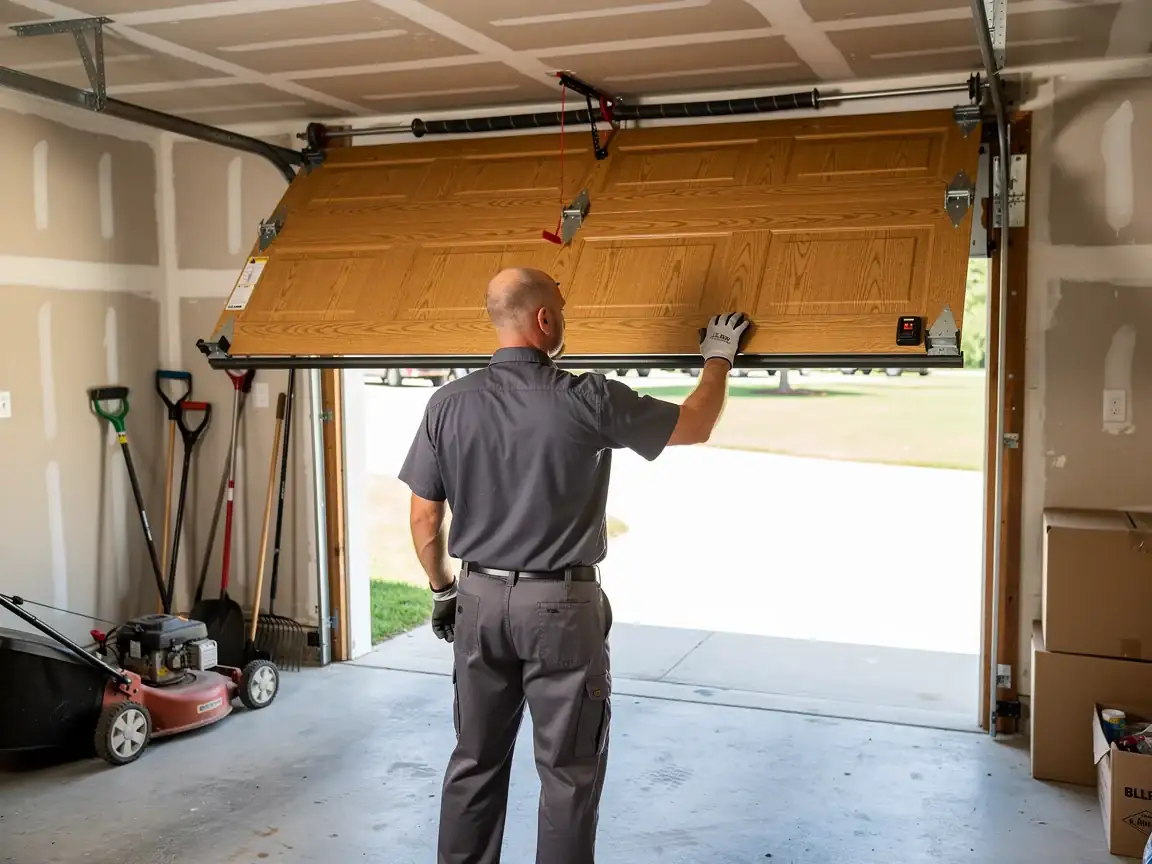
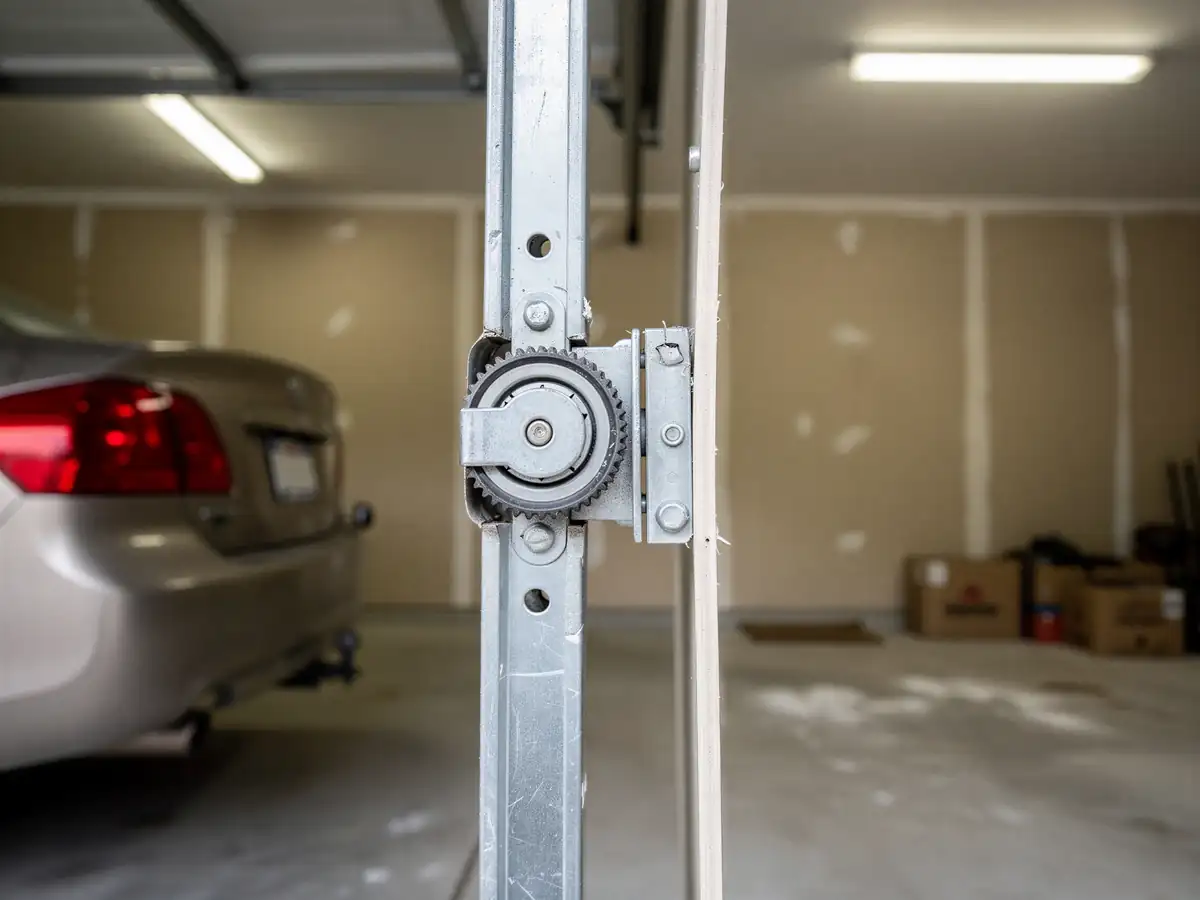
You'll usually hear it before you see it: a grinding or rattling sound as the door travels, loudest right as a roller passes a bent or worn section of track. Sometimes it's a jerk or hesitation partway through the cycle, especially on doors with steel rollers that have lost their bearing grease. On nylon rollers, look for visible cracking or a flat spot worn into the wheel where it's been riding at one resting point for years.
If only one or two rollers are shot, the door may still run but will shake the whole track assembly, which speeds up wear on the hinges and the track itself. Left long enough, a cracked roller can jump the track entirely, which turns a cheap part swap into a bent-track repair.
Can You Do This Yourself
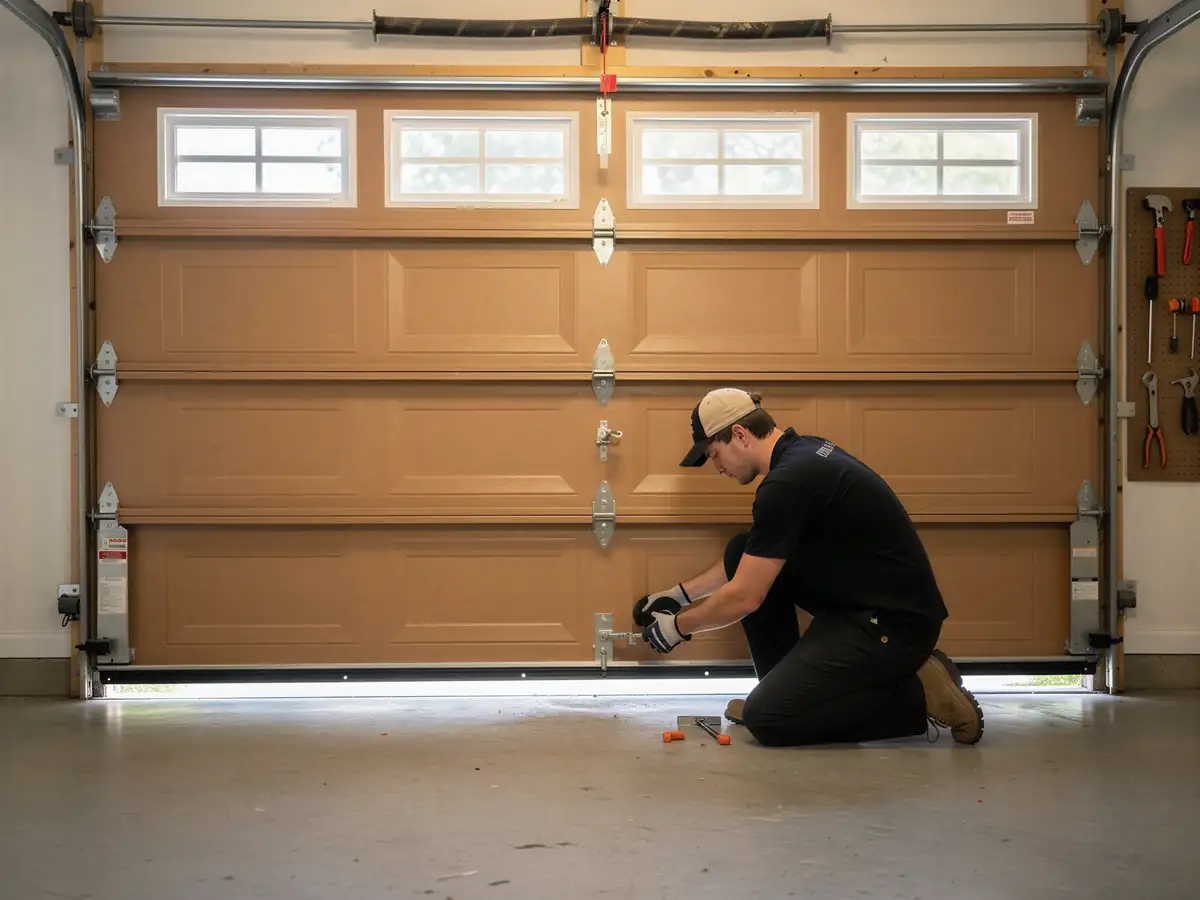
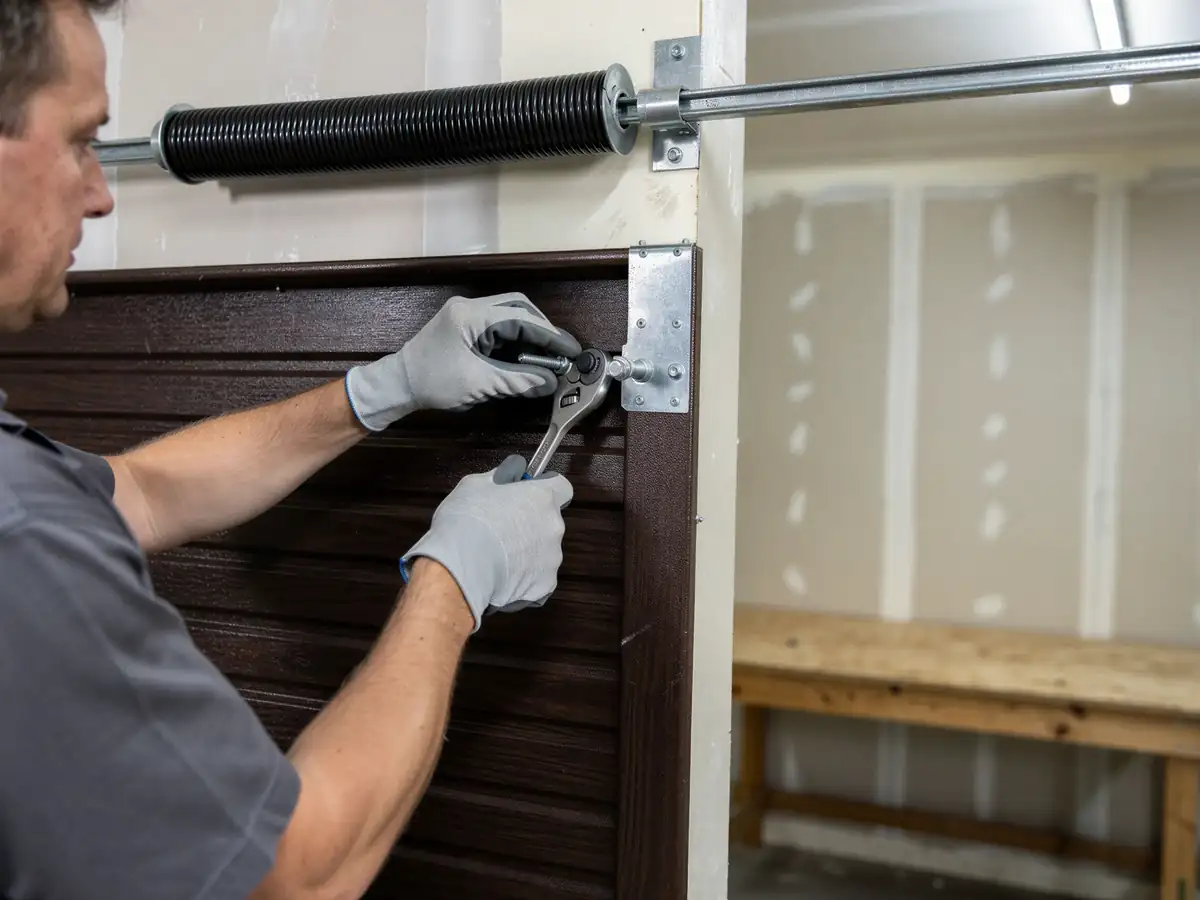
Swapping a single roller on the bottom section of the door
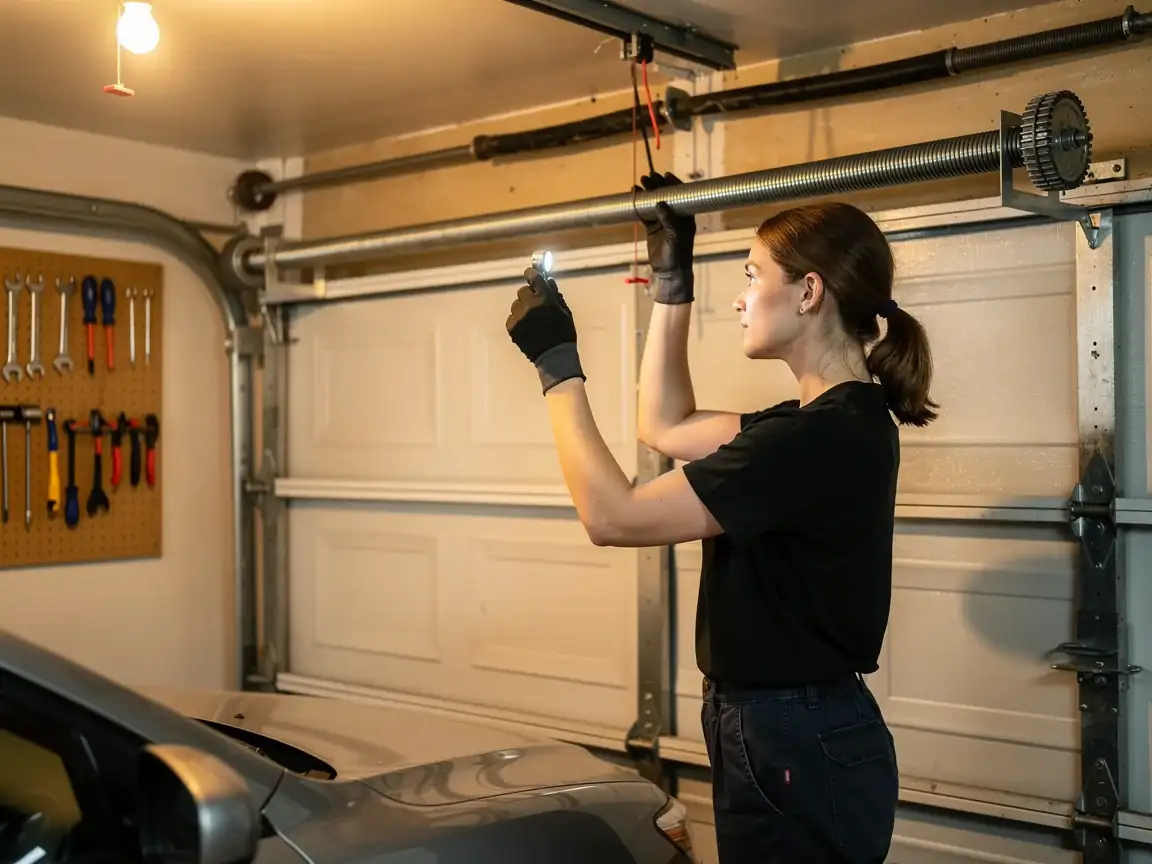
With the door down and the opener disconnected, is within reach for a lot of homeowners with the right tool for pulling the roller stem clear of the hinge. The top rollers are a different story - they sit under spring tension and close to the cable drums, and that's where we see the injuries.
One honest limitation
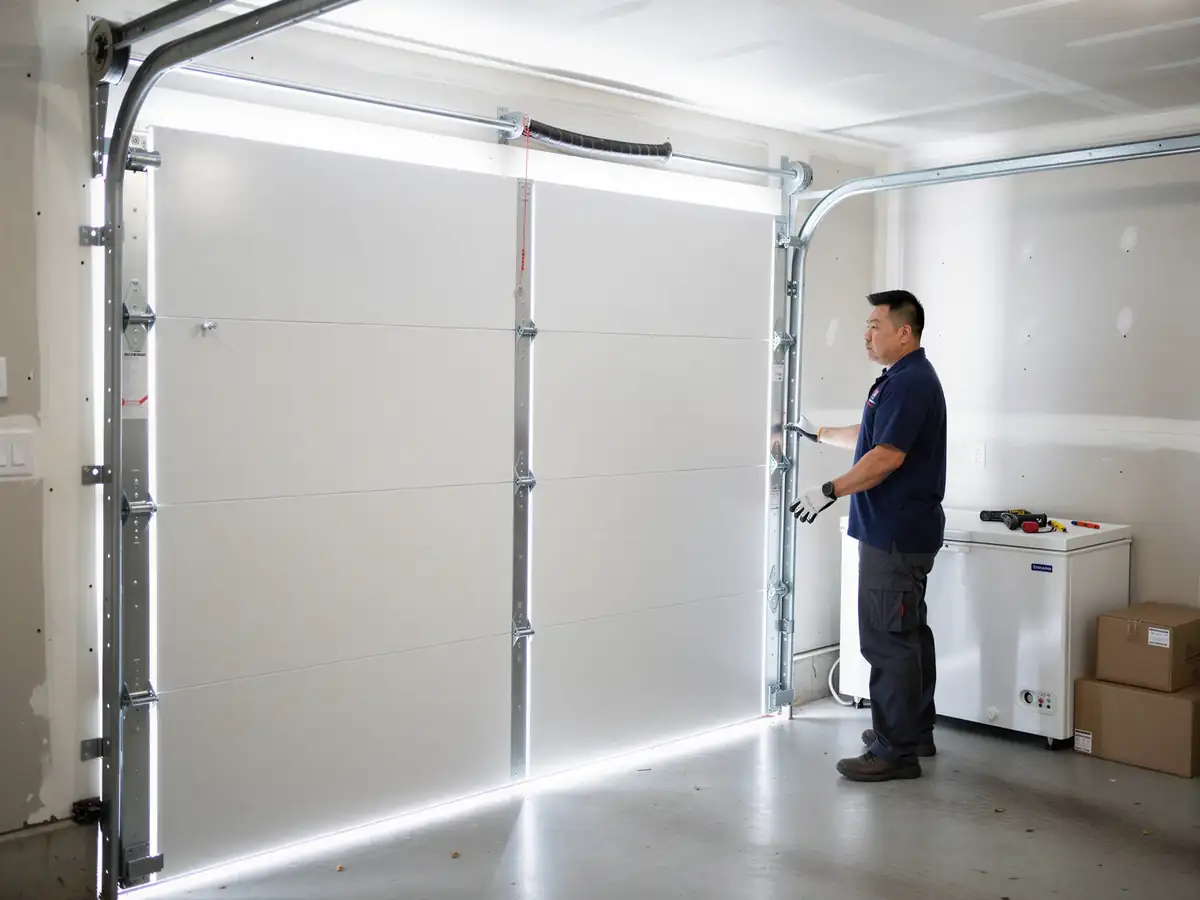
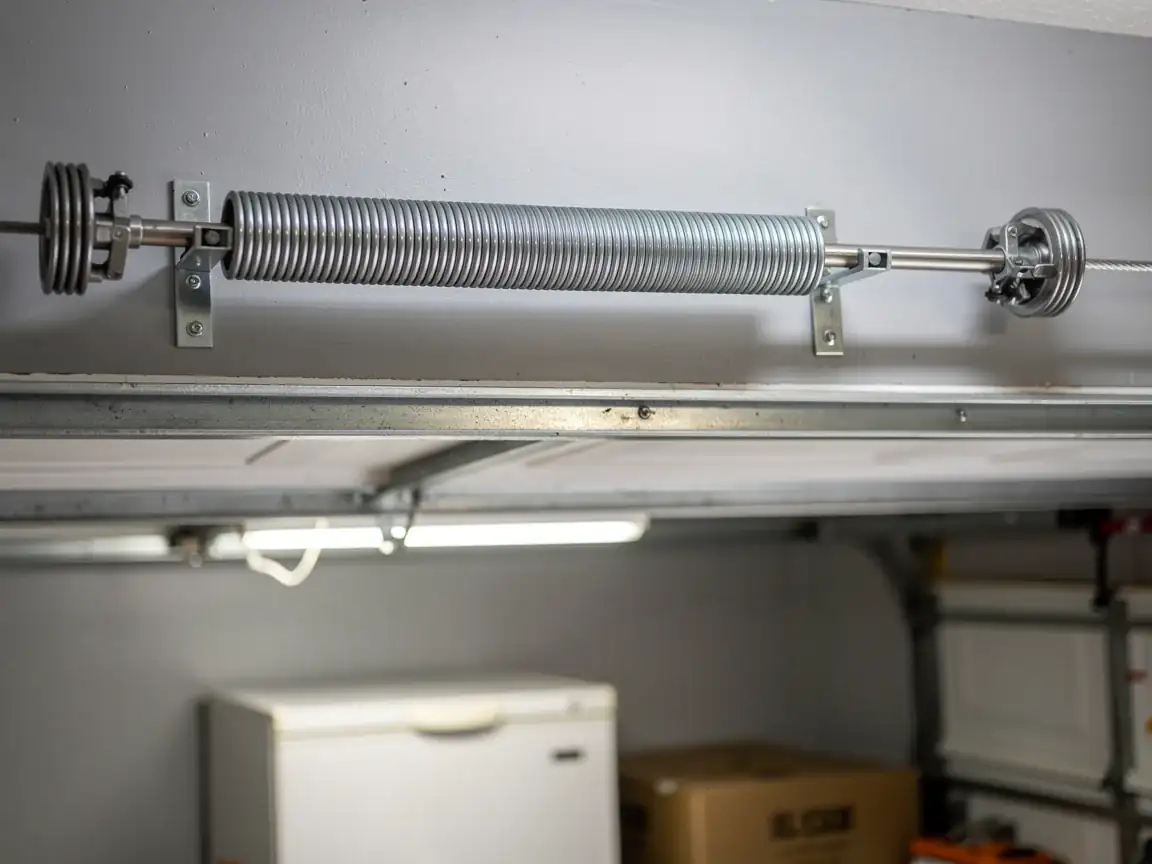
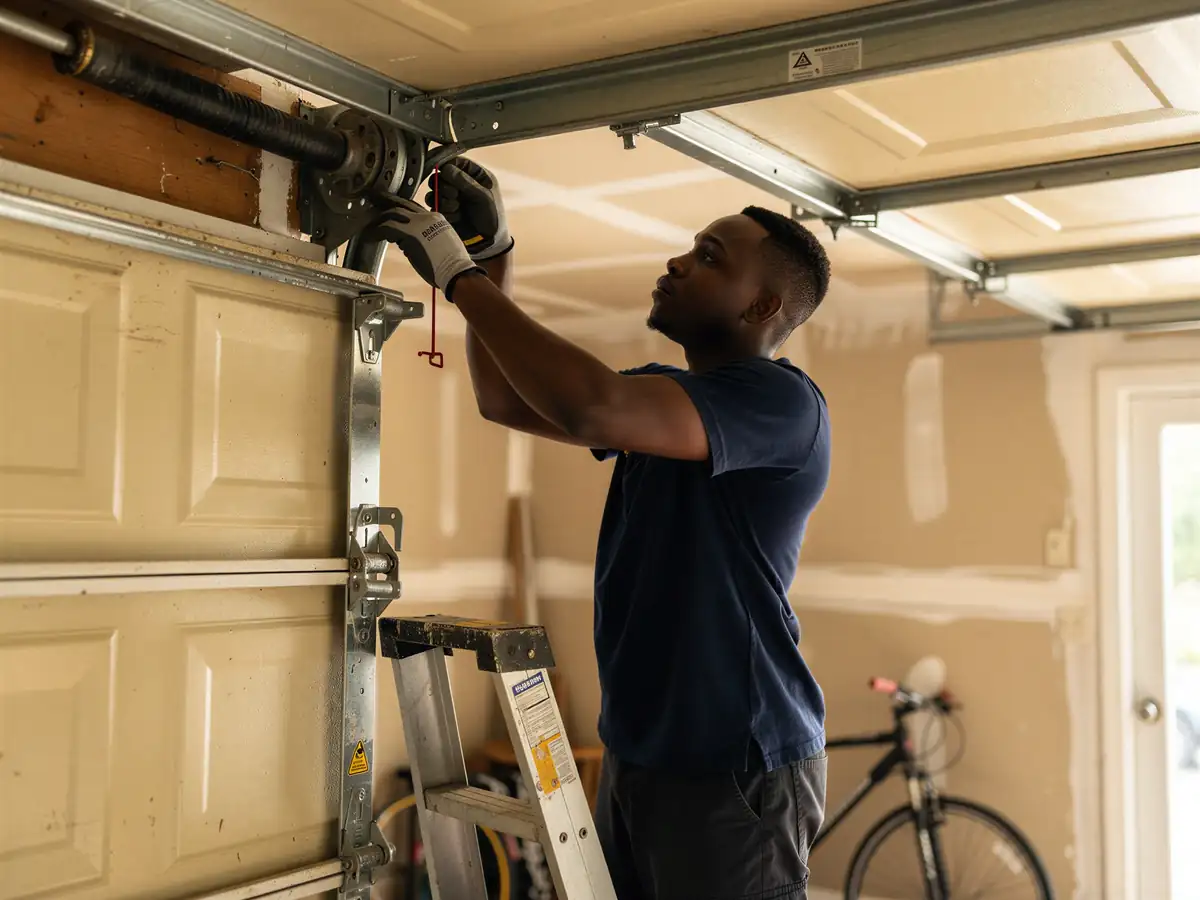
We don't recommend DIY roller swaps on any roller above the second hinge from the bottom, because of how close that work sits to a wound torsion spring. If your door uses steel rollers with sealed bearings rather than nylon, those often aren't a simple pull-and-replace - the bearing assembly can be riveted into the hinge, and forcing it can bend the hinge plate. When in doubt, it's a job to hand off rather than guess at.
How to Book
If you're hearing the grind or seeing cracked rollers on your door, get it looked at before a roller jumps the track mid-cycle. We serve this area's roughly 48,073 households, and with a median household income of $127,000 here, most owners we talk to would rather pay for a straightforward roller swap now than wait for a track repair later.
Call or head to our homepage to get a technician scheduled. Tell us whether the noise is at the top or bottom of the door - that one detail helps us bring the right rollers on the truck the first time.