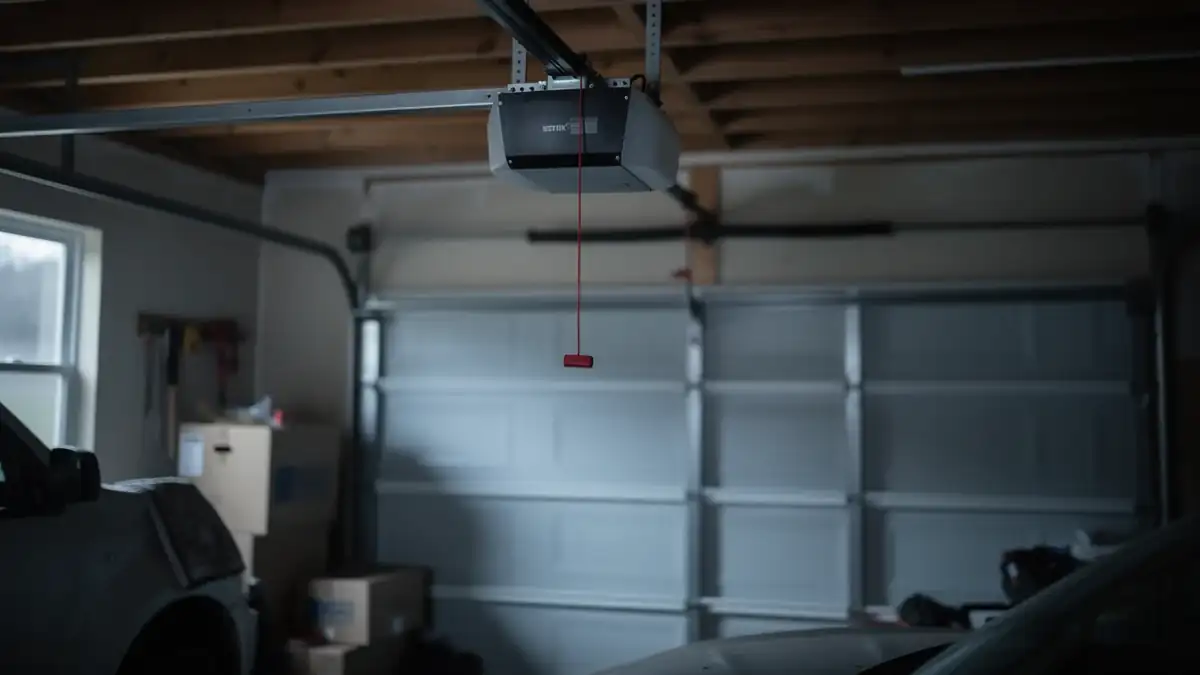
Doing Nothing For Now
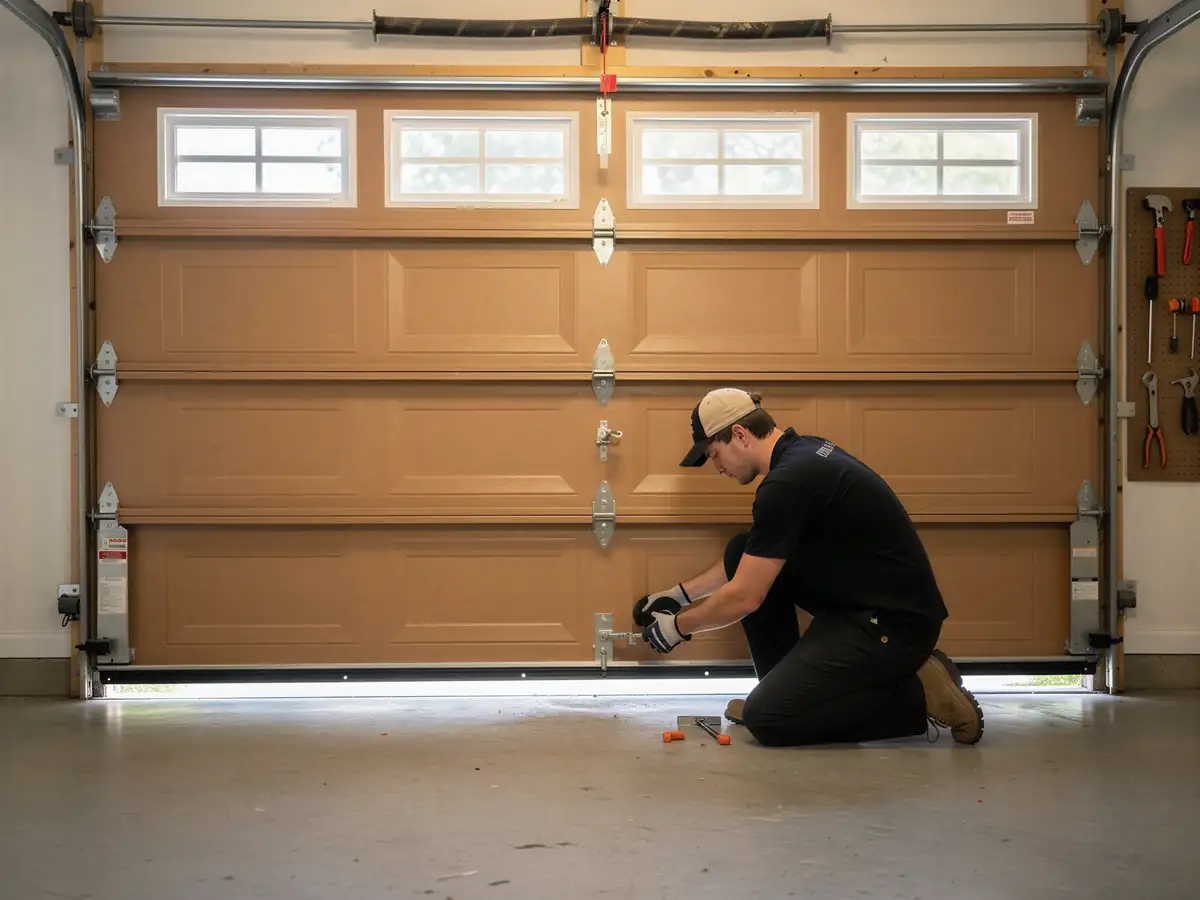
If your opener loses power and you just manually pull the release cord and move on, that's fine for a day. The trouble starts when owners leave it that way for a month because the door still opens by hand. Most houses in this service area went up between 1971 and 2015, with the bulk of that from the 2000s build-out, so the openers hanging in these garages are mostly chain or belt-drive units from that same era. They were not built with battery backup as a standard feature. When the power drops and you skip the backup conversation entirely, you're relying on a mechanical release that still works fine today but wears the same as any mechanical part. Leave it disengaged too long with kids or a car in and out, and you're one distracted moment from a door coming down on something it shouldn't. Doing nothing isn't dangerous for a night. It's a habit that gets risky by week three. We'd rather tell you that now than after a call.
The Problem
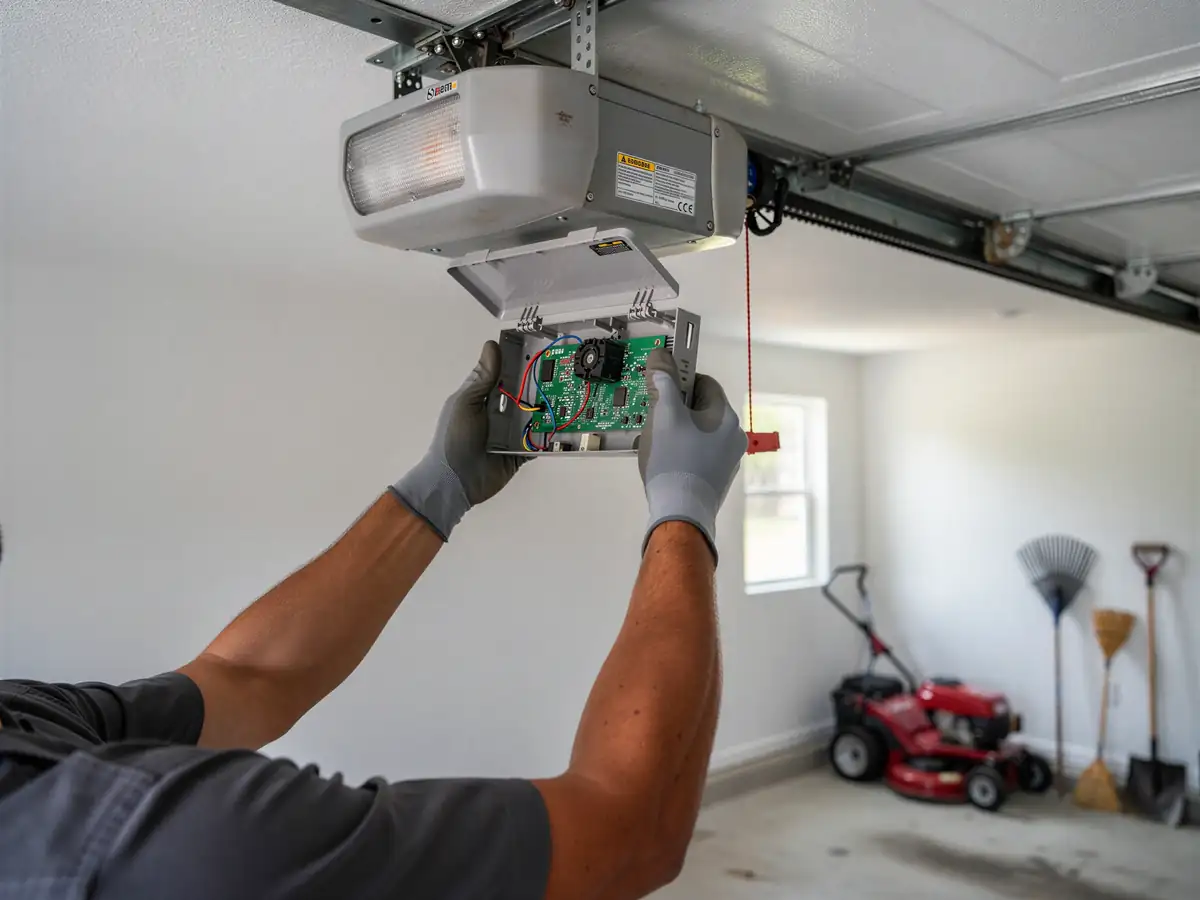
An opener that worked yesterday and doesn't today after a power blip usually isn't broken - it's just lost its position memory or tripped a safety sensor misalignment when the power cut out mid-cycle. On the 2000s-era units common across this area's housing stock, that reset is simple. On older units from before that build-out, the logic board sometimes doesn't recover cleanly and needs a technician to re-seat it. The second problem is the one owners don't think about: a garage door with no working opener is also, in a lot of these houses, the only way in if the front door lock has been acting up or someone's locked out. A dead opener during an outage isn't just an inconvenience, it's your access point gone. We don't sell generators. What we do is make sure the opener itself - the part that's actually our job - comes back up correctly once power returns, and we check the travel limits and force settings while we're there instead of just flipping the switch and leaving.
What You Pay
We don't have a flat number to put here, because the right fix depends on whether the opener is a straightforward reset, a sensor realignment, or a board that didn't survive the power cut. What we can tell you is what drives the decision. With median household income around $127,000 across the service area and most of the housing stock dating to the 2000s, a lot of these openers are still within a reasonable repair window rather than a replace one - the parts are current enough to source. Across the roughly 39,491 owner-occupied houses here, we see far more resets and sensor jobs than full opener replacements after a power event. If your unit is pushing toward 20 years old and this is its second power-cut failure, replacement starts making more financial sense than another repair call. We'll tell you straight which side of that line your opener is on before we touch anything.