Why This Fails Locally
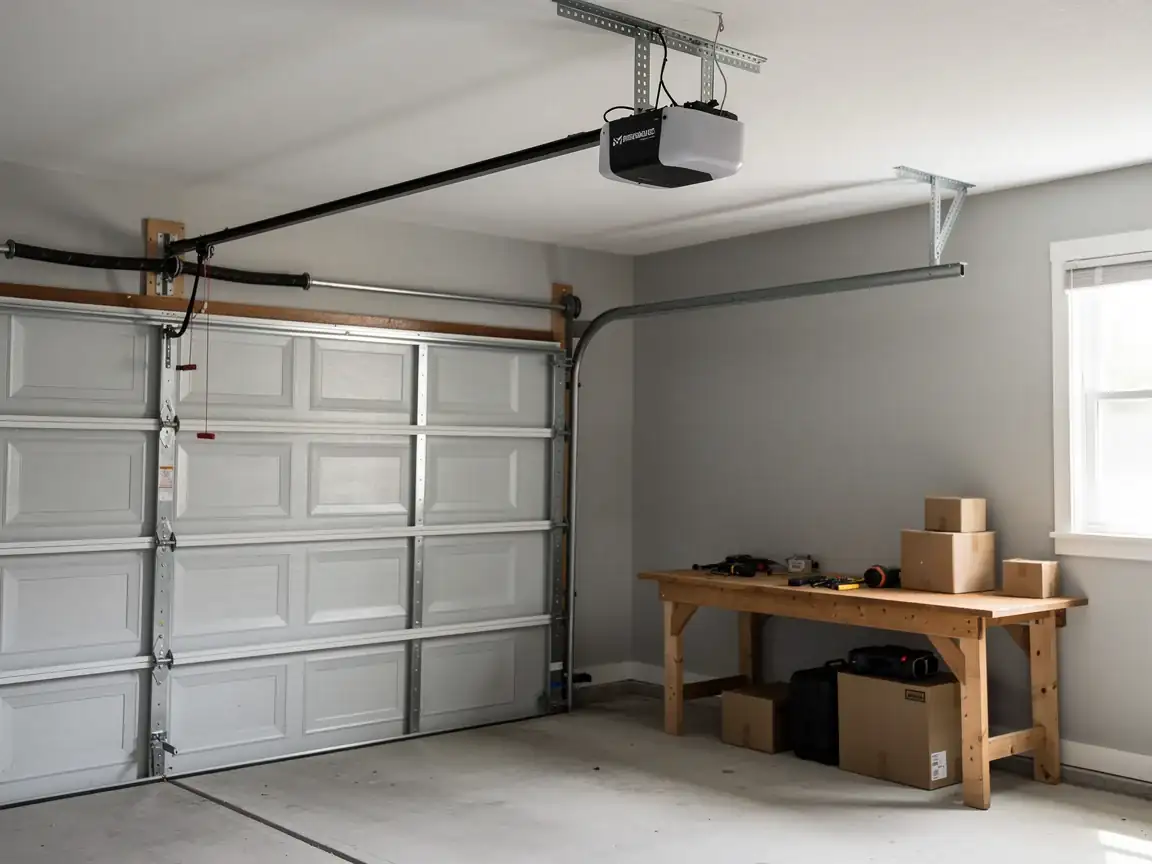
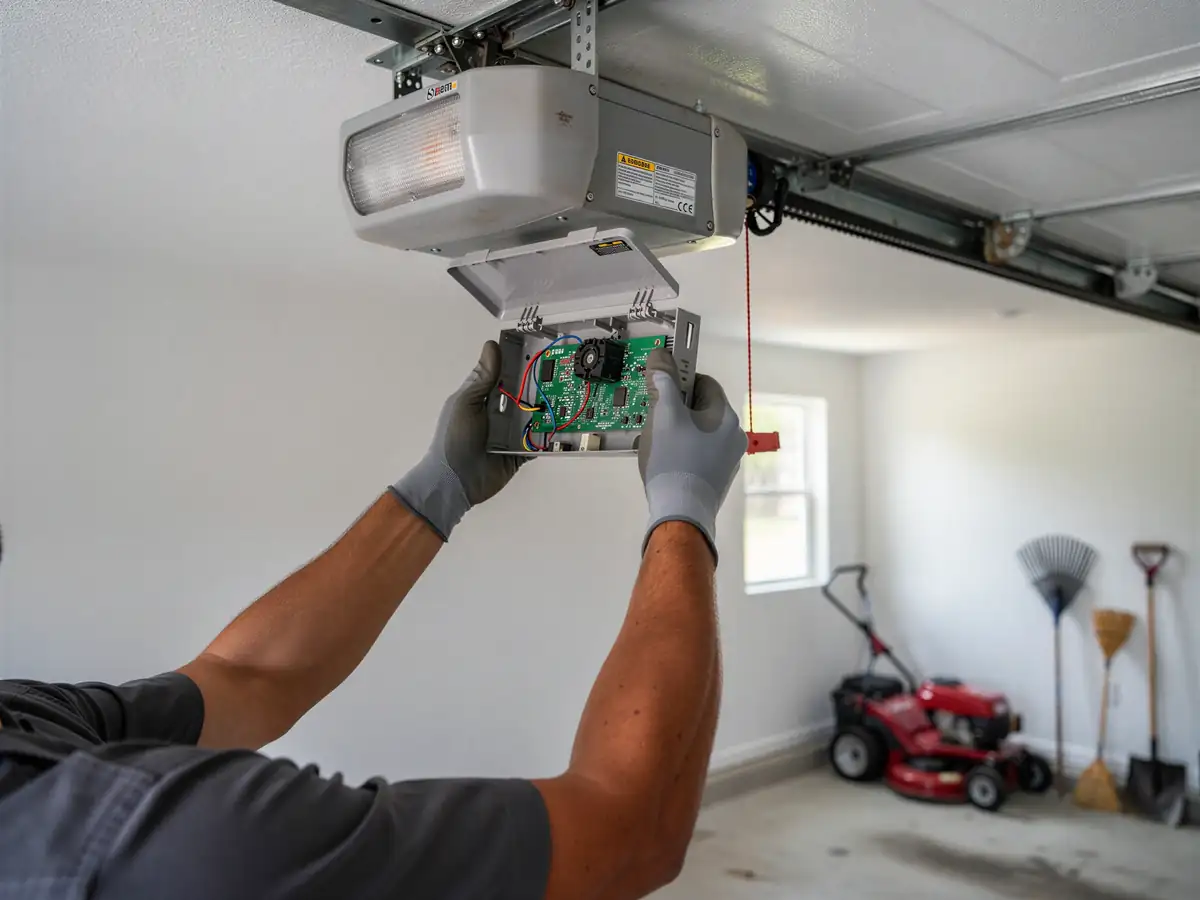
The call we get most out of Lucas isn't a snapped cable or a dented panel. It's the opener itself - the logic board stops talking to the wall switch, or the drive gear inside the unit strips out and the door won't budge even though the motor still hums. That's because most houses in this part of Lucas went up around 2002, which means a lot of garages still have their original opener, now pushing two decades of use. Circuit boards and nylon drive gears aren't built to outlast the house.
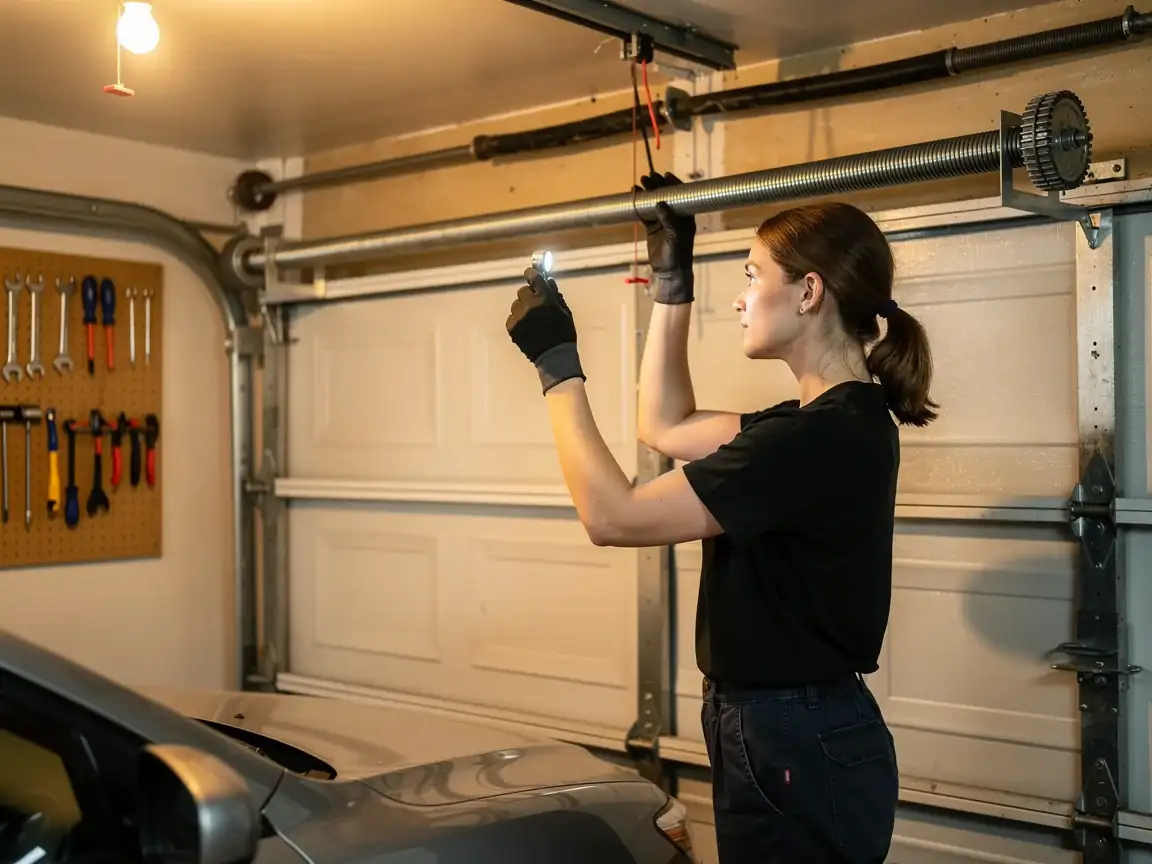
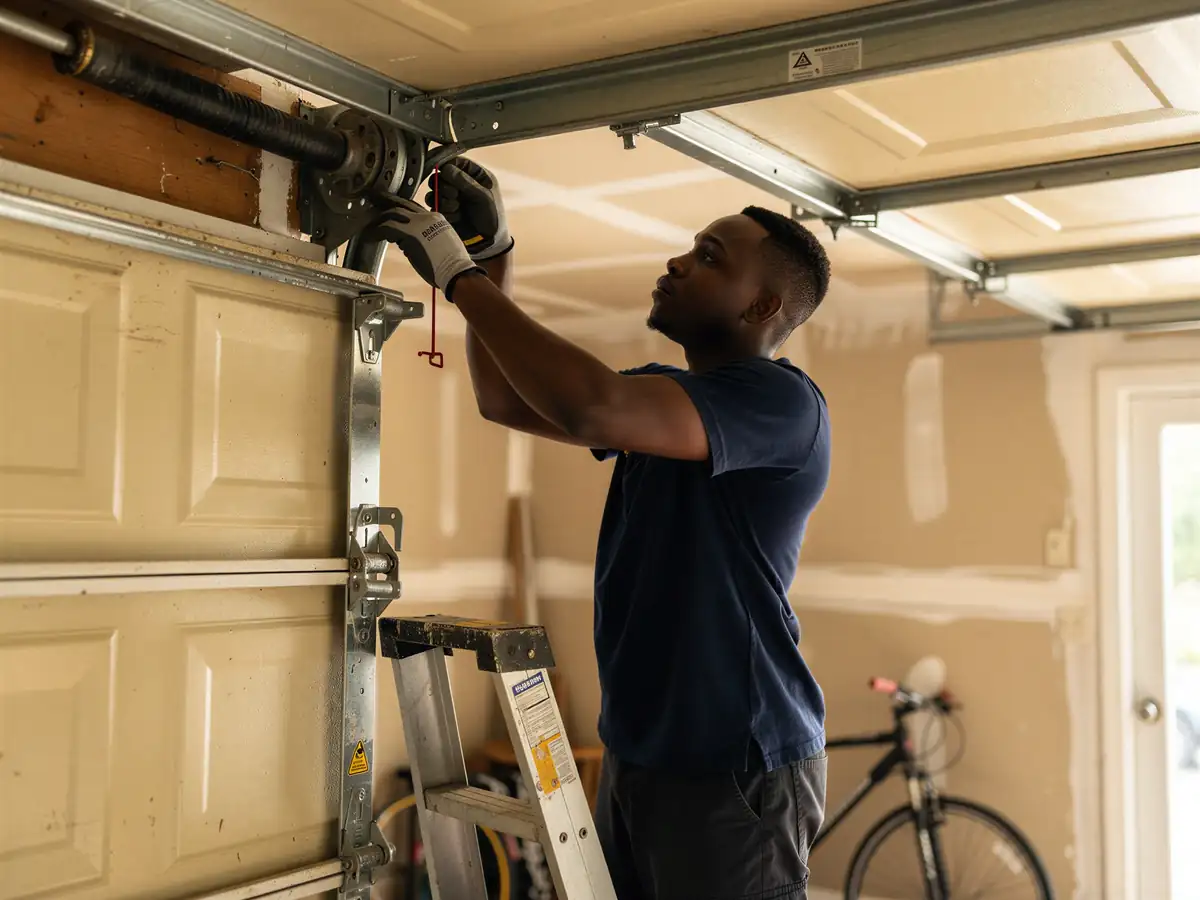
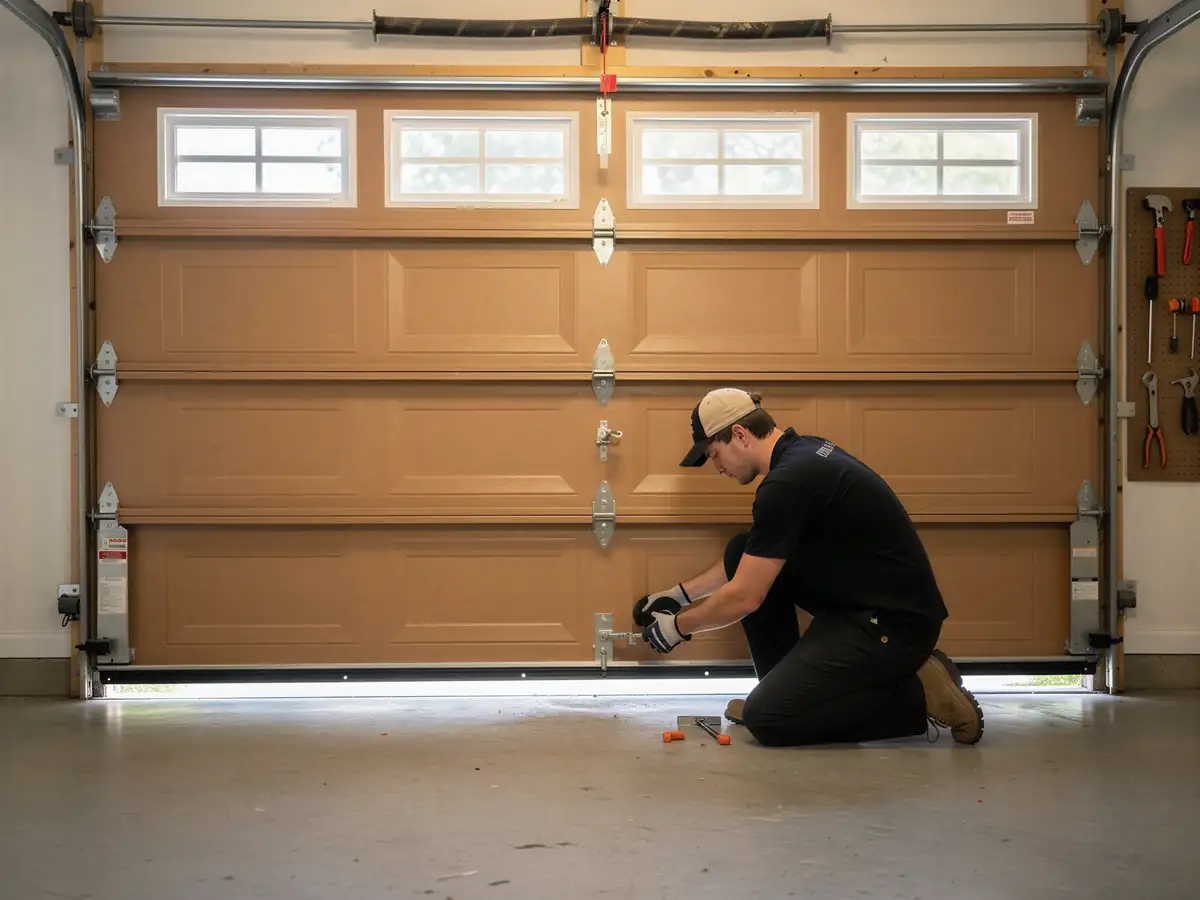
Torsion springs on those same builder-grade installs are also closing in on the end of their rated cycle count. A spring sized for a standard door is good for a few thousand open-and-close cycles, and a door that's been used daily since 2002 has probably burned through that number already. When the spring finally lets go, it's usually sudden - a loud bang, and a door that won't lift at all, or lifts crooked.
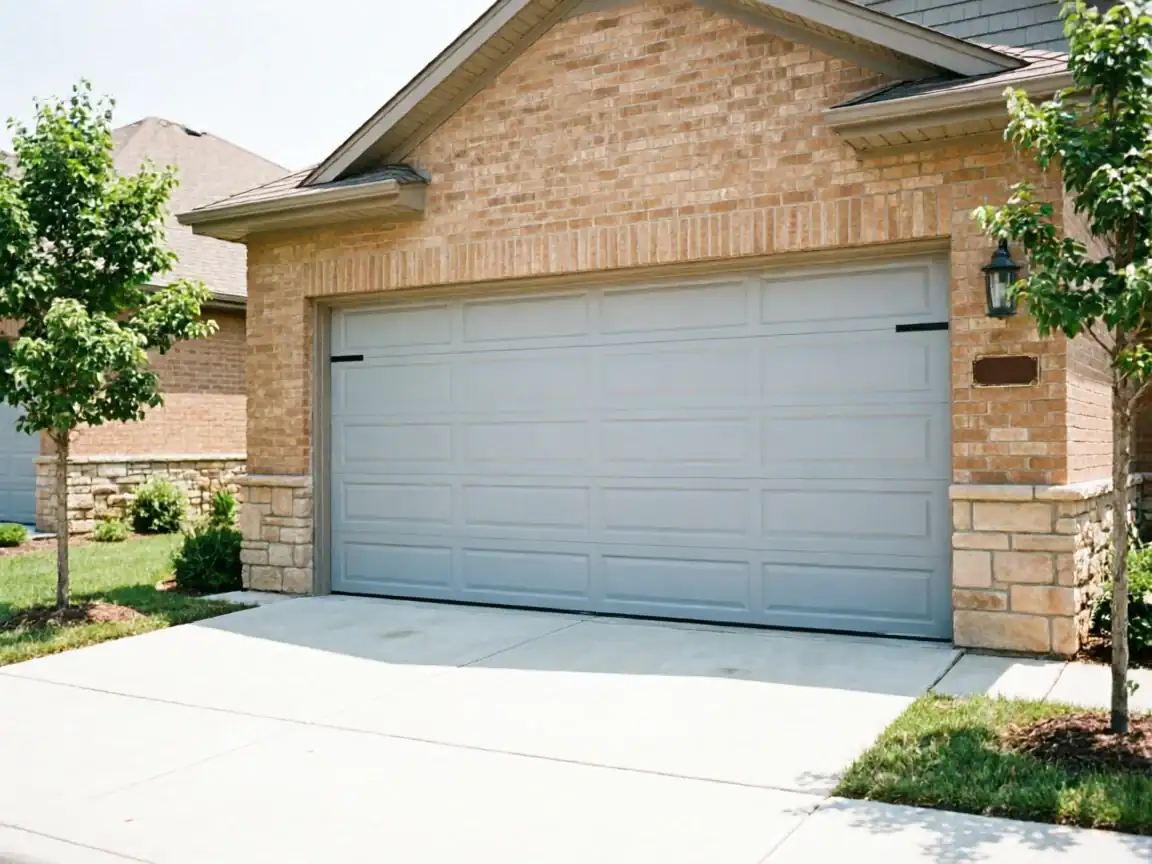
We're not guessing at an era here. Lucas households sit well above the wider service area's income line, and that shows up in the kind of doors we're pulling parts for: heavier insulated steel sections, not the thin single-layer panels you'd find on an older starter home. Heavier door, heavier spring load, faster wear on the hardware holding it up.
What the Repair Takes
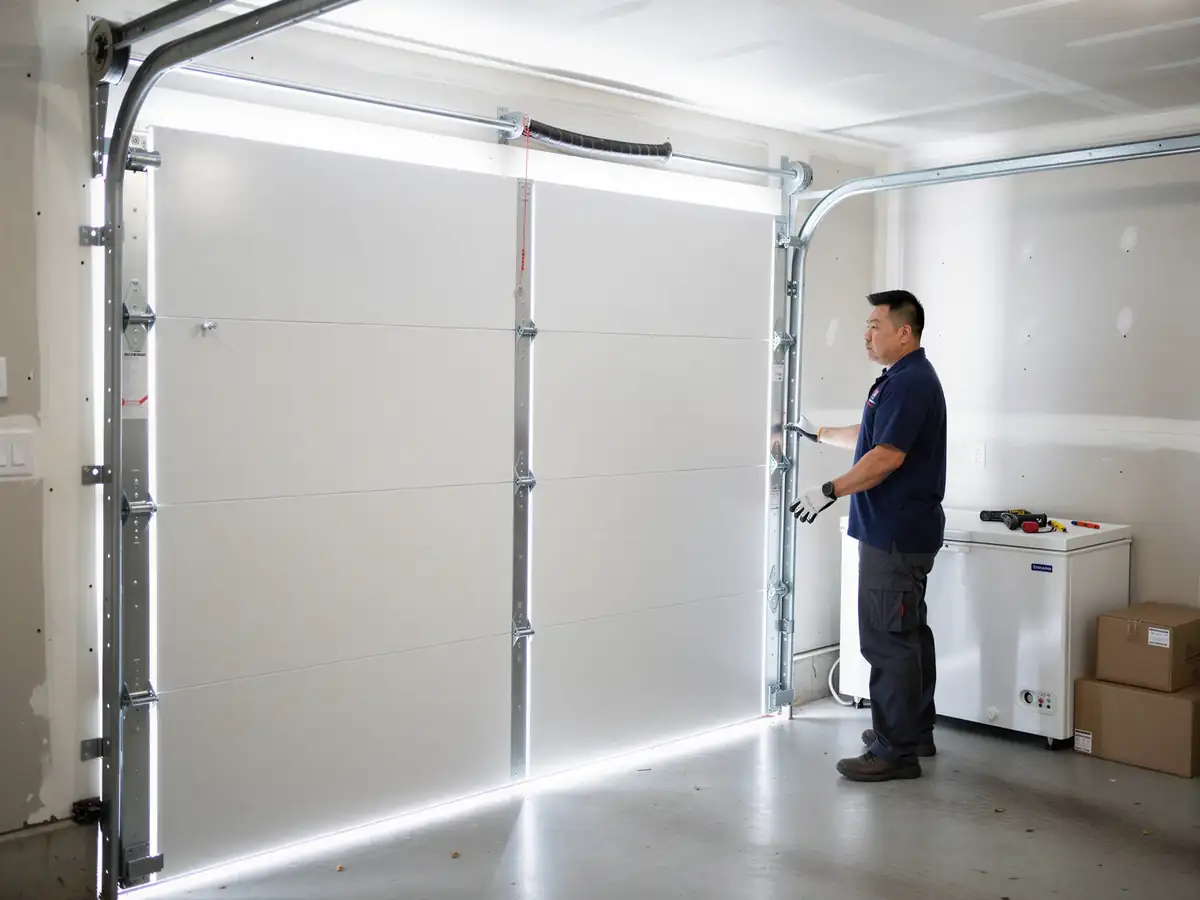
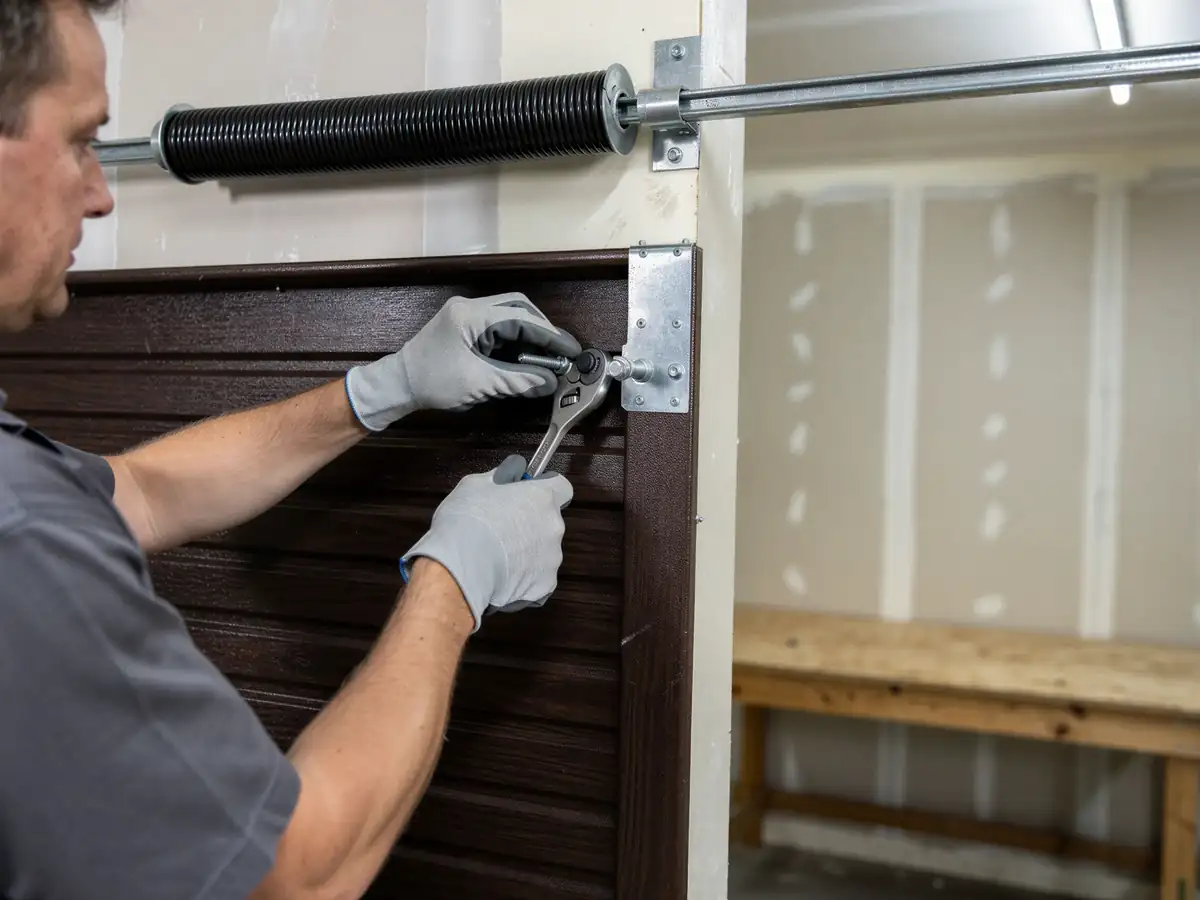
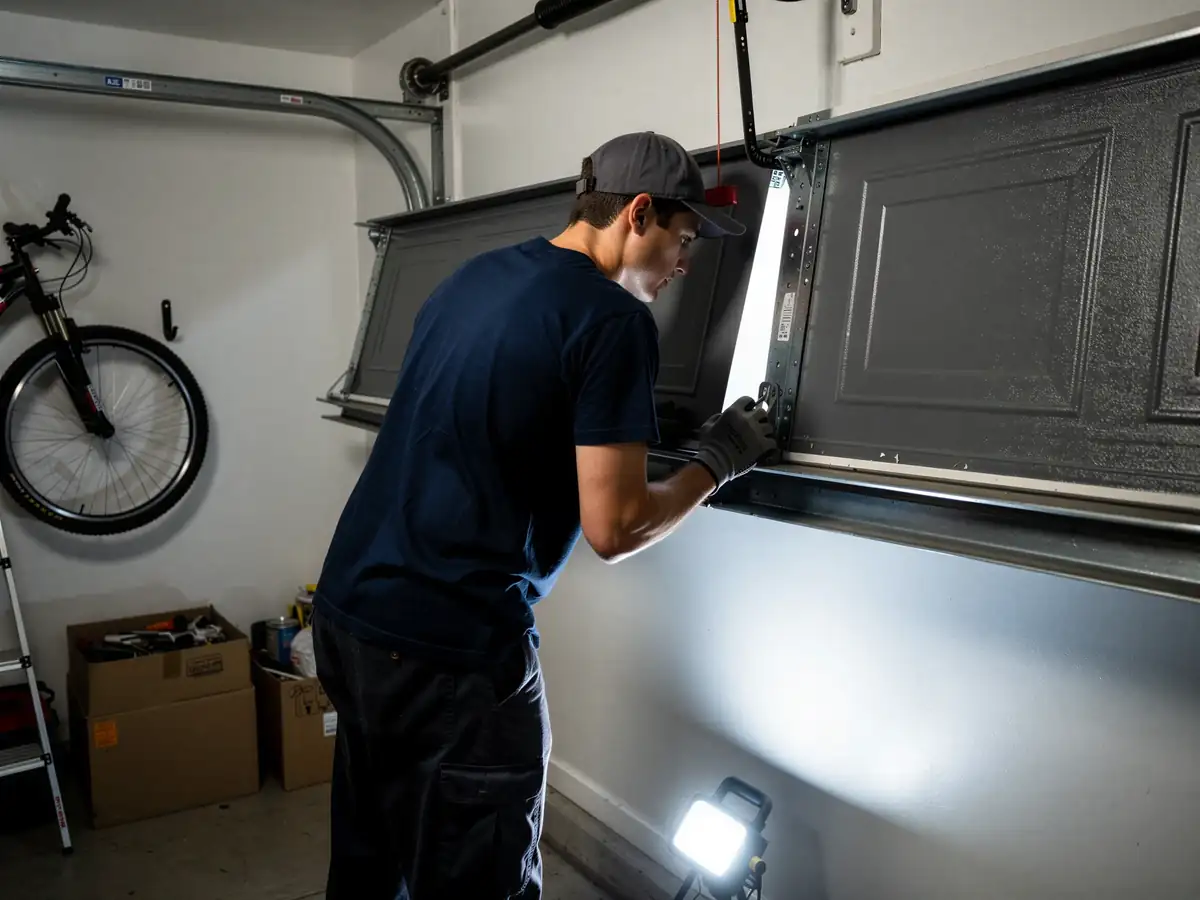
For a torsion spring on a door from this era, we're matching spring wire size and wind to a heavier insulated panel, not a lightweight one - get that wrong and the door either won't lift evenly or it over-stresses the opener trying to compensate. For an opener logic board failure, sometimes the fix is a board swap if the motor and gearing are still sound; other times the whole unit is close enough to the end of its life that we'll tell you straight that replacing it costs less than a car ride every couple years.
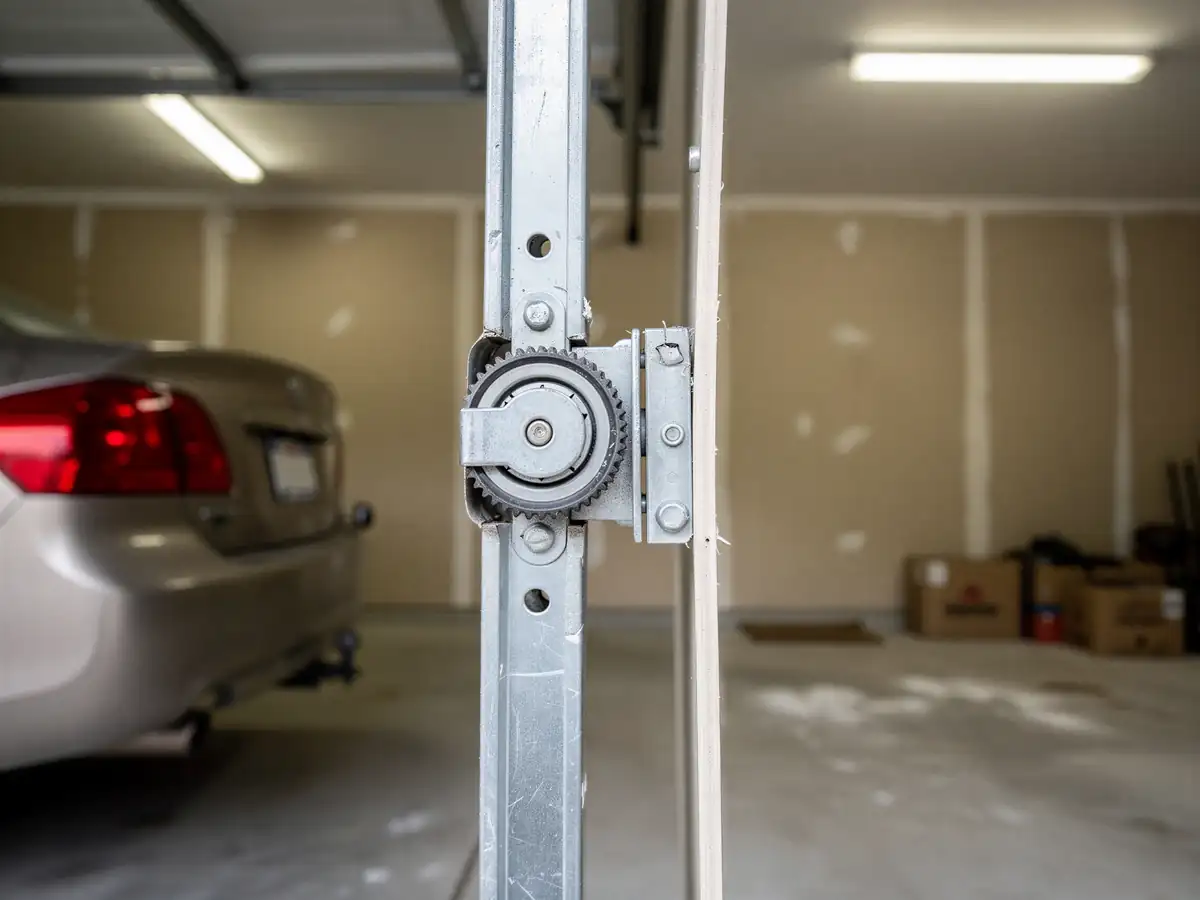
The climate here is mild with occasional freeze, which isn't hard on steel the way deep freeze-thaw cycles are, but it does mean nylon rollers and seals that have sat through twenty-plus winters get brittle. We check those on every call since they're cheap compared to what happens if a roller shatters mid-cycle and jams the track.
We come from Wylie, about 6 miles out, so parts for common opener brands and standard torsion springs ride on the truck. Less common opener boards sometimes need to be ordered, and we'll tell you up front if that's the case rather than promise same-day on something we don't have in hand.
Can You Do This Yourself
Replacing a logic board or diagnosing a dead opener is within reach for someone comfortable with a multimeter and a wiring diagram
And plenty of homeowners do it. Swapping a torsion spring is not something to take on alone - the spring is under enough tension to break bones if the winding bars slip, and that risk doesn't go down because the house is only 20 years old instead of 50.
- 20 years
What you can check yourself first
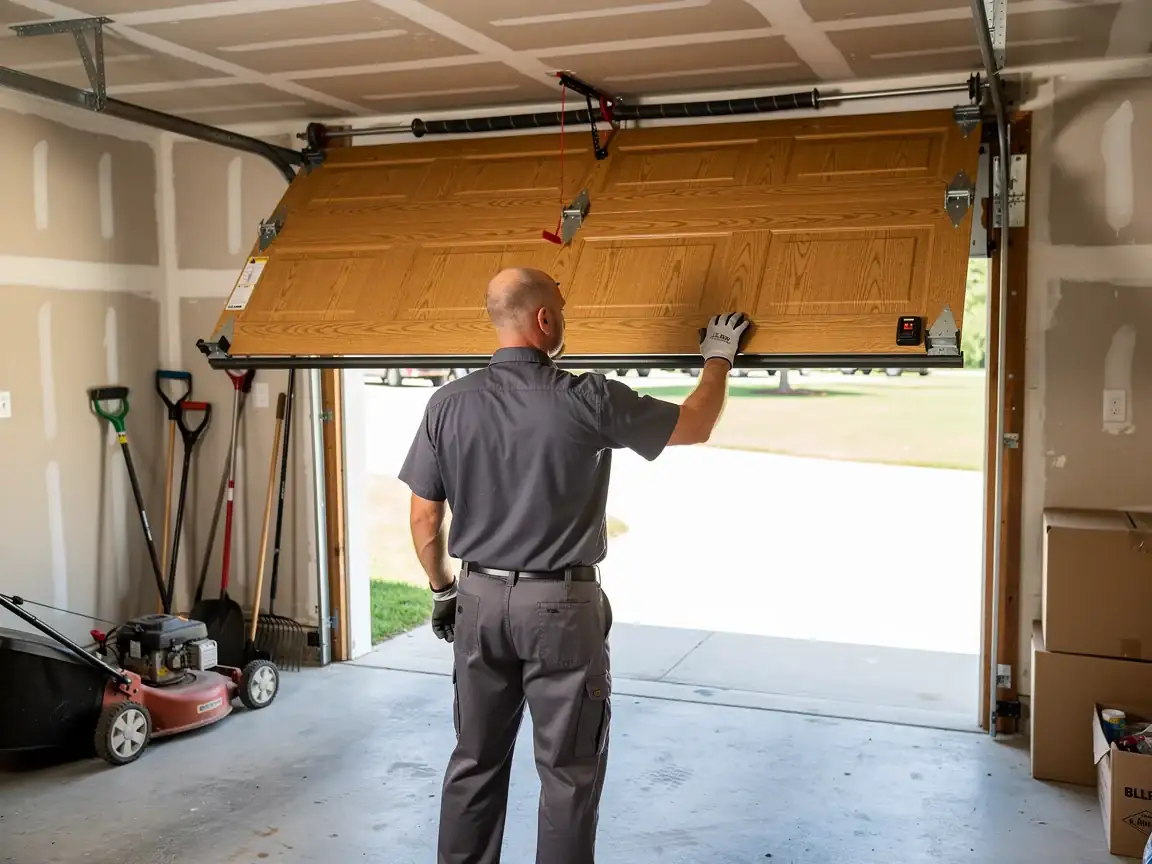
Pull the manual release cord and see if the door moves freely by hand. If it's heavy or uneven, that points to the spring, not the opener, and no amount of fiddling with the logic board will fix it. If the door moves fine by hand but the opener won't engage, that's a motor or board problem, and it's safer territory to poke at before calling someone out.
One honest limit: if the opener is the original 2002 unit and the board has failed once already
We'll usually recommend replacing the whole unit rather than chasing a second board failure a year or two later. Patching an opener that old repeatedly costs more over time than doing it once.
What Can Go Wrong
A stripped opener gear sometimes gets mistaken for a dead motor, and we've seen people buy a whole new opener when a 20 dollar gear kit would've done it - and we've also seen the reverse, where someone replaces the gear and the real problem was a failing board drawing inconsistent power to the motor. Diagnosing which one it is before buying parts saves money either way.
On the spring side, a door that's been limping along on one working spring of a two-spring system puts double the load on the remaining spring and on the opener. That spring usually fails faster than it would have on its own, and the opener motor burns out trying to lift a door it was never sized to lift alone.
Rollers and hinges that have gone past their service life on a 20-year-old door can also bind in the track without snapping anything, which shows up as a door that's loud and slow rather than one that's obviously broken. Left alone, that binding eventually cracks a panel at the hinge point, which turns a cheap roller swap into a panel replacement.
How to Book
Call to get a repair scheduled, or look at what we cover for Lucas specifically before you do. We travel in from Wylie, about 6 miles away, so we're not quoting a response time we can't back up with a crew sitting in town - we'll give you a real window when you call.
If you're not sure whether what you're dealing with is the opener, the spring, or something simpler like a sensor out of alignment, tell us what the door is doing - whether it moves by hand, whether the opener motor runs, whether it's uneven - and we can usually narrow it down before a truck even leaves Wylie.